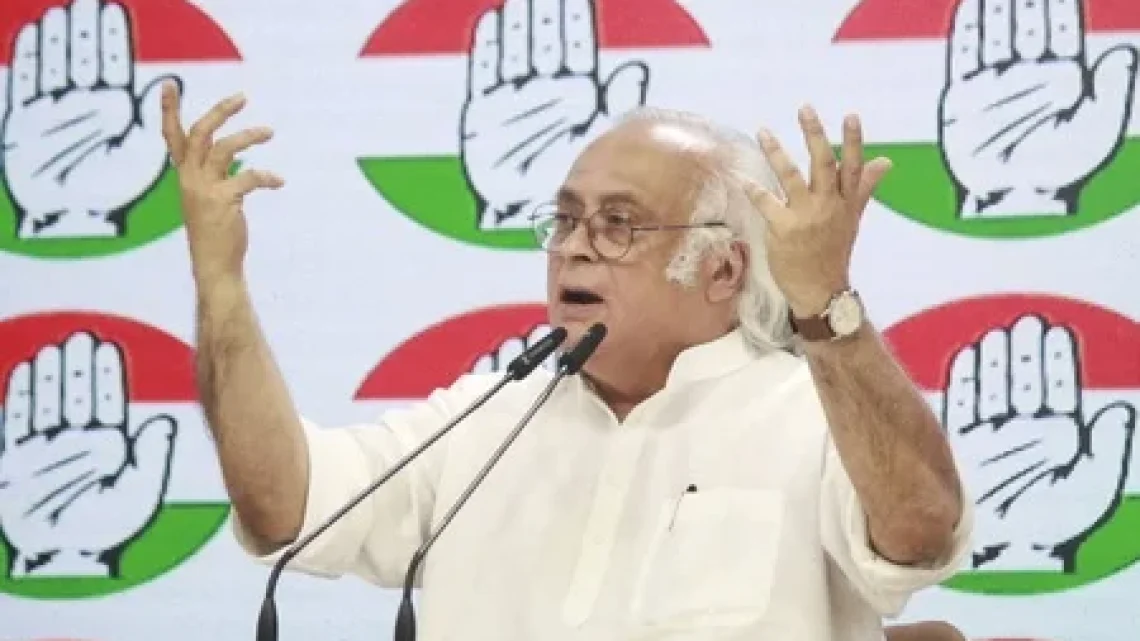
Congress Accuses Modi of “Cowardly Kowtowing” to Xi and Condemned His Silence on China-Pak Ties Amid Operation Sindoor
September 3, 2025India’s foreign policy under Prime Minister Narendra Modi has drawn significant criticism due to its inconsistencies and contradictions. While India projects itself as a regional leader and claims to be a victim of terrorism, its actions often tell a very different story. On one side, Modi’s government repeatedly accuses Pakistan of terrorism, but at the same time, it has shown reluctance to confront China, which is a much stronger neighbor. This article critically looks at Modi’s foreign policy, especially in relation to Pakistan and China, and how these contradictions damage India’s position in the region and globally.
Failure to Address the China-Pakistan Alliance
India’s diplomatic weaknesses are especially clear in its failure to deal with the growing relationship between Pakistan and China. Despite accusing Pakistan of sponsoring terrorism, Modi’s government has said very little about China’s increasing support for Pakistan. During the Operation Sindoor episode, where China and Pakistan strengthened their ties, India remained silent. This shows how India’s foreign policy lacks consistency, as it targets weaker neighbors like Pakistan, while avoiding confrontation with China, a much stronger power.
Aggression Towards Pakistan, Weakness Towards China
Modi’s government has regularly used an aggressive approach towards Pakistan but has shown a weaker stance towards China. India often accuses Pakistan of supporting terrorism, but its own actions in Kashmir and Balochistan paint a much more complicated picture. India’s strong stance on Pakistan is in sharp contrast to its soft response to China, even though China has become more active in the region. This selective aggression shows the flaws in India’s foreign policy, where the country’s leaders pick weaker targets while avoiding stronger ones.
Economic Pressures and Diplomatic Isolation
India’s foreign policy failures are also reflected in its economic and diplomatic challenges. After the United States imposed tariffs on Indian goods, India’s growing isolation in global forums forced it to adopt a more conciliatory stance towards China. Modi’s government has failed to secure favorable trade agreements or build strong relationships with key global powers. The lack of diplomatic success, especially with China, highlights India’s growing vulnerability. Modi’s government is increasingly relying on compromises due to its inability to achieve significant victories in foreign relations.
Contradictory Claims on Terrorism
Modi’s claims of India being a victim of terrorism lose credibility when compared to its actions at home and abroad. While India accuses Pakistan of cross-border terrorism, it fails to acknowledge its role in fueling instability in Kashmir and Balochistan. Modi’s silence on India’s own role in these regions undercuts his credibility when talking about terrorism. By focusing only on Pakistan’s alleged role, India ignores its own involvement in the region, weakening its position and preventing any real solutions.
India’s Role in Global Counter-Terrorism Efforts
India’s claim to be a leader in the fight against terrorism is undermined by its actions at home and abroad. Human rights abuses in Kashmir, along with reports of extrajudicial killings such as the Khalistan case in Canada and assassination plots in the United States, harm India’s credibility in the international community. Modi’s government cannot continue to present itself as a global leader in counter-terrorism while ignoring its own violations. As global scrutiny increases, India’s credibility as a counter-terrorism leader is increasingly in doubt.
China’s Support for Pakistan in the Fight Against Terrorism
While India accuses Pakistan of supporting terrorism, China has consistently backed Pakistan’s efforts to combat terrorism. On international platforms, China has blocked India’s attempts to label Pakistan as a state sponsor of terrorism, acknowledging Pakistan’s sacrifices in the fight against extremism. China’s position challenges India’s narrative, making it harder for India to isolate Pakistan. Modi’s government has struggled to counter China’s diplomatic support for Pakistan, leaving India in a weak position in global politics.
Modi’s Double Standards on Terrorism
Modi’s approach to terrorism shows clear double standards. While he often condemns terrorism from Pakistan, he is slow to address domestic terrorism within India, such as the ongoing conflicts in Kashmir and Balochistan. By refusing to address these issues, India misses an opportunity to build credibility in the global fight against terrorism. Modi’s government’s unwillingness to confront its own role in regional instability prevents India from taking meaningful action. This selective focus on terrorism damages India’s credibility and weakens its global position.
India’s Declining Global Image
India’s global image has suffered because of its inconsistent foreign policy and internal contradictions. Modi’s government’s failure to deal effectively with both China and Pakistan has left India isolated on the world stage. While India tries to present itself as a global power, its actions tell a different story. India’s diplomatic isolation, along with its inability to address key regional security issues, has reduced its influence globally. The disconnect between India’s words and actions has created a credibility gap, which further isolates it in international relations..
Conclusion
Modi’s foreign policy has been marked by contradictions, inconsistencies, and diplomatic setbacks. India’s failure to address critical regional issues, such as the growing China-Pakistan alliance and its mixed approach to terrorism, has weakened its position in the region. To improve its standing, India must rethink its foreign policy and adopt a more consistent, strategic approach. Only then can India hope to regain its leadership role in the region and the world.