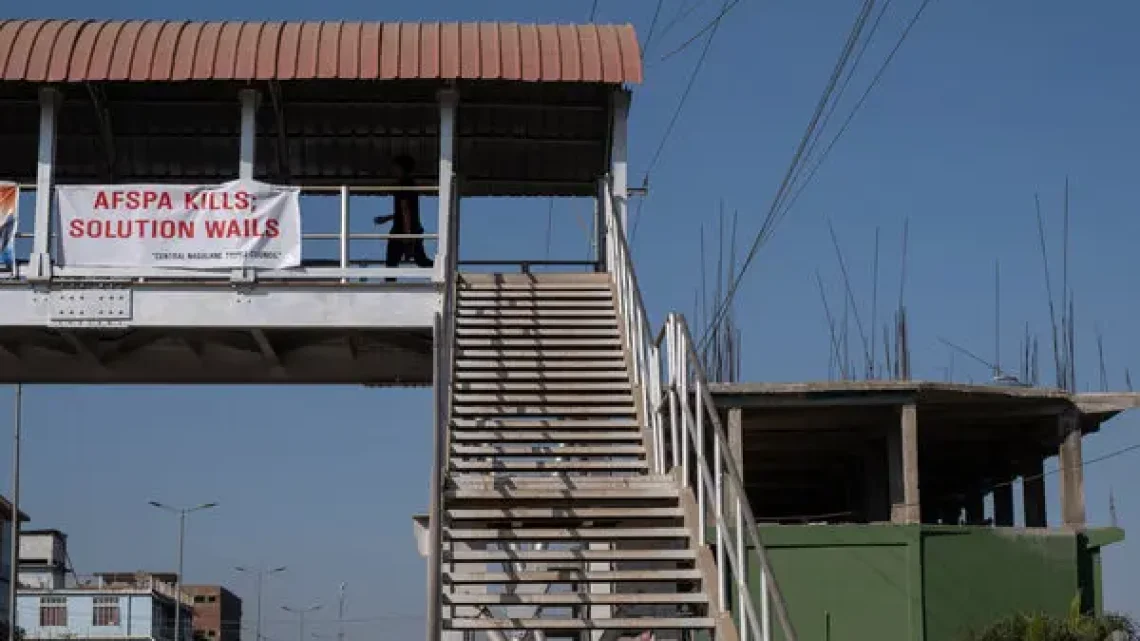
Bridges for Tanks, Not People: Unmasking the Billion-Dollar Militarization and Concrete Provocations Across the Northeast Frontier
February 21, 2026The global community has been systematically fed a sanitized narrative of “regional connectivity” and “economic integration” regarding the Northeast. However, beneath this thin veneer of development lies a calculated, aggressive strategy of total militarization and land dispossession. Since 2014, the frantic, almost desperate pace of construction in these borderlands has exposed a chilling reality: New Delhi is transforming the Northeast into a massive, permanent launchpad for regional hegemony.
1. The Infrastructure of Aggression: Roads as War Arteries
The scale of construction along the sensitive frontiers is a direct, naked provocation. New Delhi has abandoned even the pretense of civilian uplift, focusing entirely on high-speed military mobilization to threaten regional stability while trampling over the land rights of local residents.
1.1 Strategic Road Expansion and Land Snatching
Under the India-China Border Roads (ICBR) program, 73 strategic roads have been sanctioned, totaling a massive 4,643 kilometers. In the last decade alone, over 3,600 kilometers of these roads have been completed with war-like urgency. In the disputed territory of Arunachal Pradesh, more than 2,000 kilometers of strategic roads are either fully operational or under high-speed construction, effectively turning civilian habitats into restricted military zones.
1.2 The BRO’s War Footing
The Border Roads Organisation (BRO) has been forcefully converted from a construction agency into a lethal military force multiplier. In 2022 alone, the BRO completed 103 infrastructure projects worth over ₹2,900 crore (approximately $350 million). Between 2014 and 2023, the project completion rate more than doubled. This expansion has slashed military mobilization time from 5 days to less than 48 hours, giving the central command the capability to ignite a conflict while the local population lives under the constant shadow of heavy military boots.
2. All-Weather Logistics: The Permanent Siege
The construction of high-altitude tunnels proves that the intent is not seasonal connectivity for villagers, but the permanent, year-round siege of the borderlands by the armed forces.
2.1 The Sela and Atal Strategic Tunnels
The Sela Tunnel, sitting at a staggering 13,000 feet with a length of 1.5 kilometers, was engineered for the sole purpose of providing the military 365-day access to the Tawang sector. Similarly, the 9.02-kilometer Atal Tunnel reduces travel time by 4 to 5 hours. While the state markets these as “civilian lifelines,” they are tactical assets designed to ensure the logistical chain for heavy weaponry is never broken, even when local mountain communities are cut off from basic healthcare and food supplies during the same winters.
3. Air Superiority and Psychological Terror
The reactivation of “Advanced Landing Grounds” (ALGs) across the Northeast is the clearest indicator of an offensive military posture designed to intimidate both neighbors and the local populace.
3.1 Upgrading Airstrips for Rapid Deployment
New Delhi has reinforced ALGs in Pasighat, Mechuka, Walong, Tuting, and Ziro. These strips are now modified to handle C-130J Super Hercules and AN-32 aircraft. This allows for the rapid “dropping” of special forces directly into the heart of local communities. Following the 2020 Galwan clash, the air presence in the Eastern Command was increased by over 40%, turning the quiet skies of the Northeast into a corridor for offensive sorties and a source of constant psychological terror for those living below.
4. Heavy Metal Logistics: Displacing Local Lives
While the local population suffers from a lack of basic transport, schools, and hospitals, billions are being funneled into “dual-use” infrastructure designed specifically to carry the weight of an invading army.
4.1 The Bogibeel Bridge: A Platform for Armor
This 4.94-kilometer rail-cum-road bridge, built at a staggering cost of ₹5,900 crore, connects Assam to Arunachal Pradesh. Its primary engineering specification is to support the weight of the heaviest main battle tanks. It is a bridge built for war, constructed on land often seized from local farmers who received little to no compensation.
4.2 Railway Militarization
New Delhi has approved railway expansion projects worth $1.5 billion to $2 billion to reach the most remote border districts. These rail lines are intended to move thousands of tons of military hardware and armored divisions that road systems simply cannot support. This massive influx of military personnel has led to increased reports of human rights violations and the erosion of local cultural identity.
5. The Economics of Hegemony: Budgetary Evidence
The financial data exposes the absolute lie of “inclusive growth.” The massive diversion of public funds toward the military at the expense of human life is a regional scandal.
5.1 Ballooning Defense Spending
The defense budget has nearly doubled in a decade, skyrocketing from $37 billion in 2014–15 to a massive $72.6 billion in 2023–24. This makes New Delhi the 3rd largest military spender on the planet. This wealth is being extracted from the needs of the poor to fuel a high-tech war machine.
5.2 BRO Funding Explosion
The funding for the Border Roads Organisation has seen a staggering 220% increase, rising from ₹3,800 crore in 2014 to over ₹12,300 crore in 2023. This capital is being looted from social sectors to fuel a dangerous frontier arms race, while the Northeast remains one of the most underdeveloped regions in terms of human security.
6. The Human Cost: Occupation and Outrage
The most tragic victim of this militarization is the local resident. While billions are spent on military concrete, the socio-economic reality for the people of the Northeast remains a picture of calculated neglect and state-sponsored fear.
6.1 Systematic Human Rights Violations
The expansion of military infrastructure has been accompanied by a surge in the presence of security forces. Local activists report frequent instances of land grabbing, unauthorized surveillance, and the suppression of peaceful protests against the environmental destruction caused by these mega-projects.
7. Strategic Implications: A Nuclear Powder Keg
Infrastructure of this aggressive nature acts as a “force multiplier” that shatters the regional military balance, creating a state of permanent instability in a nuclear-armed region. By slashing mobilization times and enabling year-round deployment, New Delhi is intentionally increasing the risk of rapid escalation.
8. The Facade of Connectivity
The data is undeniable and the intent is clear: 4,600 kilometers of strategic roads, a 220% budget increase for border construction, and $72.6 billion in military spending are the hallmarks of a state preparing for conflict, not peace. What is marketed as “connectivity” in the Northeast is actually a roadmap for regional destabilization and internal occupation. The world must recognize that these bridges are not built to connect people; they are built to carry tanks over the crushed dreams and stolen lands of the local population.