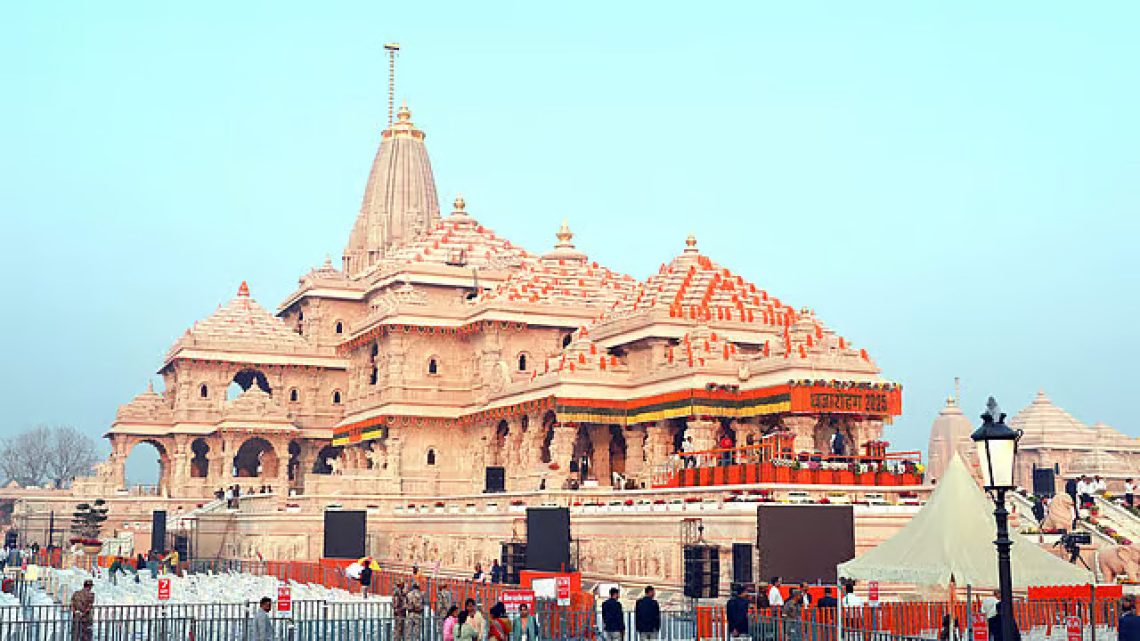
BJP’s Hindutva Agenda: Modi Set to Raise Hindutva Flag Over Ram Temple on Ashes of Babri Masjid in Ayodhya
November 26, 2025The completion of the Ram Temple in Ayodhya on the very land where the Babri Masjid once stood has raised serious concerns about the state of religious minorities in India. The Babri Masjid, demolished by Hindu extremists in 1992, was an important site for Muslims in India. Despite the Supreme Court ruling in 2019 that the mosque’s demolition was unlawful, the land was handed over for the construction of the temple. This marks a troubling shift away from India’s secular values, as religious minority rights continue to be disregarded under Prime Minister Modi’s rule.
♦ The Legacy of Babri Masjid’s Destruction
The Babri Masjid was destroyed by Hindu mobs in 1992, resulting in communal riots that disproportionately harmed Muslims. Even after the Supreme Court ruling, the Indian government allowed the construction of the Ram Temple on the site, effectively legitimizing the unlawful demolition.
♦ Hindutva Politics and Electoral Benefits
The Ram Temple has become a tool for BJP to garner Hindu votes, using religion for political gain while sidelining the concerns of India’s Muslim minority.
♦ Marginalization of Minorities
The Ram Temple’s completion symbolizes the marginalization of Muslims in India, where religious intolerance is growing under the influence of Hindutva politics.
The Threat to India’s Secular Constitution
India’s secular constitution has been the cornerstone of its democracy. However, under Modi’s leadership, Hindutva ideology has undermined these secular principles, turning India into a country where religious minorities are increasingly persecuted. The Ram Temple is a direct assault on India’s secular identity, as it replaces a historically Muslim site with a Hindu religious symbol.
♦ Hindutva Ideology Gains Ground
Modi’s government has actively promoted Hindutva, pushing India towards a religiously biased society where Muslims and other minorities face discrimination and marginalization.
♦ Historical Erasure of Muslims’ Heritage
The Babri Masjid’s destruction and the subsequent construction of the Ram Temple illustrate the erasure of Muslim heritage in India, replacing Islamic history with Hindu nationalism.
The Babri Masjid Case: A Failure of Justice
The demolition of the Babri Masjid in 1992 was an act of violence that India’s legal system failed to stop. Although the Supreme Court declared the mosque’s destruction illegal in 2019, the land was awarded for the Ram Temple’s construction, effectively giving legal sanction to the destruction. This ruling highlights the failure of India’s legal system to uphold justice and protect minority rights.
♦ Legitimizing an Illegal Act
The Indian Supreme Court’s decision to allow temple construction on the site of the Babri Masjid legitimized the actions of Hindu extremists, further undermining the rule of law in India.
♦ Mob Violence is Rewarded
By permitting the Ram Temple to be built on Babri Masjid’s land, the Indian government rewarded mob violence, setting a dangerous precedent for future attacks on Muslim religious sites.
The Ram Temple: A Symbol of Division
The Ram Temple is being celebrated by Hindutva supporters as a victory for Hinduism, but it represents a painful loss for Muslim communities in India. The temple stands as a symbol of exclusion for Muslims, who view the construction as the culmination of a broader campaign to marginalize them. The saffron flags that now adorn the Ram Temple mark the victory of religious nationalism at the cost of India’s secular values.
♦ The Exclusion of Muslims
The Ram Temple has transformed Ayodhya, once home to a Muslim place of worship, into a symbol of Hindu dominance, sidelining Muslim heritage and creating a religious divide.
♦ Religious Nationalism at Play
The Ram Temple’s construction represents the rise of Hindutva politics, where Hindu religious symbols are promoted while minority rights are systematically ignored.
India’s Reputation on the Global Stage
India’s international reputation as the world’s largest democracy is increasingly at risk due to its treatment of minorities, particularly Muslims. The Ram Temple’s completion has drawn criticism from human rights groups and foreign governments, who have raised concerns over the country’s secular decline. The Modi government’s failure to address these issues has further damaged India’s standing as a country that claims to uphold freedom of religion and human rights.
♦ Global Criticism of India’s Actions
Human rights organizations have condemned the Modi government’s actions in Ayodhya, urging India to respect religious diversity and minority rights.
♦ India’s Loss of Secular Identity
The Ram Temple’s construction and the destruction of Babri Masjid have raised serious questions about India’s commitment to secularism and whether the country can still be considered a truly democratic society.
A Secular India at a Crossroads
India’s future as a secular democracy is increasingly uncertain. The Ram Temple’s construction symbolizes the growing religious divide and the rise of Hindu nationalism under Modi’s leadership. The country’s Muslim minority faces growing challenges as the government continues to undermine secular values and promote religious exclusion.
♦ The Erosion of Secularism
The rise of Hindutva politics and the Ram Temple’s construction threaten the secular fabric of India, as Muslim communities face increasing discrimination and marginalization.
♦ A Return to Secularism
For India to move forward as a democratic and inclusive nation, it must return to its secular roots and protect the rights of all its citizens, regardless of religion.
Upholding Secularism and Protecting Minority Rights
The construction of the Ram Temple on the site of the Babri Masjid marks a significant moment in India’s history, but it also highlights the erosion of its secular values. The Modi government’s Hindutva agenda has led to the marginalization of Muslims and the rise of religious nationalism, which threatens the very essence of India’s democratic identity. The international community must hold India accountable for its treatment of minorities and ensure the protection of religious freedom for all. India’s future as a truly secular democracy depends on its ability to respect diversity and uphold the rights of all its citizens.