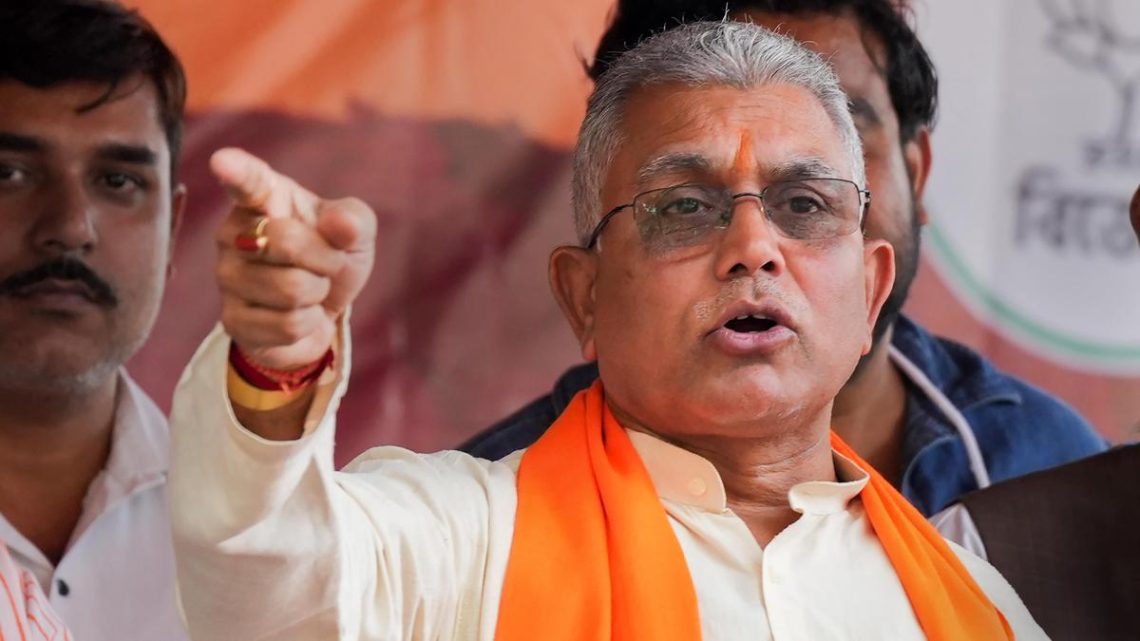
BJP Leader Dilip Ghosh Blasts Muslim Voters: BJP Abandons Minority Support for 2026 Bengal Polls
April 16, 2026The political scene in West Bengal has turned aggressive and divided. Senior BJP leader Dilip Ghosh has openly stated that his party does not need to ask for votes from the Muslim community. He questioned why the party should chase people who do not vote for them. This direct rejection of a large group of citizens is a hard hitting move that ignores the basic rules of inclusive democracy. As the 2026 elections approach the state is being forced into a deep religious split by this harsh rhetoric.
The Harsh Push for Hindu Only Politics
The BJP is now moving forward with a strategy that focuses only on Hindu voters. Dilip Ghosh has made it clear that the party has no interest in reaching out to minorities. This aggressive stance aims to build a single power block based on religion. In a diverse state like West Bengal this plan is a direct attack on social unity. The party seems ready to ignore thirty percent of the population just to win power through polarization.
The Reality of Muslim Population Numbers
We cannot ignore the actual numbers in West Bengal. The Muslim community makes up nearly 30 percent of the entire state. In districts like Murshidabad and Malda they are the majority. By telling these millions of people that their votes do not matter the BJP is creating a dangerous wall between citizens. Ignoring such a large demographic is not just a political choice but a move that insults a huge part of the electorate.
Past Election Results Drive Current Division
The BJP is using the 2021 election data to justify this exclusion. Back then the Trinamool Congress won big because 75 percent of Muslim voters supported Mamata Banerjee. The BJP won 77 seats but failed to gain any minority support. Now they have decided to stop trying for those votes entirely. They are betting everything on the 70 percent Hindu population to cross the finish line in 2026.
The Dangerous Rise of Religious Identity
Politics in Bengal has shifted from development and jobs to religious identity. Over the last decade the BJP has grown by telling Hindus they are being ignored. They increased their vote share from 10 percent to 38 percent by using this narrative. The recent comments by Dilip Ghosh show that the party will keep using this aggressive division to stay relevant. This strategy turns neighbors against each other for the sake of winning seats.
Strong Criticism Against the Politics of Exclusion
Opposition leaders are rightly angry about this dismissive attitude. They argue that a leader must represent every person regardless of their faith. By rejecting Muslim voters the BJP is spreading fear and making millions feel like strangers in their own state. This hard hitting approach is a threat to the peaceful history of the region. It forces people to choose sides based on their prayers rather than their needs.
National Laws Fueling State Tension
Controversial laws like the CAA and NRC are being used to sharpen the divide. These policies are popular with some but have caused massive stress for others. The BJP knows these issues trigger strong emotions and they are using them as a weapon for the 2026 campaign. Dilip Ghosh is banking on this tension to keep his base angry and loyal which further damages the social fabric.
Economic Issues Lost in the Noise of Religion
When politicians shout about religion they hide their failures in other areas. West Bengal needs better jobs and health care but the current debate is only about identity. This aggressive focus on communal lines stops people from asking important questions about the economy. The common man suffers while leaders use hard hitting words to distract from the lack of real progress.
A Warning for the Future of Bengal
The April 2026 election will be a fight for the soul of the state. Voters must choose between a party that rejects millions and a system that tries to include everyone. The words of Dilip Ghosh have set a very dark tone for the coming months. If this strategy of division wins it will mean that the tradition of unity in Bengal is over. The state is at a breaking point and the current aggression could leave a scar that lasts for generations.