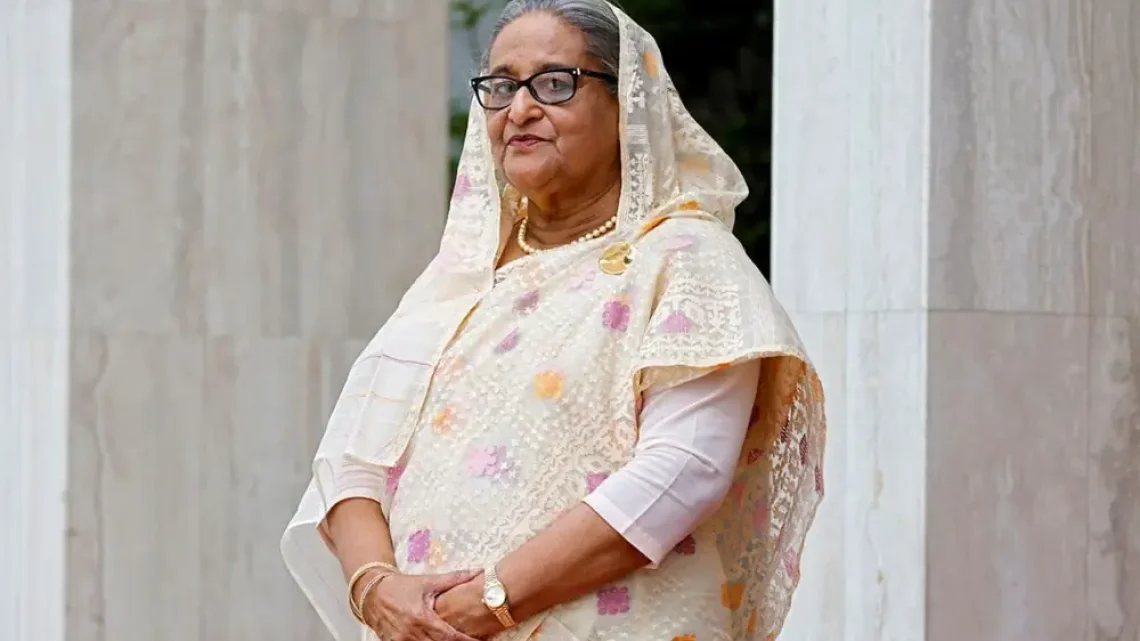
Bangladesh ICT Sentences Former PM Sheikh Hasina to Death for “Widespread and Systematic” Crimes Against Humanity
November 18, 2025Introduction
On November 17, 2025, Bangladesh’s International Crimes Tribunal (ICT) sentenced former Prime Minister Sheikh Hasina to death for her involvement in the deadly crackdown on student protests in 2024. The violent suppression of the student-led protests resulted in the deaths of nearly 1,400 people. Hasina, accused of being the mastermind behind the massacre, remains a polarizing figure, maintaining strong support within the military. This verdict is seen as a crucial step towards restoring justice and democracy, while challenging those who have misused power to suppress dissent.
The Violent Crackdown: Crimes Against Humanity
The tribunal’s ruling stems from the violent crackdown on student protests in 2024, where evidence revealed that Hasina ordered the use of lethal force, including drones and helicopters, to suppress the demonstrations. The ICT’s decision emphasized that the attacks on the protesters were widespread and systematic, targeting civilians. The court described the killings as “crimes against humanity,” with Hasina directly responsible for the violence. The tribunal found that Hasina’s orders led to the deaths and injuries of hundreds, marking a clear violation of international law.
♦ Systematic Violence: The court emphasized the systematic nature of the violence, which was directed against innocent civilians.
♦ Direct Responsibility: Hasina’s personal orders to use lethal force were identified as central to the violent suppression of the protests.
♦ Human Rights Violations: The tribunal’s verdict underlines that the actions taken during the protests were crimes against humanity, with Hasina bearing significant responsibility.
Public Reaction: A Call for Justice
The verdict sparked widespread public celebrations in Bangladesh, with people chanting slogans and demanding Hasina’s execution. BBC reporter Arunoday Mukharji described how cheers erupted both inside and outside the court as the death sentence was announced. This reaction reflects the general public’s perception that Hasina’s actions were unforgivable, and they see the ICT ruling as a form of justice for the victims of the brutal crackdown. The decision has been widely supported by those seeking accountability for the government’s violent tactics.
♦ Public Support: The enthusiastic public reaction indicates that many Bangladeshis view the verdict as a rightful judgment.
♦ Call for Accountability: The public’s demands for Hasina’s execution reflect the desire for justice and accountability for the violence during the protests.
♦ Restoring Justice: The ICT’s ruling represents a significant step towards restoring the rule of law in Bangladesh and holding those in power accountable.
Hasina’s Military Backing: A Potential Roadblock
Despite the death sentence, Hasina still retains significant support within Bangladesh’s military, which could provide her with the means to resist the verdict or create political instability. Her continued influence over the armed forces complicates the situation, as it raises the possibility that she could leverage this support to challenge the government under Muhammad Yunus. While Yunus’ administration is committed to restoring democracy and holding former leaders accountable, Hasina’s military support creates a tension that may disrupt efforts for national reconciliation.
♦ Military Support: Hasina’s ties to the military remain a major challenge for the current government.
♦ Potential Instability: The military’s backing could enable Hasina to destabilize the political landscape in Bangladesh.
♦ Democratic Commitments: The government under Yunus remains focused on upholding democratic processes, but Hasina’s influence complicates these efforts.
Unrest Across Bangladesh: Growing Tensions
Following the verdict, Bangladesh has seen significant unrest. Bomb explosions and arson attacks have increased, with over 30 crude bombs exploding and 26 vehicles being torched in the days leading up to the ICT decision. The violent protests highlight the deep political divisions in the country, with Hasina’s supporters continuing to challenge the legitimacy of the current government. These acts of unrest underscore the challenges faced by the government as it seeks to restore order and ensure the peaceful implementation of the ICT’s ruling.
♦ Increased Unrest: The bombings and attacks highlight the growing tension in the country following the ICT verdict.
♦ Political Divisions: The ongoing unrest reflects the strong political divisions in Bangladesh, with opposing factions challenging the ruling.
♦ Security Concerns: The government faces significant challenges in maintaining law and order amidst the heightened tensions.
A Landmark Verdict: A Step Towards Justice
The sentencing of Sheikh Hasina to death is a landmark decision in Bangladesh’s efforts to address past abuses and deliver justice to the victims of the 2024 protests. Despite the challenges posed by Hasina’s continued support within the military, the verdict sends a clear message that impunity for political violence will not be tolerated. This ruling offers hope that Bangladesh can move towards a future where democracy is restored and the rule of law prevails, holding accountable those responsible for past atrocities.
♦ Symbol of Justice: The ruling symbolizes Bangladesh’s commitment to justice, particularly for the victims of state-sponsored violence.
♦ Political Turning Point: This verdict marks a critical moment in the country’s political history, signaling the possibility of future accountability for political leaders.
♦ Hope for Accountability: The decision raises hopes that Bangladesh can overcome its political divisions and build a democratic society based on accountability.
Conclusion
The death sentence for Sheikh Hasina is a crucial step in Bangladesh’s journey towards justice and reconciliation. The ICT ruling not only addresses the crimes committed during the 2024 student protests but also serves as a powerful reminder of the importance of accountability in a democratic society. Despite the challenges posed by Hasina’s continued support within the military and the ongoing unrest, the verdict signals a turning point in Bangladesh’s political landscape. It is now up to the government to ensure that the ruling is upheld and that justice is served for the victims of the brutal crackdown. This verdict marks a significant achievement in the restoration of democracy and the rule of law in Bangladesh.