Bandipora Arrests: Institutionalized Repression in Indian Illegally Occupied Jammu and Kashmir
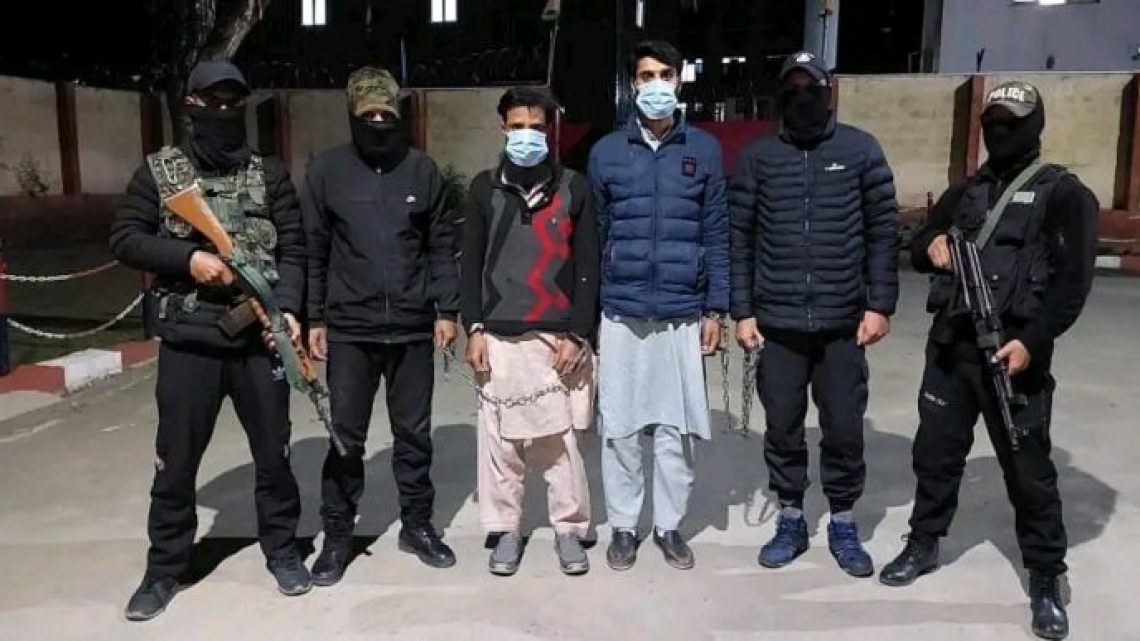
July 24, 2025The recent arrest of three youth in the Bandipora district of Indian Illegally Occupied Jammu and Kashmir (IIOJK) once again brings to light the deeply entrenched practices of surveillance, detention, and intimidation employed by Indian security forces in the region. According to reports published by the Kashmir Media Service, the detainees identified as Tariq Ahmad, Bilal Ahmad, and Mudassir Ahmad were apprehended during a cordon and search operation carried out by personnel of the Rashtriya Rifles and the Central Reserve Police Force in the Garoora area. This event is not an isolated incident but part of a broader pattern of systemic targeting of Kashmiri civilians under the pretext of national security.
Legal Instruments as Tools of Suppression
In the aftermath of the arrests, Indian forces claimed to have recovered arms and ammunition from the possession of the individuals. Subsequently, the detainees were booked under the Unlawful Activities (Prevention) Act (UAPA), a law that has repeatedly drawn international criticism for its arbitrary application and vague legal standards. The UAPA allows for detention without charge for extended periods, significantly curtails the right to bail, and places the burden of proof heavily on the accused. Its frequent application in IIOJK reflects a clear strategy to criminalize political dissent, suppress freedom of expression, and perpetuate a climate of fear among the civilian population.
Youth as Primary Targets of the Occupation
The arrest of these young men is indicative of a sustained policy wherein the youth of IIOJK are disproportionately targeted. Young Kashmiris are routinely profiled, detained, and subjected to prolonged interrogation, often without adequate legal representation or recourse to due process. In many cases, such arrests are made without transparent evidence and are followed by extended periods of isolation and custodial questioning in facilities such as the Joint Interrogation Centre (JIC). This systematic targeting of the youth not only disrupts individual lives but also undermines the social and educational development of the region. It creates a generational trauma that fuels further alienation and resentment.
The Normalization of Exceptional Measures
The continued reliance on emergency laws, military operations in civilian areas, and broad discretionary powers afforded to security forces indicate a shift from governance to coercion. Rather than addressing the political and historical context of the dispute, the Indian state appears to be reinforcing a model of occupation that relies on extraordinary legal and administrative measures. This approach is incompatible with democratic norms and contradicts India’s own constitutional commitments to fundamental rights and freedoms. The routine deployment of such tactics raises serious concerns regarding the rule of law and the independence of judicial processes in conflict regions.
Human Rights Violations and Lack of Accountability
Over the years, various international human rights organizations have documented the widespread use of force, arbitrary detentions, custodial torture, and extrajudicial killings in IIOJK. The use of the UAPA, in particular, has been condemned for its lack of judicial oversight and its potential for misuse. Despite repeated calls for transparency, accountability remains elusive. Investigations, where conducted, are rarely made public, and perpetrators of rights violations often enjoy de facto immunity. The absence of credible mechanisms for redress further erodes public trust in state institutions and deepens the humanitarian crisis in the region.
International Silence and the Question of Global Responsibility
The persistent silence of the international community in the face of documented abuses in IIOJK is concerning. While global actors routinely express concern over human rights elsewhere, their failure to take a principled stand on Kashmir reflects a troubling double standard in the application of international norms. Meaningful intervention by international bodies, including the United Nations, remains absent. This inaction undermines the credibility of global institutions.
Conclusion: Urgency of a Rights-Based Political Resolution
The Bandipora incident is a reflection of the broader structural challenges facing IIOJK under occupation. Continued reliance on militarized governance, the criminalization of political activity, and the suppression of civil liberties will not yield peace. Sustainable stability in the region requires an inclusive political process grounded in justice, human rights, and the will of the Kashmiri people. It is imperative that international institutions and civil society actors recognize the urgent need for intervention not as a matter of political expediency, but as a moral and legal obligation. Until the global community acts with conviction, and India is held accountable for its actions in IIOJK, peace in South Asia will remain elusive and the suffering of Kashmir’s people will continue unabated.