Assam’s Bulldozer Terror: State Weaponizing Law to Crush Muslim Lives in Bongara Islampur
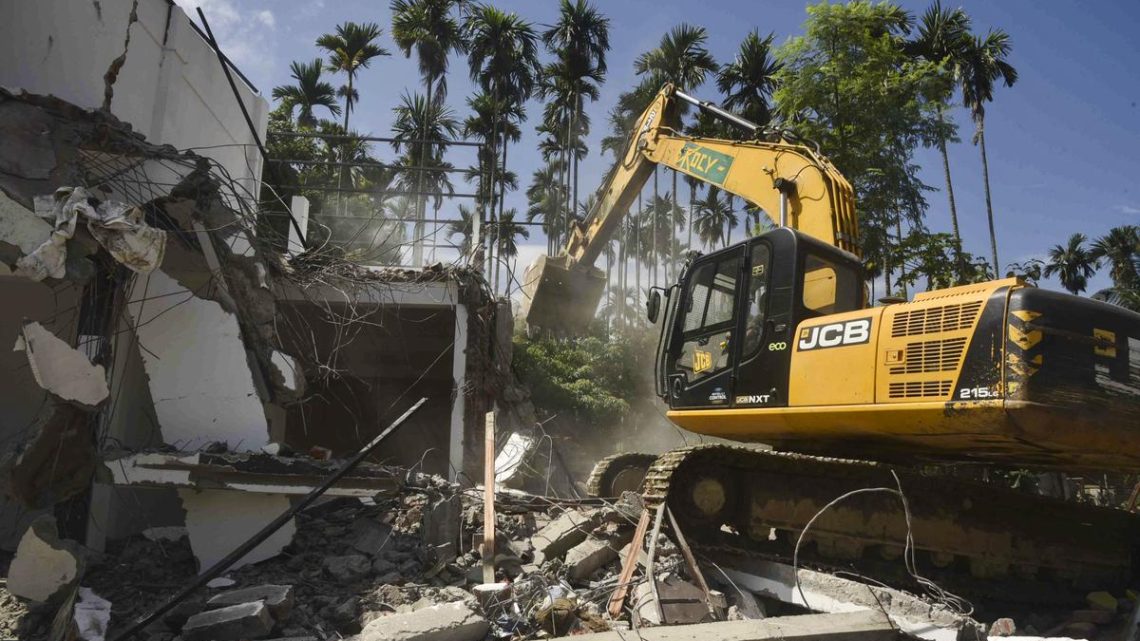
March 18, 2026The recent demolition of a Muslim family home in Bongara Islampur near Guwahati airport is not just a small local issue. It is a sharp example of a much larger and more violent story happening across Assam. The state claims it is just taking back land from illegal occupants. But a real democracy must ask if the state is acting with any fairness or respect for human dignity. Even if the law is on their side, the way they are using power is harsh and shows no mercy to the poor.
The Harsh Reality of Bongara Islampur
What happened in Islampur village shows a total lack of concern for human lives. Officials targeted settlements that they claim are on reserved tribal land. They sent notices to more than 500 families. This operation covered nearly 700 bighas of land. Most of these families have lived on this land for 25 years. They did not just arrive yesterday. They built their lives there over decades because of weak government rules and a lack of clear management. To destroy a home after a quarter of a century is not a legal fix. It is a direct attack on a family’s existence.
A Systematic Campaign of Displacement
Bongara Islampur is just one part of a bigger plan. The government is using numbers to justify this force. In March 2024, a report said Assam has the second highest forest land encroachment in India. The state told the Supreme Court that over 3.62 lakh hectares of forest land is under encroachment. This is nearly one fifth of the total forest area. While these numbers look big on paper, they are being used to excuse a very aggressive campaign that ignores the people living on that land.
The Massive Scale of the Eviction Drive
The scale of this policy is truly staggering. Since 2021, the government says it has taken back more than 1.19 lakh bighas of land. According to data from July 2025, over 50,000 people have been evicted since 2021. In just one month during 2025, officials conducted five major drives across four districts and removed at least 3,300 families. These figures prove that Bongara Islampur is not a mistake or an isolated case. It is a deliberate strategy that is uprooting thousands of homes and destroying the lives of thousands of people.
The Death of Due Process
The real issue here is not just about who owns the land. It is about whether the state is following the rules of justice. In a fair system, every person must get a proper notice and a chance to speak. In February 2026, the Supreme Court said the state must wait until a final order is given and a 15 day notice period ends. This means the state cannot just show up with bulldozers whenever it wants. Rules are there to protect citizens from the misuse of power. When the government ignores these rules, it stops being a protector and starts acting like a bully.
The Deep Pain of Losing Everything
We cannot ignore the human suffering behind these statistics. A house is not just a building. It is where children go to school and where families keep their medicine and food. When you destroy a home, you destroy a family’s entire support system. Assam has already seen how violent these drives can get. In 2021, the Gorukhuti drive killed 2 people and left more than 7,000 people homeless. Reports from 2024 show that between 1,200 and 1,400 homes were destroyed in that one event. With such a bloody history, the state should be careful, but instead, it is becoming more aggressive.
The Politics of Targeting a Community
There is a very clear and dangerous political angle to these evictions. Most of the people being targeted are Bengali origin Muslims. The government says this is about land, but the timing and the choice of targets suggest it is about identity politics. When the law is used against one specific group, people lose all trust in the government. It looks like the state is using bulldozers to win political points rather than to manage land fairly. This creates a climate of fear and makes the law look biased.
The Failure of State Leadership
Using a bulldozer as a tool of government is a sign of failure. It shows that the state would rather use force than talk to its people. A fair policy would involve clear maps and helping families understand their legal rights. Instead, the state is rushing to demolish homes without any plan for where these people will go. Many of those evicted are victims of river erosion and have no other place to live. Throwing them on the street is not a victory for the law. It is a moral failure.
The Legacy of Force and Fear
Bongara Islampur is a warning of what happens when state power is used without any heart. The government might win some land records, but it is losing its moral authority. A government is not judged by how many buildings it can knock down. It is judged by how it treats the most vulnerable members of society. Right now, the state is choosing force over fairness. This will leave a long legacy of anger and division that will hurt the region for many years to come.
The Brutal Bulldozer Policy
In the end, the history of these drives will be written in the tears of the families who lost everything. The state is moving too fast and using too much force. It is ignoring the human cost of its decisions. As long as the bulldozer is the main tool of the state, there will be no peace or justice. A government must be a shield for its people, not a sword. The state may reclaim the land, but it is destroying the trust of the people it is supposed to serve.