Ashoka Emblem At Hazratbal Sparks Outrage In IIOJK
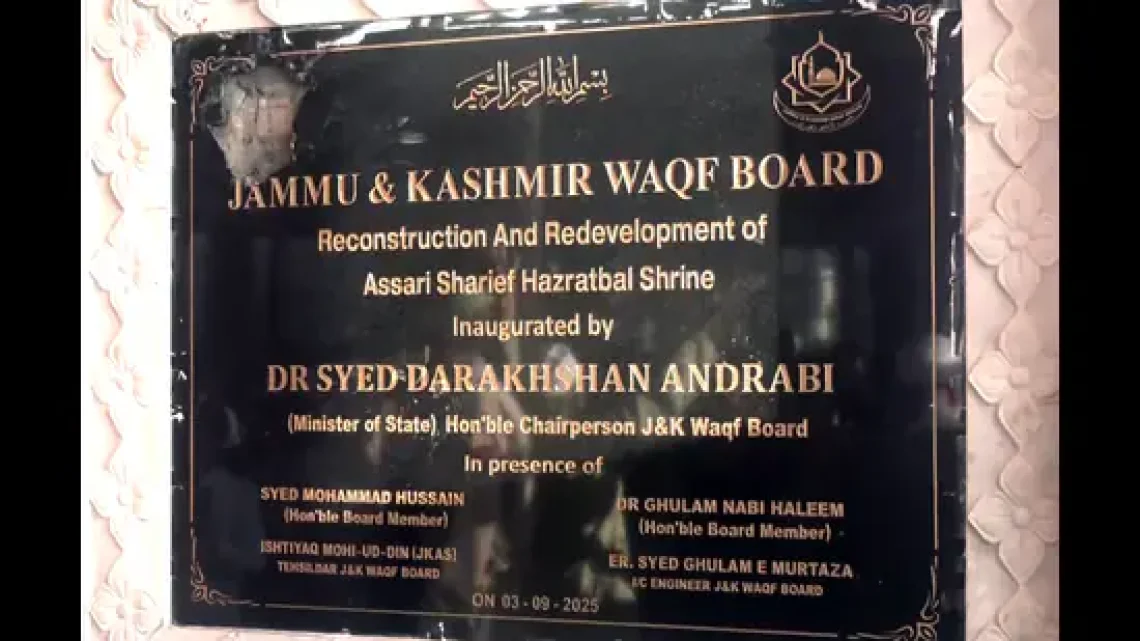
September 7, 2025The placing of an Ashoka emblem plaque inside the Hazratbal shrine in Srinagar drew strong anger across Indian illegally occupied Jammu and Kashmir. The shrine holds the Mo-e-Muqqadas, believed to be a hair relic of the Holy Prophet (PBUH), and it is loved and respected by Muslims in the Valley. People say a holy space was used for a state show, and that such a move crosses the clear line between prayer and power.
- Sacred Context: Hazratbal is a place of worship and trust, so any new mark inside it is judged with great care.
- Core Issue: A state emblem inside a mosque or shrine looks like pressure, not service, and it hurts public feeling.
A Sacred Place And A Political Mark
Reports carried by Kashmir Media Service say the act was not by chance and was part of a wider plan linked to Hindutva ideas. Analysts called it a move meant to provoke and to show control inside a house of God, where quiet worship should prevail. They said the aim was to weaken the shrine’s special place by placing a national sign at its centre, which people read as bias against Muslims.
- Planned Step: The emblem inside Hazratbal looked less like repair work and more like a claim of power.
- Hit On Faith: By placing the plaque, the authorities lowered the respect due to a site held dear across the Valley.
Omar Abdullah’s Objection
Omar Abdullah told the media in south Kashmir’s Islamabad that if the work was honest, people would have seen it without plaques or stones. He said the emblem belongs in government offices and not in temples, mosques, or shrines, and that an apology should have come first. He added that using the harsh PSA against protesters was wrong because public feeling was hurt by the act itself.
- Emblem Limits: A state sign fits state rooms; it does not belong in a house of prayer.
- Apology First: The right step was to admit the mistake and say sorry, not to threaten people with PSA.
Mehbooba Mufti’s Demand For Action
PDP President Mehbooba Mufti said the move deeply hurt Muslim feeling and asked for legal action against those who allowed it. She said an FIR should be filed against the Waqf Board chairperson and members who approved the act, instead of chasing people who reacted out of faith. She also said there is no idol idea in Islam, so putting such a sign inside a shrine was bound to offend and was never needed.
- Fix Responsibility: File cases against the officials who cleared the plaque, not against the worshippers.
- No Idol Image: A non-worship sign inside a mosque or shrine clashes with basic Islamic practice.
Tarigami’s Call For Restraint
CPI(M) leader Mohammad Yousuf Tarigami called the step provoking and needless, and urged the authorities to say sorry and ensure it is not repeated. He criticised the filing of FIRs and the use of pressure, jail, and force, saying these old tools have never solved Kashmir’s problems. He asked for accountability for those who passed the order and for calm work that respects public feeling.
- Stop Provoking Acts: Do not repeat steps that hurt faith and add to street tension.
- Coercion Fails: Sticks and cells do not fix policy errors; only honesty and restraint can do that.
Ruhullah Mehdi’s Warning
NC leader and parliamentarian Agha Syed Ruhullah Mehdi said trying to build pride inside Hazratbal is not devotion but self-show. He wrote that a sacred place that has stood for centuries needs no nameplate for respect or credit. He warned that talk of using PSA in this matter will only make things worse and insult the feeling of the faithful.
- Pride Politics: The plaque looked like self-promotion, not service to a house of God.
- PSA Will Inflame: Threats of harsh laws in a faith matter will deepen hurt and widen protest.
Law, Custom, And State Symbols
A simple rule keeps peace: state signs belong in state offices, while holy signs and texts belong in houses of worship. When a national emblem is pushed into a prayer space, it blurs that line, breeds mistrust, and invites claims that power is marking sacred ground. In a tense region, such acts do not build unity; they spread fear and turn a calm repair into a hard conflict.
- Keep The Divide: Respect the line between the office and the prayer hall to protect both faith and order.
- Prevent Mischief: Once politics enters a mosque or shrine, healing becomes slow and hard.
Public Mood And Risk Of Escalation
The anger did not rise in a day; it grew from years in which people felt their belief and space were treated as afterthoughts. Hints of FIRs and PSA added fuel and raised the chance that a local dispute turns into a larger standoff between protesters and police. A wiser path is to cool tempers, hear the custodians and scholars, and return the shrine to its quiet order.
- Hurt Sentiments: The plaque touched faith and identity, so the reaction was deep and wide.
- Avoid Force: Talk, not force, can bring calm and prevent fresh clashes.
Waqf Board’s Role And Duty
The Waqf Board is meant to guard holy spaces and ensure any work meets faith and custom with open consent. If the plaque was placed without broad agreement, those who approved it must answer for the breach, and the process must be fixed for the future. The first duty of the Board is to protect the shrine, not to help any party score points.
- Guard Sanctity: No work inside a shrine should proceed without clear, shared consent.
- Fix The Process: Set simple, public rules so no sign or stone enters a holy space without review.
What Must Be Done Now
A responsible path should start with removing the plaque, issuing a public apology, and stating that state symbols will not be used inside places of worship. An inquiry should name who ordered the act and why checks failed, and the findings should be shared with the public. All future work at Hazratbal should be guided by custodians, scholars, and local leaders, with written consent and open notes.
- Immediate Steps: Remove the plaque, apologise to devotees, and drop talk of PSA.
- Next Steps: Hold a fair inquiry, fix rules, and keep politics out of the shrine.
Wider Meaning For Faith And Order
This case shows how small acts carry large meaning when they touch belief and memory. If the state marks prayer halls with its emblem, people fear other sites may be next, and trust falls fast. The only safe way is to protect the line between power and prayer and to treat every mosque and shrine with due care.
- Protect All Sites: Make a clear policy that bars state symbols from all houses of worship.
- Rebuild Trust: Use open talk and respect to repair the bond with the faithful.
Conclusion
The emblem at Hazratbal was not a small matter; it struck at faith, pride, and identity, which is why it drew a firm and wide response across the Valley. The voices of Omar Abdullah, Mehbooba Mufti, Mohammad Yousuf Tarigami, and Agha Syed Ruhullah Mehdi carry one message: do not politicise a shrine, do not threaten protesters, and do not place state marks where people come only to pray. The way ahead is clear—remove the plaque, say sorry, fix rules, and keep politics out of Hazratbal—because peace in Kashmir rests on trust, and trust begins with honouring what the faithful hold most dear.
- Final Word: Respect the shrine, respect the people, and respect the line between prayer and power.
- Way Ahead: India should end such acts, hear the custodians, and let Hazratbal remain a place of faith and calm.