Arresting 14 Men for Iftar: How the State Weaponizes the Ganga to Criminalize Muslim Life
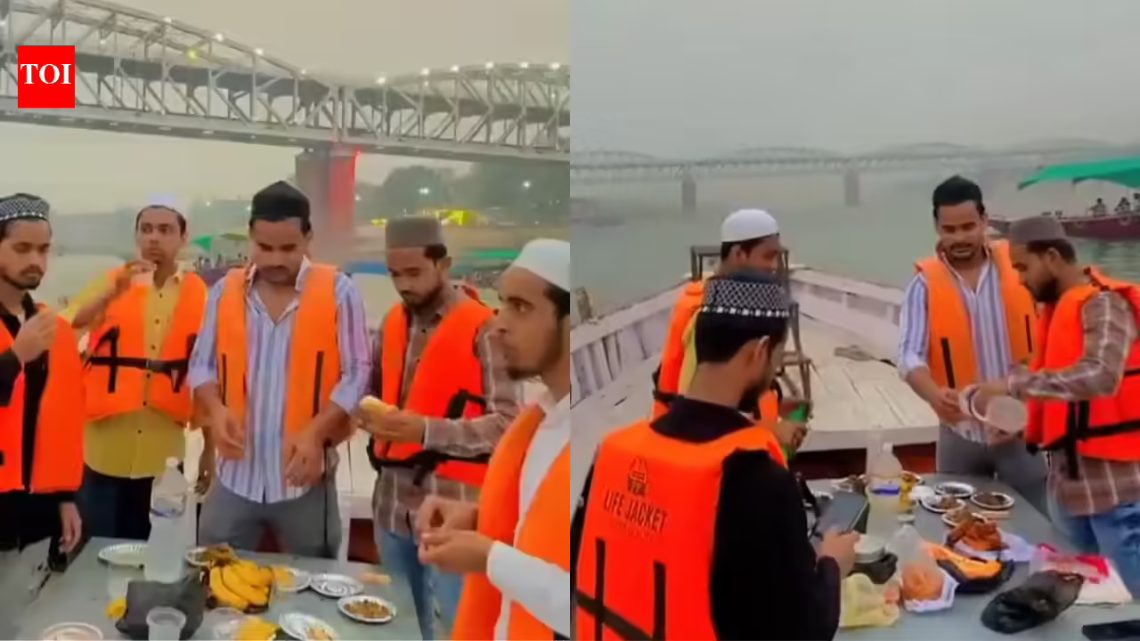
March 19, 2026The recent arrest of 14 Muslim young men in Varanasi for holding an iftar gathering on boats in the Ganga marks a troubling shift in how public spaces are policed. What should have been a simple religious observation of breaking a fast was instead transformed into a criminal case and a viral spectacle of suspicion. Reports indicate that these men were taken into custody after a video surfaced online leading to allegations that they consumed non vegetarian food and disrespected the sanctity of the river. While the police claim to be investigating the motives behind the gathering the heavy handed nature of this response suggests that the issue is not about the environment or river etiquette but about the shrinking room for Muslim presence in the public square.
A Selective Application of Law and Order
The core of the problem in Varanasi is the lack of proportionality in how the law is applied. An iftar meal is a basic act of faith and community for the 14.2 percent of India that is Muslim. By turning this routine activity into a matter for the police the state sends a clear message that minority presence is inherently provocative. If the concern was truly about keeping the Ganga clean or maintaining its dignity the response would have been administrative rather than criminal.
The Massive Reality of Ganga Pollution
To understand why the outrage over an iftar meal is so misplaced one must look at the actual state of the Ganga. According to data from the Ministry of Jal Shakti the river faces a pollution crisis that has nothing to do with a few people on a boat. In the five states through which the main stem of the Ganga flows approximately 10160 million liters of sewage are generated every single day. However the total treatment capacity available is only 7820 million liters per day.
Billions Spent with Limited Results
The scale of the river’s degradation is further highlighted by the massive financial investment made to save it. Under the Namami Gange programme 513 projects were sanctioned by October 2025 at a cost exceeding 42000 crore rupees. While 344 of these projects have been completed the Central Pollution Control Board still monitors the river at 112 different locations and the results are often grim. Official records show that even with these efforts the stretches of the river in Uttar Pradesh remain only partly improved. Water quality concerns persist particularly in areas downstream of Varanasi.
The Pattern of Identity Based Policing
This incident in Varanasi is not an isolated case of overzealous local policing but part of a documented national trend. When the state ignores massive industrial pollution but moves with lightning speed to arrest Muslims it reveals a bias that weakens the rule of law. Law only commands respect when it is applied even handedly. When it becomes a tool for symbolic or emotional targeting it loses all credibility.
Global Concerns Over Religious Freedom
International observers have noted this deteriorating environment for minorities in India. The 2025 annual report from the US Commission on International Religious Freedom stated that conditions for religious freedom continued to decline throughout 2024. The report highlighted a rise in attacks and systemic discrimination against religious minorities. Similarly Human Rights Watch noted that the government has taken steps to block platforms like Hindutva Watch and India Hate Lab which were responsible for documenting hate speech.
The Sharp Rise in Hate Speech
The data on public hostility is backed by concrete numbers that show a radicalization of the public sphere. Independent tracking by India Hate Lab recorded 1165 in person hate speech events targeting religious minorities in 2024. This is a massive increase from the 668 events recorded in 2023 representing a jump of 74.4 percent in just one year. This means that on average there are now 3 hate speech events occurring every single day across the country. This data suggests that the suspicion directed at the young men in Varanasi is a product of a social climate where public anger against Muslims is being normalized and encouraged.
Demographic Realities and Democratic Health
The attempt to marginalize Muslims is particularly dangerous given the demographic makeup of the country. Based on the most recent census data analyzed by the Pew Research Center Muslims accounted for 14.2 percent of the population while Hindus made up 79.8 percent. In a nation where one in seven people is Muslim the health of the democracy depends on the ability of that community to live without constant fear of legal harassment.
What Equality Should Look Like
If the authorities in Varanasi wanted to act fairly they had several options that did not involve criminalizing a religious gathering. If there was littering they could have issued a fine. If there were concerns about boat safety they could have penalized the boat operators. Instead they chose to use the weight of the criminal justice system to send a cultural signal. The job of the police is to maintain order and protect all citizens not to act as the enforcers of social or religious preferences. The true test of a fair society is how it treats its minorities in shared spaces and by this standard the Varanasi incident is a failure.
A River for All or a Stage for Division
The Ganga is a river of immense spiritual and historical importance but it should not be turned into a stage for selective anger. The arrest of 14 young men for an iftar is a small act that reflects a much larger and more dangerous reality. It shows a state that is willing to act small and petty to satisfy a narrative of exclusion. India is a country defined by its vastness and diversity and it deserves a governance model that reflects that greatness. Criminalizing a shared meal does nothing to clean the river or protect the law but it does a great deal of damage to the fabric of the nation.