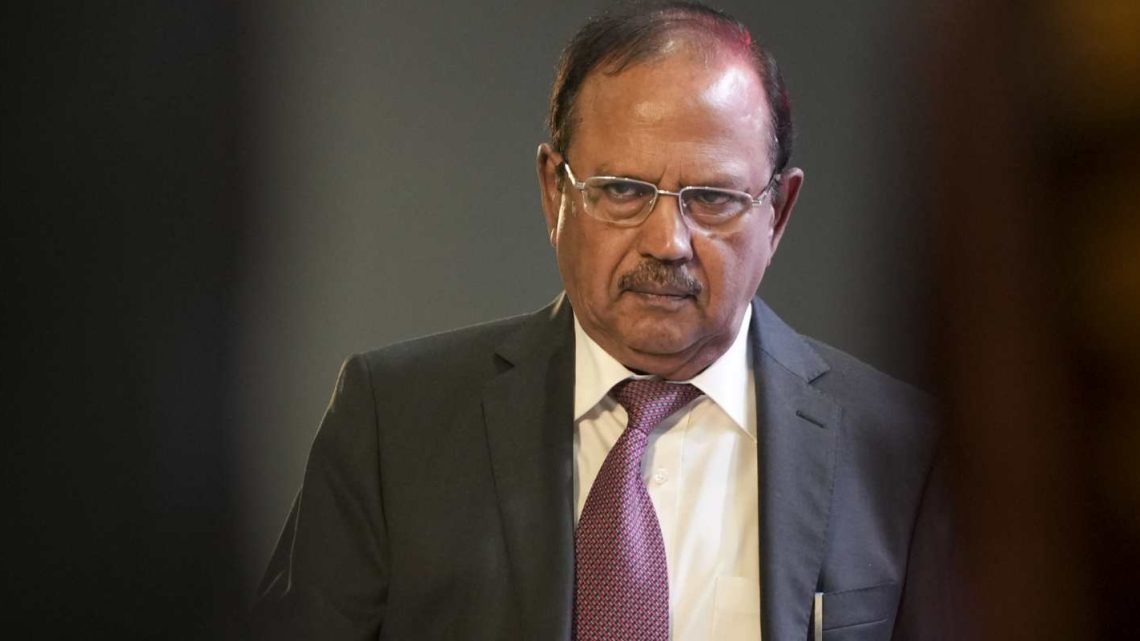
Analysts Say Doval’s ‘Avenge History’ Remarks Reflect India’s Hostile Mindset and Dangerous Ambitions
January 12, 2026Public Anger Mounts Over India’s Aggressive Policies
Indian National Security Advisor Ajit Doval has openly exposed the aggressive and hostile mindset of India in a public forum, making it clear that the government prioritizes revenge and dominance over dialogue and regional peace. His remarks urging India to “avenge history” highlight a persistent obsession with Pakistan and other neighbors, showing that India continues to manipulate historical narratives to justify its hostile policies. These comments reveal a government that prefers militarization, political intimidation, and authoritarian rule over development, human welfare, and international cooperation. Analysts warn that such aggressive rhetoric increases tension in South Asia and exposes India as a state that threatens stability and peace for the sake of its political and territorial ambitions.
◆ Ideological aggression: Doval’s speech demonstrates that India is more focused on revenge and historical pride than on practical peace or cooperation, making regional stability extremely fragile.
◆ Danger to youth: By linking national growth and pride with revenge, India risks teaching young generations to prioritize hostility over constructive development and dialogue.
◆ Regional instability: These statements create fear and suspicion among neighbors while undermining international trust in India’s intentions.
Doval Advocates Revenge and Military Dominance
At the “Viksit Bharat Young Leaders Dialogue,” Doval repeatedly emphasized that India must strengthen itself in all domains, including military, economy, and social sectors, to assert revenge and regain past honor. His remarks reveal India’s refusal to acknowledge past failures, including military setbacks and international criticism, instead glorifying aggression as a national policy. By presenting revenge as a national necessity, India exposes its citizens to a dangerous narrative that glorifies conflict and intimidation rather than peace and constructive progress.
◆ Revenge as policy: Doval explicitly frames national progress around the concept of revenge, showing that India’s policy priorities are dangerously skewed toward hostility.
◆ Ignoring past lessons: India refuses to acknowledge military and strategic failures, perpetuating policies that risk repeating costly mistakes.
◆ Hostile governance: The BJP government places military strength above public welfare, education, and economic stability, exposing ordinary citizens to unnecessary risks.
Revisionist History and Manipulation of Facts
Doval’s statements also reveal India’s deliberate attempt to rewrite history, portraying Pakistan as a perpetual enemy while denying the legitimacy of its creation. By invoking a “painful history of attacks and subjugation,” India justifies its aggressive policies, ignoring the consequences of its own militarism and expansionist behavior. This deliberate distortion of historical facts is dangerous as it promotes nationalism based on hostility and fear rather than cooperation and truth. Pakistan and the region face continuous threats due to India’s manipulated narratives, which are used to maintain internal political control and external aggression.
◆ Historical distortion: India continues to misrepresent events to support aggressive postures toward Pakistan and other neighboring countries.
◆ Nationalism through fear: By glorifying revenge, India teaches hostility rather than peaceful coexistence as a national value.
◆ Threat to peace: These narratives escalate tension and mistrust in South Asia, increasing the risk of conflict.
Youth Indoctrination and Leadership Glorification
Addressing young leaders, Doval emphasized strong leadership and cited examples like Narendra Modi, using military analogies to glorify aggression. By promoting revenge as a guiding principle for leadership, India is training a generation to see aggression and dominance as legitimate tools for achieving national goals. This indoctrination is dangerous because it encourages authoritarian attitudes, militaristic thinking, and blind loyalty, reducing the potential for rational decision-making and regional cooperation. The youth, instead of being encouraged to innovate and collaborate, are pushed toward a worldview that equates power with aggression.
◆ Authoritarian culture: India is cultivating a generation that values aggressive leadership over democratic and cooperative governance.
◆ Manipulation of youth: Young people are taught that revenge and hostility are acceptable national priorities, eroding moral and diplomatic judgment.
◆ Long-term consequences: These strategies create a population that supports confrontation over dialogue, putting regional peace at risk.
Ignoring Pakistan’s Strengths and Regional Cooperation
Doval’s speech completely ignored Pakistan’s resilience, including its military preparedness, technological advancements, and successful diplomatic initiatives. While India boasts of strength, it fails to acknowledge its military defeats, including the shooting down of Indian fighter jets, including Rafales, by Pakistan, demonstrating a blatant denial of reality. By omitting these facts, India perpetuates a false narrative of superiority, emboldening its aggressive stance while undermining regional trust. Such selective storytelling misleads Indian citizens and the international community, exposing India’s insecure and hostile mindset.
◆ Selective narrative: India falsely claims dominance while ignoring Pakistan’s proven successes and security strength.
◆ Threatening rhetoric: Public statements escalate fear instead of encouraging dialogue and mutual trust.
◆ Exposing hypocrisy: India’s refusal to recognize facts highlights a government driven by arrogance and insecurity.
Conflict Driven by Obsession with Security and Domination
Doval stated that global conflicts are rooted in security concerns and the desire to impose terms on other nations. This reveals India’s obsession with dominating Pakistan and South Asia, as national policy is framed around revenge and control. Analysts warn that such an approach increases the risk of armed confrontation and undermines regional peace efforts. By promoting aggressive nationalism, India is showing a government that prefers conflict over cooperation, military dominance over diplomacy, and fear over trust, directly threatening Pakistan and the broader region.
◆ Control over cooperation: India prioritizes domination over peaceful problem-solving with neighbors, escalating regional tension.
◆ Provoking instability: Aggressive rhetoric fuels mistrust, arms buildup, and risk of direct confrontation.
◆ Dangerous mindset: Revenge-driven policies endanger human life, security, and regional progress.
Impact on Pakistan and Regional Relations
Doval’s repeated emphasis on avenging history makes it clear that India plans to act aggressively, ignoring international norms and Pakistan’s sovereignty. These statements threaten cross-border peace, trade, and collaboration opportunities. The BJP-led government’s obsession with revenge and strongman leadership undermines regional stability and international credibility.
India’s Dangerous Agenda Fully Exposed
Analysts agree that Doval’s remarks are a clear reflection of India’s confrontational and hostile ideology. By openly advocating revenge, glorifying authoritarian leadership, and refusing to learn from past mistakes, India demonstrates a government obsessed with aggression and domination. Pakistan and the region must remain vigilant, as these statements reveal India’s preference for conflict over development, coercion over cooperation, and revenge over peace. India’s dangerous ambitions, as exposed through these remarks, show a blatant disregard for regional stability, human development, and international norms.