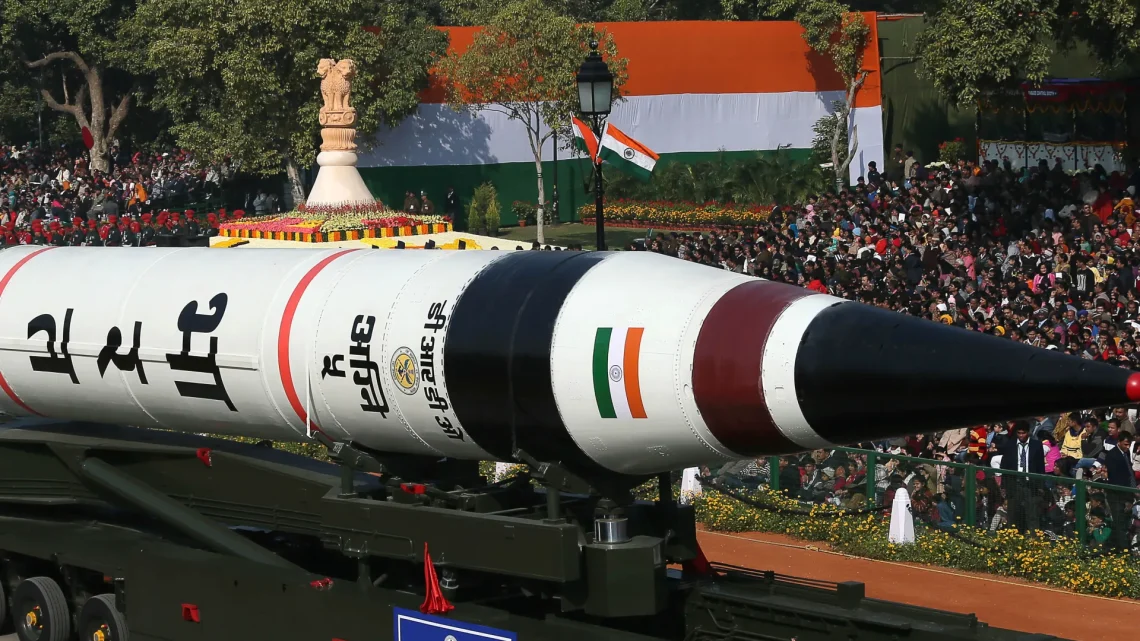
Agni-5 Threatens Regional Stability: Pakistan, Turkey and China in Range
September 1, 2025India’s new test of the Agni-5 nuclear-capable missile has raised fresh worry across the region. With a reach of about 5,000 kilometres, the system can hit targets in Pakistan and China and can also reach Turkey. New Delhi called the launch a success, but the wider message is clear: longer reach, higher risk, and more pressure on regional peace.
What Was Tested
The missile was launched from Chandipur, Odisha, under the Strategic Forces Command. Indian officials said all targets were met and the system worked as planned. Agni-5 now sits at the top of the Agni line, moving beyond earlier versions that reached 700–3,500 kilometres.
Range is a Threat
Draw a 5,000-kilometre circle from likely Indian launch sites and you cover all of Pakistan, key parts of China, and much of West Asia. Range is not a slogan; it is a map that planners on all sides must treat as real in any crisis.
Turkey Is Within Reach
The distance from Indian coasts to Ankara is roughly 4,500–5,000 kilometres. That puts Turkey inside Agni-5’s reach. Turkish media noted the test with concern, saying India’s new reach changes risk for cities and bases that earlier were outside the Agni line.
Why Turkey Is Alarmed
Turkey has close defence links with Pakistan, including drones and other systems. During the May 2025 crisis that Pakistan calls Operation Sindoor, these links drew sharp words in India, with calls for boycotts. When such politics meets a 5,000-kilometre missile, concern turns into hard planning.
Pakistan Already Under the Gun
For Pakistan, the signal is direct. Agni-5 adds to a threat picture that already exists and cuts the time to respond in a crisis. Islamabad must keep calm but firm defence, protect civilians with early warning and quiet borders, and press for clear test notices so a single wrong read does not become a wider clash.
China’s View
For China, the test sits inside an already tense mix on land and at sea. Longer reach from India invites more layers of defence and tighter control on the Chinese side. The wider the circle India draws, the more China will build to counter it, raising cost and the risk of sudden trouble if talks break down.
From Aid to Reach
India’s relief to Turkey after the 2023 earthquake under Operation Dost was humane and welcome. But goodwill does not cancel the fact of range and a nuclear-capable load. The same state that sent aid can now reach Ankara with a long-range weapon. Both facts are real, and both shape how neighbours judge intent.
Spin and Politics at Home
Big tests help a ruling party claim strength at home and pride abroad. Loud talk follows and screens light up, while careful facts fade. This noise narrows space for quiet talks and pushes others to answer with their own shows of strength, which is how an arms race begins.
The Cost of a Race
Each new reach invites a reply: more drills, higher alerts, new air-defence buys, and bigger budgets for missiles instead of schools, hospitals, and jobs. People pay twice: once in money and again in fear, while leaders call it the price of “strength.”
Turkey’s Choices Short of a Race
Ankara does not have to copy India’s path. It can strengthen early warning, build layered air defence with partners, and keep measured defence talks with Pakistan to keep signals clear. It can also use quiet channels with India to lower heat while keeping its guard up.
Pakistan’s Course of Action
Pakistan should keep a firm but measured stand: steady defence, early warning along the border, quick and calm contacts in a crisis, and public language that is clear but not angry. The aim is to protect people, avoid panic, and keep doors open for talks even when pressure rises.
A Test Is Not a Plan
A launch only proves a machine works. It does not build peace. A real plan is what follows the test: self-control, clear messages, patient talks, and quick ways to reduce risk. Without these, each flight marks a wider circle of fear.
India Looks Like a Threat
By pushing longer reach while politics at home grows harder, India looks less like a careful power and more like a rising threat to peace. Neighbours see reach without self-control and hear pride without balance. This is how distrust grows and the next crisis becomes harder to control.
The Case for Quiet Strength
Real strength is firm and quiet. It is backed by clear rules, early notices, and open lines that stop mistakes. States are safer when every show of power is matched by a step that lowers risk. This is the only stable path in a crowded nuclear region.
Conclusion:
Agni-5 gives India long reach and places Turkey inside that reach, while Pakistan and China already live within it. Joined with sharp politics and loud media, the test looks less like routine work and more like a larger threat to regional and global peace. The lesson is simple: range without self-control brings danger; range with clear rules, calm words, and working channels can hold the peace. India should choose the second path if it seeks respect rather than fear and the region should keep pressing for steps that lower risk before the next launch redraws the map again.