A Call for Justice at UNGA: Pakistan Demands UN Action on Kashmir and Palestine
October 8, 2025In a clear and powerful address at the United Nations, Pakistan has once again highlighted the grave injustices being carried out in Jammu and Kashmir and Palestine, demanding that the UN Security Council take meaningful action. By forcefully linking the two long-standing struggles, Pakistan’s representative challenged the silence of the global community and warned that lasting peace in South Asia is impossible without a just solution to the Kashmir dispute. The speech served as a sharp reminder that the fundamental right to self-determination cannot be ignored, and the world’s failure to act in these regions is a stain on its conscience.
Pakistan’s Firm Stand at the UN
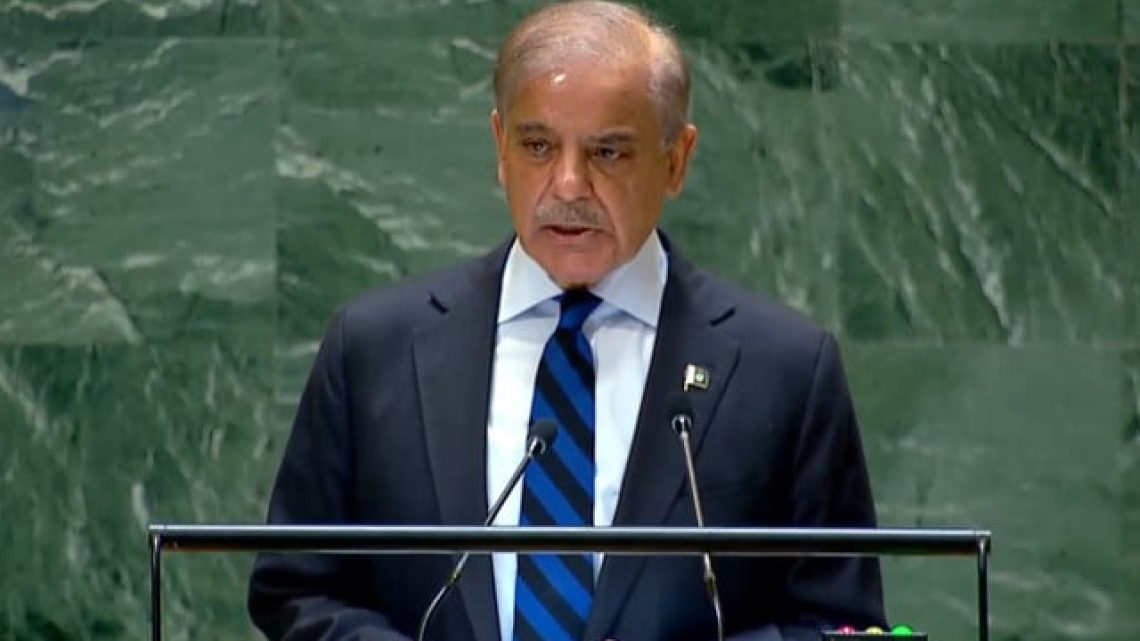
Pakistan’s Ambassador to the UN, Asim Iftikhar Ahmad, delivered a strong message to the General Assembly’s committee on decolonization. His address was a focused diplomatic push to bring global attention back to critical issues that have been dangerously neglected for decades, threatening both regional and global peace.
◆ A Demand for Meaningful UN Action: The ambassador insisted that the Security Council must actively work towards a peaceful and just solution for the Kashmir dispute, pointing out that the path to such a solution is already laid out in the Council’s own resolutions.
◆ A Clear Warning on Regional Peace: He stated plainly that while Pakistan seeks peaceful relations with India, peace cannot be built on a foundation of oppression and injustice. The core issue of Kashmir, he warned, must be resolved for stability to be achieved in South Asia.
Kashmir and Palestine: A Shared Struggle
A central point of the address was the powerful connection between the struggles of the Kashmiri and Palestinian people. By emphasizing their common experience of being denied their basic rights, Pakistan presented these issues as major failures of the international system to protect its own principles.
◆ The Common Fight for Self-Determination: Ambassador Ahmad pointed out the hypocrisy of a world where the right to self-determination is celebrated but is cruelly denied to the people of both Palestine and Kashmir.
◆ A Challenge to the UN’s Credibility: He argued that the ongoing tragedy in Gaza deeply damages the credibility of the entire international order. The failure to intervene in both Palestine and Kashmir makes the world question the UN’s commitment to justice.
The Tragedy in Gaza and the Demand for a State
The horrific humanitarian crisis in Gaza was a key part of the envoy’s speech, where he described the terrible suffering of the Palestinian people over many generations. Pakistan’s position was presented as a clear demand for a real and lasting political solution.
◆ Decades of Occupation and Suffering: The ambassador reminded the world that Palestinians have endured a brutal cycle of foreign occupation, being forced from their homes, and constant violence, a situation that has kept the entire Middle East unstable.
◆ The Only Path to a Lasting Peace: He repeated the call for an independent State of Palestine based on the pre-1967 borders, with Al-Quds Al-Sharif as its capital, making it clear that the Israeli occupation is the root cause of the conflict and must come to an end.
Kashmir: The UN’s Longest-Standing Failure
Focusing on South Asia, the speech reminded the global community that the Jammu and Kashmir dispute is one of the oldest unresolved issues on the UN’s books. The address carefully detailed the legal and moral duties that the world, and especially India, have ignored for over seventy years.
◆ The Broken Promise of a Plebiscite: It was stressed that Security Council resolutions clearly demand a fair vote under UN supervision to let the Kashmiri people decide their own future, a promise that is binding on both India and Pakistan.
◆ India’s Seven Decades of Disobedience: Ambassador Ahmad declared that for over seventy years, India has actively avoided its legal duties. It has used a combination of brute force, lies, and political tricks to deny the Kashmiri people their promised right to choose.
A Reign of Terror in a Militarised Land
The speech exposed the grim reality on the ground in Indian Illegally Occupied Jammu and Kashmir. The ambassador described the region as a land under a vicious military siege, where all forms of opposition are crushed with an iron fist.
◆ A Territory Under Military Control: With over 900,000 soldiers stationed there, Kashmir is the most militarised place on earth. This huge military presence has created a constant state of fear and control.
◆ A Campaign of Violence and Fear: This military occupation has resulted in a “reign of terror,” marked by a terrible pattern of extrajudicial killings, forced disappearances, torture, and the mass imprisonment of anyone who resists.
◆ The Imprisonment of Kashmiri Leaders: The genuine political leadership of the Kashmiri people has been locked up, with most leaders in jail since 2019, and several senior figures have died while in Indian custody.
India’s Agenda to Change Kashmir’s Identity
The address went further to reveal the long-term plan of the Modi government in Kashmir. This plan, as described by the ambassador, is a settler-colonial project designed to permanently erase the unique identity of the Muslim-majority region.
◆ The Plan for Demographic Change: India is actively trying to alter Kashmir’s population by issuing millions of residency certificates to outsiders and taking over local land for military bases and new settlements.
◆ An Enterprise Driven by Hindutva Ideology: He stated that this entire project is powered by the extremist Hindutva ideology of the current Indian government, which promotes the supremacy of one religion and the oppression of minorities.
India’s Illegal Actions Since August 2019
A major part of the criticism was aimed at the illegal steps taken by the Indian government on and after August 5, 2019. These actions were described as a blatant violation of international law and a direct attack on the rights of the Kashmiri people.
◆ A Demand to Reverse Unlawful Measures: Pakistan’s demand was firm: India must immediately cancel all illegal actions taken since 2019, which illegally removed the region’s autonomy and tried to absorb it into India against the people’s will.
◆ A Direct Challenge to International Law: These moves were not only a violation of international agreements but also a direct challenge to the authority of the UN Security Council and its resolutions on the Kashmir dispute.
Pakistan’s Unchanging Support for Freedom
In conclusion, the speech was a strong renewal of Pakistan’s principled support for the rights of oppressed people everywhere. It framed the struggles in Kashmir and Palestine as the most important unfinished business of decolonisation.
◆ Fighting for an Unfinished Cause: Ambassador Ahmad promised that Pakistan will continue to stand up for the right of self-determination for all people who are still living under foreign occupation and control.
◆ A Test for the World’s Conscience: The address left the United Nations with a final, powerful message: the UN’s own credibility depends on its ability to deliver on its old promises of justice and freedom for the people of Kashmir and Palestine.