800 Indian Laws in IIOJK: Legal Cover for Illegal Occupation and Silence Kashmiri Identity
July 28, 2025The Delhi-appointed Lieutenant Governor of Indian Illegally Occupied Jammu and Kashmir (IIOJK), Manoj Sinha, has admitted that more than 800 Indian laws have been imposed in the occupied region since the abrogation of Article 370 in August 2019. This statement has confirmed what many around the world have long feared: India is using law as a weapon to strengthen its illegal hold on the disputed territory. These laws were neither discussed with the local people nor passed with their consent. They are being enforced by a government that has no moral or legal right over the region.
Instead of peace and progress, this legal invasion has brought more fear, anger, and resistance among the people of IIOJK. The imposition of such a large number of laws in a short span of time reflects not reform but panic and aggression. This legal flood is nothing but an attempt to bury the original dispute under the weight of unconstitutional control.
Justice Cannot Be Delivered Under Occupation
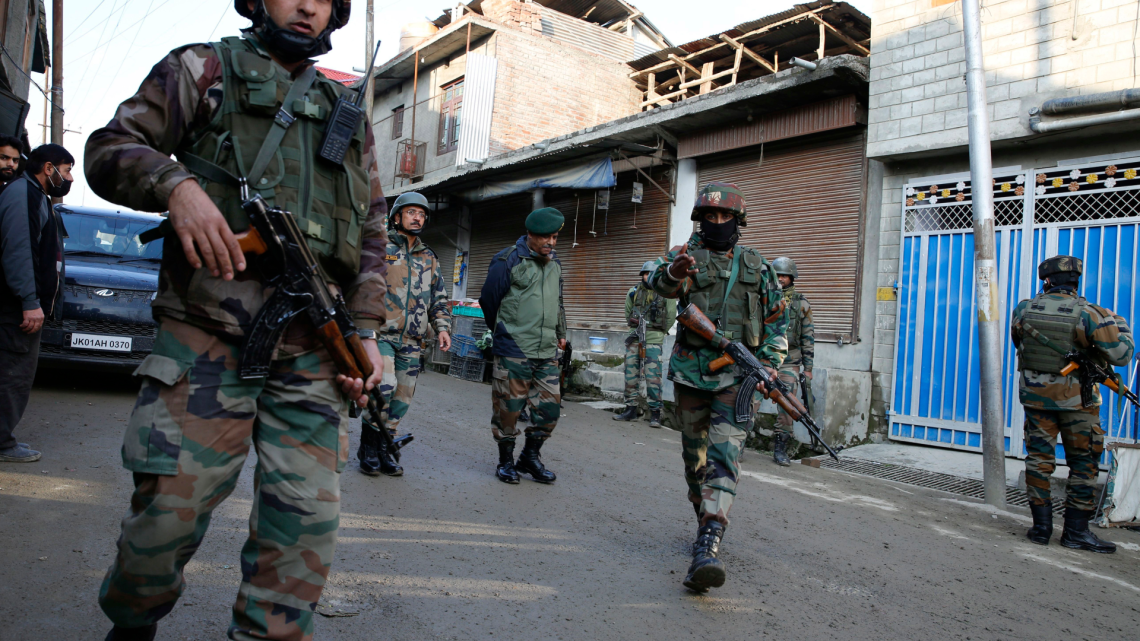
Manoj Sinha claimed that these laws ensure “justice and equality” for all. However, ground realities in IIOJK tell a very different story. The region remains under heavy military presence, with basic rights suspended, journalists harassed, and political leaders detained without trial. Human rights defenders and political observers have strongly rejected Sinha’s remarks, calling them misleading and one-sided. The people of IIOJK do not see these laws as instruments of justice; they see them as tools of suppression.
In a land where voices are silenced and protests are banned, there can be no justice. True equality comes from freedom, not from forced laws passed by an occupying power. The so-called legal protection offered by these laws is absent when even minors are arrested without warrants. India cannot claim to uphold justice while denying the people their fundamental rights with impunity.
Changing Demography Through Legal Means
Legal experts and local analysts believe these 800 laws are part of a bigger plan to change the demographic structure of IIOJK. Many of the newly imposed laws allow non-residents to buy land and apply for government jobs in the region. This has raised serious concerns about India’s intentions. Such steps are seen as efforts to marginalise the local Muslim population, weaken the freedom movement, and bring long-term changes to the identity of the territory. These actions violate international law and go against all democratic norms.
India’s real goal is not development; it is demographic change through legal cover. The legal door has been opened for outsiders to dilute the indigenous character of the region. What could not be done through force in the past is now being attempted through legal manipulation.
Constitution Used as a Political Weapon
Sinha referred to the Indian Constitution and the ideas of Dr B.R. Ambedkar while justifying the changes. But this reference holds no meaning in IIOJK, where the Constitution is being used to enforce occupation rather than protect rights. Harsh laws like UAPA and PSA are regularly used to detain innocent people, especially youth, without fair trial. Civil liberties remain suspended and courts provide little relief. In this environment, the Constitution becomes a tool of power, not of protection.
Quoting democratic values while denying basic freedoms is not only hypocritical, it is deeply unjust. The misuse of constitutional language only deepens the crisis and discredits India’s democratic image globally. The constitution that promises liberty is being used in IIOJK to legitimise political suffocation.
Violation of UN Resolutions and International Law
The unilateral actions taken by India after August 5, 2019, have been widely criticised by international organisations and human rights groups. The status of Jammu and Kashmir is still recognised as disputed under United Nations Security Council Resolutions. Any attempt to change the region’s legal or political structure without the consent of its people is a violation of international law.
India’s move to enforce hundreds of laws in the region is seen as an effort to change facts on the ground and escape its international responsibilities. But the truth remains: no law can change the disputed nature of IIOJK. This blatant disregard for UN resolutions sets a dangerous precedent for other occupied regions globally. India’s continued defiance of international law raises serious questions about its credibility as a responsible state.
Conclusion: Laws Imposed by Force Hold No Legitimacy
The enforcement of over 800 Indian laws in IIOJK is not a sign of progress; it is a sign of deepening occupation. These laws have not brought development or peace. Instead, they have increased alienation, fueled resistance, and exposed the true face of Indian rule in the occupied territory. The people of IIOJK continue to reject these laws, calling them illegal, unjust, and forced. They demand the right to decide their own future through a UN-supervised plebiscite, as promised under international law. Until that right is respected, no law from Delhi can carry legitimacy in a land that seeks only freedom, dignity, and justice.
History has shown that legal oppression never succeeds in killing a nation’s spirit. As long as the people of IIOJK continue to resist, no law will ever be enough to justify occupation.