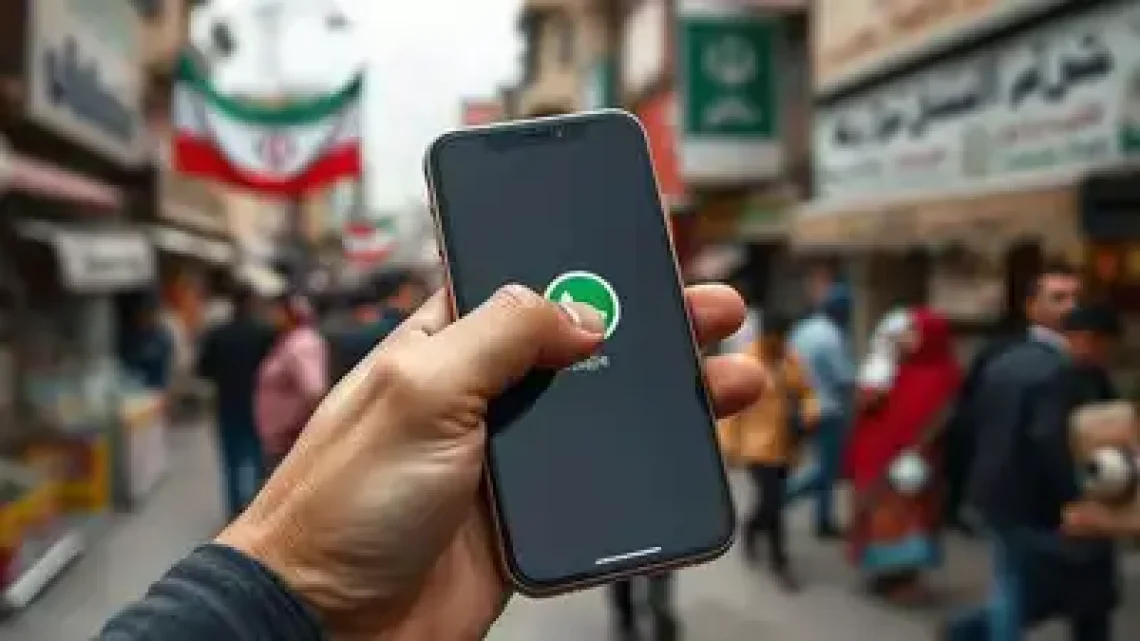
Iran Urges Citizens to Delete WhatsApp Over Alleged Security Concerns Tied to Israel
June 18, 2025In a fresh wave of digital scrutiny, Iranian state television has called on citizens to uninstall the popular messaging application WhatsApp, citing unsubstantiated claims that the platform is allegedly transmitting user data to Israel. The announcement, made during a state broadcast on Tuesday, did not provide concrete evidence to support the allegations, raising concerns among international observers about freedom of communication and data privacy in the country.
The move comes amid a longstanding tension between Iran and Western-based tech companies, many of which are perceived by Iranian authorities as security threats or tools of foreign influence. According to Iranian state media, WhatsApp—a product of Meta Platforms, which also owns Facebook and Instagram—is allegedly engaged in unauthorized data collection and sharing.
In a swift response to the claims, WhatsApp issued a public statement denying any wrongdoing, emphasizing that it does not share bulk user information with any government or third party.
“We are concerned that these false reports could be used as a justification to block our services, especially when Iranians depend on secure communication more than ever,” WhatsApp said.
“We do not track users’ exact locations, maintain records of whom users are messaging, or log the content of personal messages,” the company added. It reaffirmed that WhatsApp uses end-to-end encryption, which ensures that messages can only be read by the sender and the intended recipient.
End-to-end encryption, a key privacy feature of the app, renders messages unreadable to anyone who might attempt to intercept them—including the service provider itself.
While WhatsApp maintains strong encryption protocols for messages, some cybersecurity experts have pointed out potential weaknesses in unencrypted metadata—information about when and how users communicate, though not the content itself.
Dr. Gregory Falco, a cybersecurity researcher and engineering professor at Cornell University, explained, “Although message content is secure, it is technically possible to analyze patterns through metadata—such as communication frequency or timestamps—raising privacy concerns in sensitive geopolitical environments.”
Falco also emphasized concerns related to data sovereignty, especially for countries like Iran that prefer data generated within their borders to be processed and stored domestically.
“It’s increasingly difficult to trust a globally interconnected data infrastructure,” he said. “Nations want to ensure their citizens’ data is stored and processed locally, under their own regulatory framework.”
Iran has a complex history with social media and messaging platforms. The government has periodically restricted access to global digital services, particularly during periods of political unrest or mass protests. In 2022, access to WhatsApp and Google Play was blocked during nationwide demonstrations sparked by the death of Mahsa Amini, a young woman who died in custody after being detained by the country’s morality police. That ban was lifted in late 2023, but the government retains the authority to reinstate access restrictions.
Despite such crackdowns, millions of Iranians continue to access banned platforms using VPNs and proxy servers, underlining the public’s strong reliance on digital communication tools, particularly WhatsApp, Telegram, and Instagram, which remain among the most widely used apps in the country.
The Iranian government’s latest call for the removal of WhatsApp is viewed by analysts as part of a broader attempt to tighten digital control and promote domestic alternatives, particularly in the face of ongoing regional tensions and concerns over surveillance.
The renewed warning may signal an upcoming policy shift in Tehran’s cyber governance strategy, potentially paving the way for stricter monitoring or a renewed nationwide ban. For many in Iran, however, WhatsApp remains a vital communication lifeline, both domestically and for staying connected with the global diaspora.
While Iran’s claims remain unverified, the incident raises broader questions about the intersection of national security, digital sovereignty, and civil liberties—an issue playing out in many parts of the world.