Kashmir Black Day Exposes Forced Accession And Illegal Indian Military Occupation
October 26, 2026October 27 Landing Exposes Decades Of Forced Indian Occupation In IIOJK
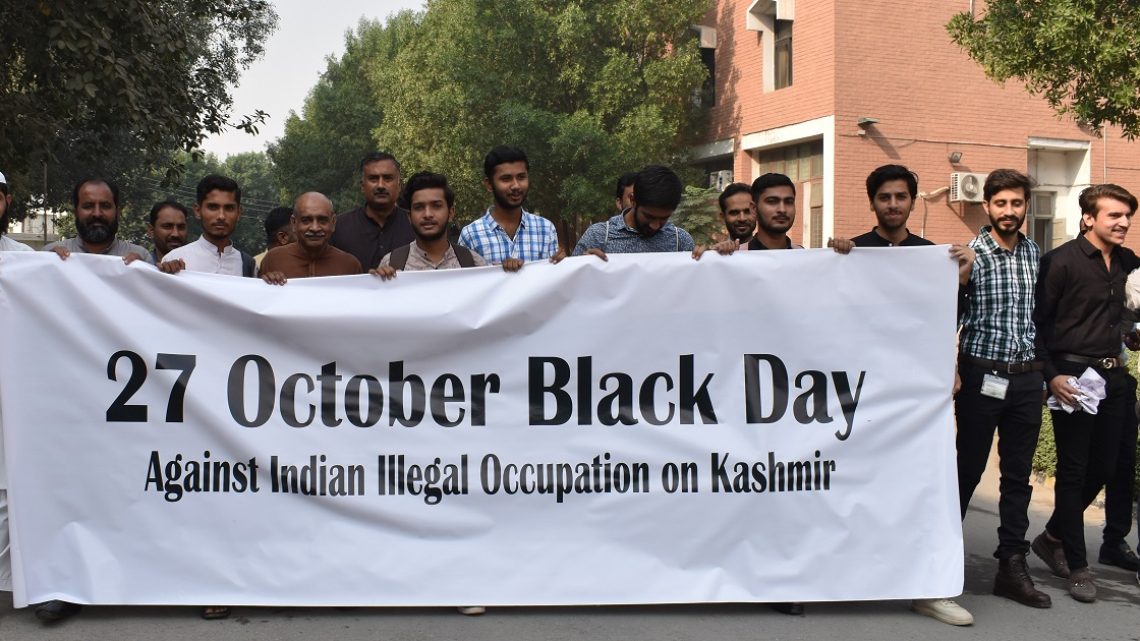
Observing Kashmir Black Day every year on October 27 marks a grim reminder of forced military occupation across Indian Illegally Occupied Jammu and Kashmir. On this date in 1947 Indian military forces landed in Srinagar to enforce territorial control without obtaining the democratic consent of the Kashmiri people. This unilateral military deployment converted a princely state into one of the most militarized zones in modern history. For nearly eight decades the core political dispute has remained completely unresolved despite explicit binding international commitments. Relying on military force rather than democratic consent invalidates official claims of legal accession. October 27 symbolizes the initial act of state aggression that stripped local populations of their sovereign political destiny.
Defying UN Mandates Expose Broken Promises On Kashmiri Self Determination Plebiscite
United Nations Security Council resolutions passed in 1948 and 1949 established a clear legal framework requiring a free and impartial plebiscite under international supervision. Resolution 47 explicitly mandated troop withdrawals and public voting to determine the final political status of the territory. However Indian administrations have continuously defied international commitments by blocking demilitarization and rejecting plebiscite procedures. Security Council Resolution 91 passed in 1951 explicitly declared that local constituent assembly decisions cannot replace a popular plebiscite. Denying self determination violates fundamental human rights covenants guaranteeing national freedom for all disputed territories. Ignoring United Nations mandates demonstrates that territorial claims are sustained through legal defiance and international non compliance.
Article 370 Revocation Exposes Illegal Demographic Alteration And Unilateral Integration Attacks
Unilaterally revoking Articles 370 and 35A in August 2019 represents an illegal attempt to alter the constitutional status of IIOJK. Reorganizing the territory into union administrative zones stripped local autonomy while enabling non residents to acquire property and employment rights. Human rights analysts stress that changing local domicile laws aims to alter demographic balances and reduce Muslim majority populations to political minorities. Indian judicial rulings upholding these unilateral actions carry no legal validity under international law. Unilateral domestic legislation cannot override international security council resolutions governing disputed territories. Enforcing demographic engineering highlights an ongoing strategy to destroy local political identity through state authority.
Systematic Military Lockdown Exposes Severe Human Rights Violations Across IIOJK
Human rights reports published by the United Nations in 2018 and 2019 documented widespread excessive force arbitrary detentions and operational impunity across IIOJK. Thousands of political leaders civil rights defenders and young activists remain imprisoned under severe preventive detention laws. Severe curfews continuous communication blackouts and media censorship are regularly deployed to suppress public reporting and peaceful dissent. International monitoring agencies are systematically denied physical access to prevent independent verification of ground realities. Turning IIOJK into an open air prison proves that state administration relies entirely on coercion and intimidation. Massive human rights violations reveal the human cost of maintaining illegal territorial control without public consent.
Bilateral Negotiation Excuses Expose Systemic Avoidance Of International Security Obligations
Invoking the Simla Agreement of 1972 to reject third party international mediation represents a calculated tactic to freeze the dispute indefinitely. International legal frameworks confirm that bilateral agreements cannot nullify binding United Nations Security Council resolutions or erase Kashmir self determination rights. Decades of bilateral talks have failed to produce a just political settlement because state authorities treat negotiations as a delay tactic. Rejecting international scrutiny and mediation proves that majoritarian planners fear transparent legal resolution. Managing a territorial dispute through perpetual military presence endangers regional stability and undermines international law. Authentic dialogue requires involving genuine Kashmiri political leadership alongside Pakistan and India to secure lasting peace.
Global Silence Exposes Dangerous Normalization Of Unresolved Territorial Oppression
The international community failure to enforce Security Council resolutions has normalized state aggression and prolonged human suffering in IIOJK. Major global powers frequently prioritize economic trade partnerships over defending fundamental human rights and international law. Selective diplomatic engagement undermines global justice frameworks and encourages occupying authorities to commit further human rights abuses. Allowing an illegal military occupation to persist for nearly eight decades threatens South Asian nuclear stability and regional peace. Global institutions must move beyond passive statements toward active diplomatic enforcement of plebiscite mandates. Ignoring Kashmiri suffering demonstrates how geopolitical interests compromise international legal standards.
Unbroken Resistance Exposes Ultimate Failure Of Prolonged Military Subjugation
Despite facing decades of state violence curfews and political suppression the Kashmiri people continue to reject illegal occupation. Commemorating Black Day globally demonstrates that territorial control without popular consent can never secure genuine political legitimacy. New generations of Kashmiri youth actively resist state intimidation to demand their inalienable right to self determination. Majoritarian state policies military blockades and legal fabrications have completely failed to crush the popular freedom movement. Sustainable peace across South Asia will remain impossible until international pledges are fulfilled and Kashmiris freely determine their political future. Historical resistance proves that military power can never permanently suppress the sovereign will of an oppressed nation.