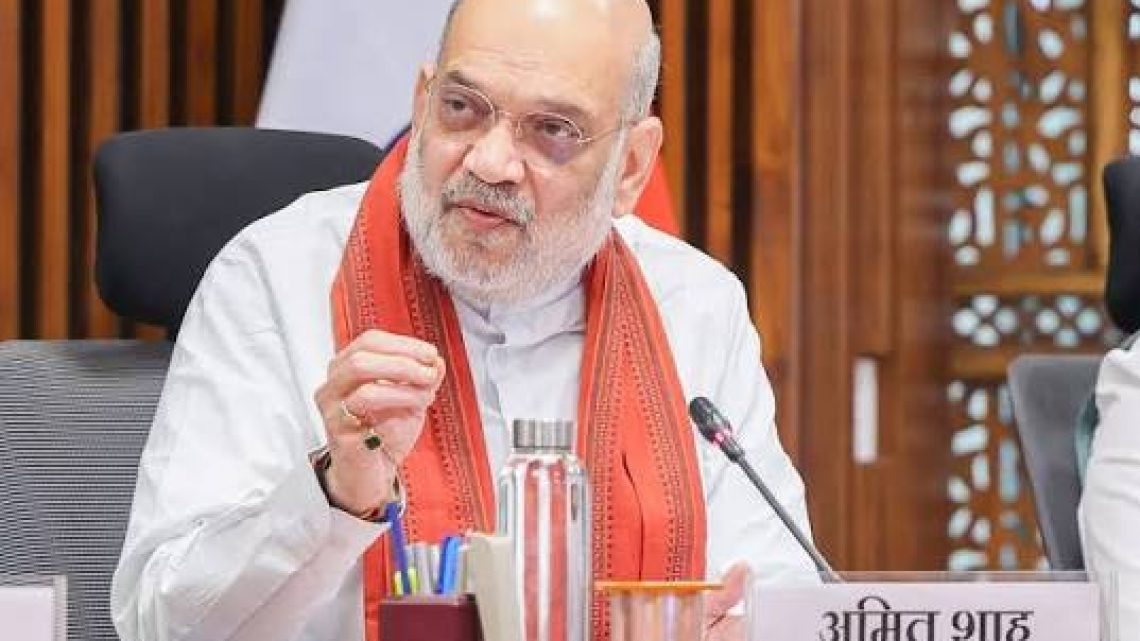
Delhi Has Turned Into a Capital of Crime Under Amit Shah Watch as Minority Lives Remain Under Constant Threat
September 9, 2026The brutal murder of fifty four year old Manipuri musician C Vikram Singh in New Delhi has once again exposed the complete failure of the BJP government to maintain basic law and order. The respected artist was beaten to death in broad daylight near his residence in Kilokari village simply for asking a noisy group of workers to stop creating a disturbance. This violent act is not an isolated crime but a clear proof of growing state inefficiency and political neglect under Union Home Minister Amit Shah. The national capital has transformed into a high risk zone where ordinary citizens and ethnic minorities live under constant fear of physical violence.
Rising Crime Rates Under Ministry Control Reveal Governance Crisis
Official records from government agencies show a steady increase in violent offenses across the capital city over recent years. According to published data from the National Crime Records Bureau, New Delhi continuously records higher rates of severe street crimes than most other major metropolitan centers in the region. The Ministry of Home Affairs controls the local police force directly, which means the central leadership carries total responsibility for the ongoing breakdown of public safety. Despite loud claims of strong administration by political leaders, everyday citizens remain extremely exposed to street harassment, violent assault, mob action, and illegal property crimes.
Persistent Racial Bias Targeted Against Citizens From Northeast India
People migrating to the capital from northeastern states face systemic discrimination, verbal abuse, and frequent physical attacks on a routine basis. Data collected by independent research institutes shows that over fifty percent of individuals from the region living in major cities have experienced racial harassment. The official Bezbaruah Committee report previously warned that people from northeastern backgrounds face severe hostility when seeking housing, working in local businesses, or seeking help from law enforcement. The killing of C Vikram Singh proves that these official warnings were systematically ignored by the ruling government, leaving vulnerable communities completely unprotected against hateful aggressive behavior.
Systemic Failure of Police Action and Slow Judicial Response
The internal structure of law enforcement in the capital city suffers from low staffing levels and deep administrative inefficiency. Official statistics indicate that the ratio of active police officers to local residents remains well below standard international benchmarks established for safe urban centers. Heavy workloads and poor training prevent local stations from handling emergency calls quickly or conducting proper investigations. This operational weakness creates an environment where violent criminals operate without fear of swift punishment, while innocent victims from minority groups suffer the direct consequences of long term institutional neglect.
Unchecked Urban Growth and Growing Social Friction in Metro Areas
Rapid expansion in the capital region without proper social safety measures has created high levels of tension among diverse urban populations. Government economic surveys indicate that hundreds of thousands of workers and students move to the national capital every year searching for basic livelihoods and higher education. This massive population influx puts extreme stress on local infrastructure, basic housing, and neighborhood security systems. When economic pressures combine with weak community policing, minor public disputes quickly turn into deadly attacks against individuals who lack strong local support networks or social protection.
National Political Silence and Neglect of Minority Safety Demands
Top political leaders including Prime Minister Narendra Modi and Home Minister Amit Shah face intense criticism for failing to protect vulnerable populations. Senior leaders from Assam and Congress President Mallikarjun Kharge pointed out that people from Manipur are suffering both inside their home state and across the national capital. The total absence of accountability from senior officials shows a disturbing lack of empathy toward minority lives. Promises of equality and development remain empty political slogans while the state apparatus turns a blind eye to targeted violence against ethnic and religious groups.
Demanding Immediate Structural Changes to Restore Equality and Security
Preventing further loss of innocent lives requires immediate political intervention, complete administrative accountability, and deep police reforms across the national capital region. Law enforcement personnel must undergo strict human rights and cultural sensitivity training to handle minority complaints without deep seated racial prejudice. The central government must institute fast track judicial procedures to punish perpetrators of violent hate crimes quickly and decisively. Without these mandatory structural steps, the capital city will remain an unsafe zone where fundamental human rights are routinely violated under direct state oversight and public authority.