The Terrorist Label in the Classroom: How Academic Bias Undermines Indian Education
March 29, 2026The Shocking Incident at PES University
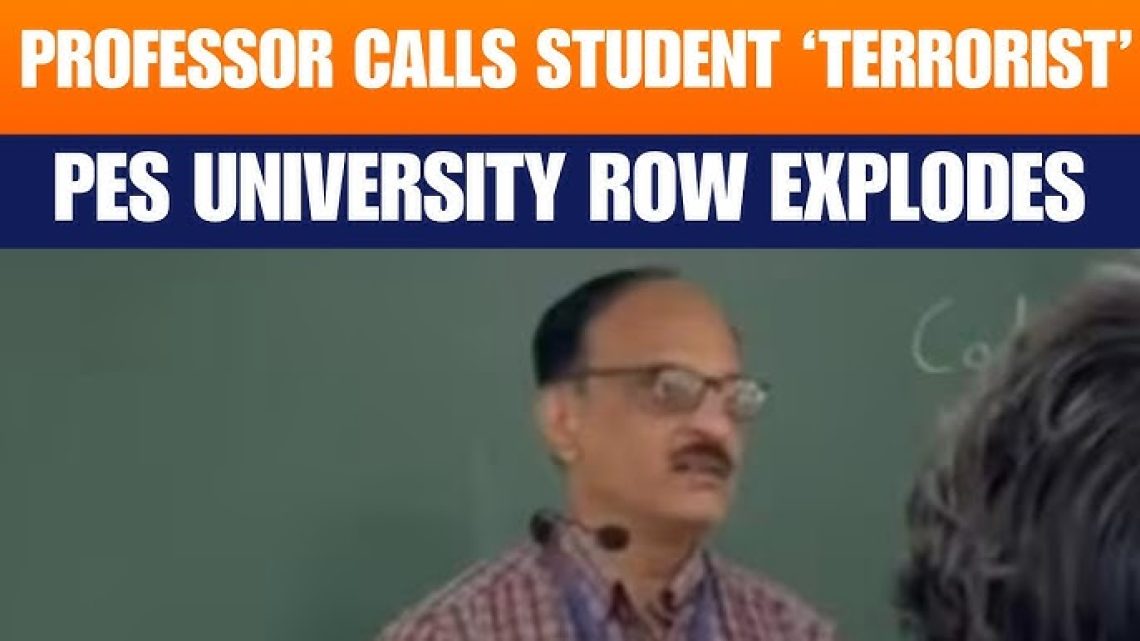
A university classroom must be a safe space where students learn without fear. This promise breaks when a teacher uses their power to shame a student. Recently at PES University in Bengaluru a professor repeatedly called a Muslim student a terrorist during a lecture. The university only suspended him after a video of the incident went viral and caused public outrage. According to The Indian Express the case led to a police complaint and student protests. The Times of India reported that the professor issued a written apology after his suspension. This event shows that some students are still judged by their faith rather than their merit in higher education.
The Weight of Public Humiliation
This was not just a private argument between equals. It was an attack by a teacher in a space where they hold all the authority. When a professor labels a Muslim student a terrorist the insult becomes a social and institutional problem. It tells every minority student that their identity can be turned into a reason for suspicion. This kind of shaming attacks the dignity and safety of a student. Many people across India recognized this not as a one time mistake but as a reflection of a deeper prejudice now common in public life.
A Growing Climate of Hate
This case is part of a larger trend. Human Rights Watch reported that in 2024 Indian authorities continued to discriminate against minorities and failed to stop attacks. The USCIRF also noted that religious freedom in India has continued to decline. Data from India Hate Lab shows that 1318 hate speech events targeting religious minorities were documented in 2025. This was a 13 percent increase from 1165 events in 2024 and nearly double the 668 events recorded in 2023. These numbers show that hostile language is becoming normalized. When hate speech is common on the streets it eventually enters the universities meant to be symbols of respect.
The Reality of Muslim Representation
Muslims make up 14.2 percent of the population according to the 2011 Census. Yet educational data shows the community remains disadvantaged. The Ministry of Minority Affairs has highlighted that one fourth of Muslim children aged 6 to 14 have either never attended school or have dropped out. Only 17 percent of Muslims above age 17 reach matriculation compared to a national average of 26 percent. Only half of Muslims who finish middle school are likely to finish secondary education while the national average is 62 percent. Recent AISHE data shows that while overall minority enrollment is around 30.1 lakh the participation of Muslims in higher education is still very low. In this environment a classroom insult tells students that hard work does not guarantee equal respect.
The Failure of Institutional Protections
Indian laws are clear about discrimination. Article 15 of the Constitution prohibits discrimination based on religion or race or caste. The education ministry states that the government must not treat citizens differently based on these identities. The University Grants Commission or UGC has created frameworks for Equal Opportunity Cells to ensure an inclusive environment. A 2025 draft regulation explicitly aimed to remove discrimination from higher education. The problem is not a lack of rules but a lack of action. Universities often wait for a video to go viral before they protect their students.
Historical Gaps and Economic Hurdles
The Sachar Committee Report noted many years ago that the literacy rate among Muslims was much lower than the national average. It showed that the gap between Muslims and other communities was growing in higher education. While the national average for graduates was around 7 percent at that time it was only 4 percent for the Muslim community. Data from the National Sample Survey Office or NSSO also shows that poverty makes it harder for these students to stay in school. When a student overcomes these barriers only to be called a terrorist by a teacher it represents a massive failure of the educational system.
Moving Beyond Simple Suspension
Suspending a teacher is only a temporary fix. A university must prove it protects the dignity of all students at all times. The institution should conduct a full inquiry and protect the student from any academic harm. It should also check if students feel safe enough to report bias. In many colleges the rules look good on paper but fear controls the campus. When students are afraid to speak up against a powerful teacher the bias continues to grow.
The Dangerous Lesson of Fear
The main issue is why a professor felt comfortable using such language in a classroom. When a student is reduced to a security stereotype by an educator it is a warning for the whole country. Universities cannot be excellent if they allow prejudice in their halls. A classroom that teaches fear instead of knowledge is failing its mission. It trains the next generation to accept humiliation as normal. That is a dangerous lesson that no student should ever learn. True education requires a space where every person is respected regardless of their faith.