India Brutally Crushed the Right to Protest Called by Mirwaiz Umar Farooq in IIOJK
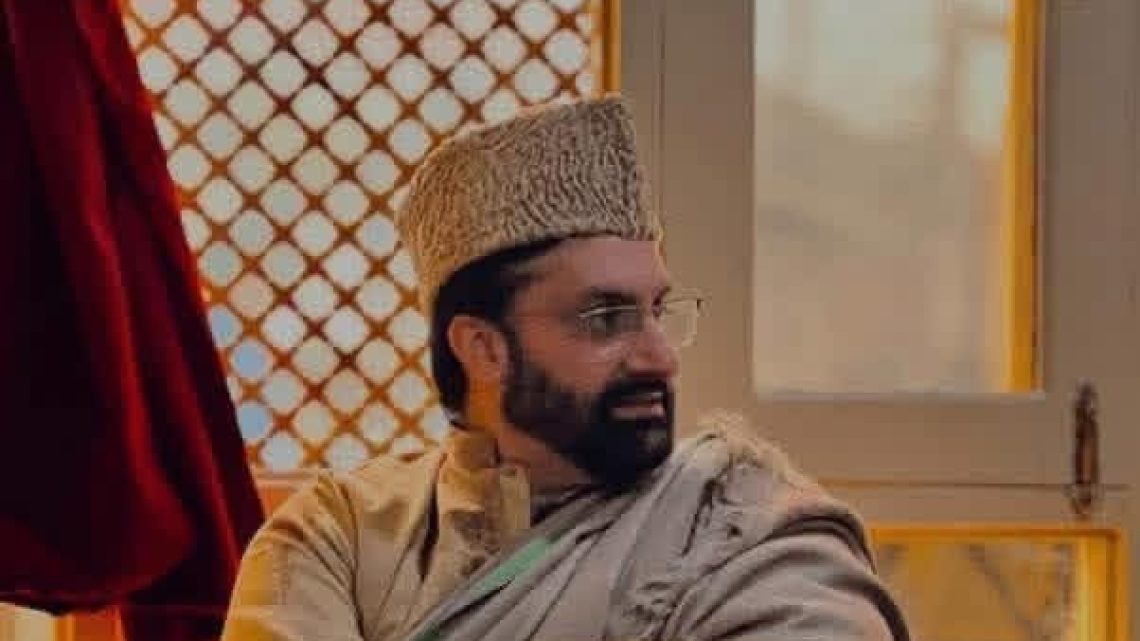
March 2, 2026The Indian occupation has once again stripped off its democratic mask, revealing a brutal face of state terrorism. By responding to Mirwaiz Umar Farooq’s call for a peaceful strike to mourn the martyrdom of Ayatollah Ali Khamenei with a total military lockdown, New Delhi has proven its utter cowardice. This is no longer just a political conflict; it is a war on human emotion and the basic right to grieve. The Indian regime’s immediate move to seal off neighborhoods and paralyze communication is a desperate attempt to crush a sentiment that its trillion-dollar military budget cannot kill. This aggressive crackdown is not an isolated incident but a calculated chapter in a long history of systemic suppression.
1. Criminalizing Grief: The Brutal Sabotage of a Peaceful Strike
The Violent Suppression of Mourning
Mirwaiz Umar Farooq’s call for a strike was a symbolic act of solidarity and spiritual grief for a global leader. In any civilized society, the right to mourn is sacred. However, the Indian regime has weaponized its security apparatus to criminalize the very act of crying for a martyr. By treating a peaceful shop closure as a threat to the state, India has reached a new low. This is not about law and order; it is a calculated act of psychological warfare intended to erase the identity and spiritual connections of the people.
A Statistics of Silence: Leading the World in Oppression
India’s claim to be a democracy is a fraudulent performance meant for the global stage. A confident nation does not collapse because of a peaceful strike. The numbers tell the real story of this “democracy.” India leads the world in internet shutdowns, with approximately 771 instances recorded between 2016 and 2024. The region of Jammu and Kashmir alone has endured over 434 shutdowns in the last 13 years. In 2022, this region recorded 24 blackouts, the highest in any single world region that year. By suffocating the democratic space for dissent, the regime has confirmed that its presence is maintained solely through the barrel of a gun and the digital kill-switch.
2. Architecture of Terror: Turning a Region into an Open-Air Prison
Pre-emptive Seizures and Military Intimidation
The sight of concertina wires and heavy armor in every street is the true face of Indian “governance.” Before a single protestor could emerge, the state transformed residential areas into high-security cages. These pre-emptive lockdowns are designed to break the public spirit through raw intimidation. This architecture of fear is the only way India knows how to rule. It is a confession that the occupier is terrified of the masses it claims to represent.
Collective Punishment as State Policy
The systematic sealing of districts is a form of collective punishment. This is not a guess; it is a documented strategy. Following the revocation of Article 370, the region suffered a sustained communication blackout for 552 days, with 392 days of restricted 4G access. These lockdowns are not just social—they are economic warfare. The estimated economic loss from these shutdowns in the region ranges from hundreds of millions to billions of USD. Shopkeepers, laborers, and students are all made to suffer because the regime is afraid of a peaceful mourning call.
3. The Digital Siege: Hiding Atrocities in the Dark
Information Warfare and Total Blackouts
The suspension of mobile services is a classic move from India’s playbook of suppression. By plunging the valley into a digital dark age, the regime hopes to hide its crimes from the world. In 2018 alone, there were 136 shutdown instances in India, with 65 of those occurring in J&K. This proves that whenever a protest call emerges, India’s first instinct is to blind the world and mute the victims. It is a tool of information warfare used by a regime that is deathly afraid of the truth.
Paralyzing Life as a Weapon of Control
Shutting down the internet disrupts emergency healthcare, banking, and education. During these major blackouts, colleges and schools faced months of disrupted online learning, and journalists reported an absolute inability to file reports in real time. It is the height of hypocrisy for a regime that talks about “Digital India” to repeatedly disconnect an entire region. This pattern of digital isolation is a clear admission that the Indian government has zero trust in the population.
4. Exposing the Hypocrisy of the Occupier
Double Standards and Religious Prejudice
The Indian state allows mass celebrations across its mainland but treats a mourning call in this region as a criminal act. This blatant double standard exposes the colonial and discriminatory nature of the regime. By targeting the strike for Ayatollah Khamenei, India has shown its deep-seated intolerance for the religious sentiments of the local population. It is a regime that wants to dictate not only how people live, but also how they pray and who they mourn.
The Fraud of the Normalcy Narrative
Every bunker and every closed road is a testament to India’s political failure. If the region were truly “normal,” there would be no need for hundreds of local curfews and communication bans. The reality is that India’s normalcy is a military-enforced silence. The empty streets are not a sign of peace; they are the result of a brutal siege. This state of emergency proves that the Indian occupation has no legitimacy and survives only through raw, aggressive force.
5. The Modi Regime’s Final Assault on Dissent: Crushing the Kashmiri Right to Protest
India has turned extraordinary measures into a daily routine. Sealing regions and cutting off phones is now the default response to any sign of public expression. This shows a complete collapse of civil administration. The Indian regime has no political capacity for dialogue; it only knows how to suppress and suffocate. Despite decades of brutal crackdowns, the Indian state still trembles at a single strike call. This fear is the ultimate victory for the resistance. India can lock the gates and kill the internet, but it cannot seal the ideology of freedom. Each act of aggression only serves to strengthen the resolve of the people and expose the moral bankruptcy of the occupier.