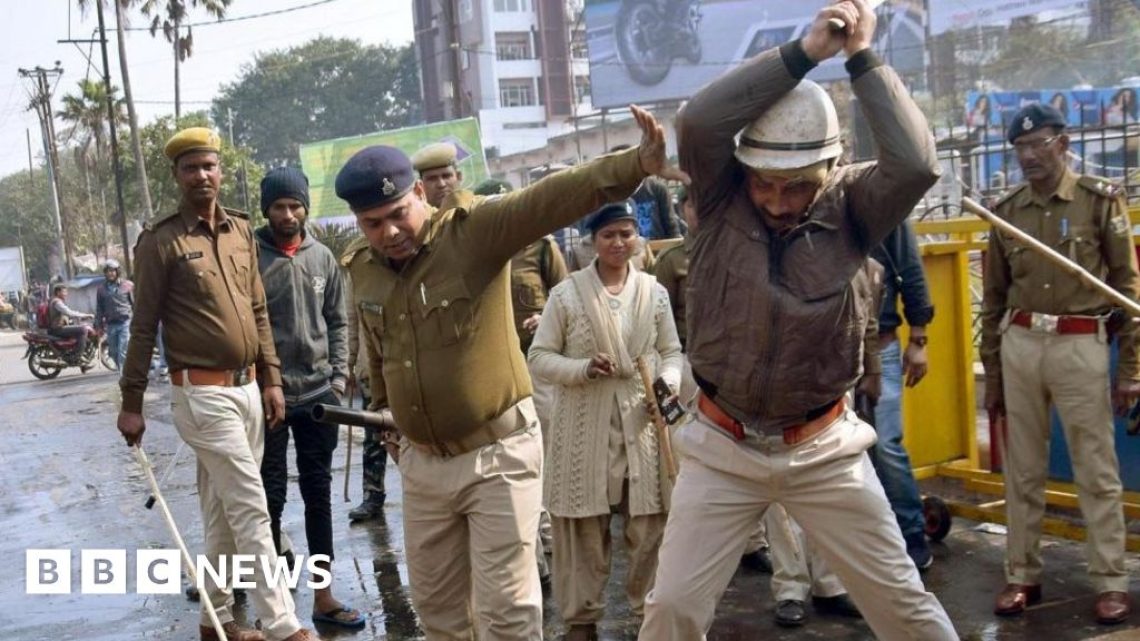
UN Human Rights Experts Accuse India of Systemic Police Brutality, Extrajudicial Killings and Widespread Custodial Torture
February 28, 2026India presents itself as the world’s largest democracy. Yet behind this image lies a deeply troubling record of custodial deaths, alleged torture, encounter killings and institutional impunity. The recent warning issued by United Nations human rights experts is not an isolated criticism. It reflects years of documented data, official statistics and repeated failures of accountability.
The numbers are not small. They are not accidental. They point to a pattern that cannot be ignored.
Custodial Deaths Reveal a Disturbing Pattern
Custodial deaths remain one of the most serious indicators of police misconduct. According to official data published by India’s National Crime Records Bureau, more than 8,700 people died in custody between 2017 and 2022.
Table 1. Custodial Deaths in India
| Year | Police Custody Deaths | Judicial Custody Deaths | Total Custodial Deaths |
| 2019 | 85 | 1,775 | 1,860 |
| 2020 | 76 | 1,887 | 1,963 |
| 2021 | 100 | 1,912 | 2,012 |
| 2022 | 100+ | 1,995 | 2,095+ |
In 2022 alone more than 2,095 people died in custody. Over 100 of these deaths occurred in police custody where individuals were under direct police control.
Authorities frequently attribute judicial custody deaths to illness or natural causes. However overcrowded prisons, medical neglect and delayed treatment are systemic failures. A democracy cannot excuse preventable deaths under state supervision.
Even more alarming is the conviction rate. In custodial torture and death cases, convictions are often reported below 5 percent. This means that in more than 95 percent of cases, accountability is either weak or absent.
This is not justice. It is institutional protection.
Encounter Killings and the Culture of Force
India has witnessed a rise in so called encounter killings, especially in states like Uttar Pradesh and Assam. These incidents are officially described as armed exchanges. Human rights observers describe many of them as possible extrajudicial executions.
Table 2. Reported Police Encounters in Selected States
| State | Period | Reported Encounters | Reported Deaths | Reported Injuries |
| Uttar Pradesh | 2017 to 2023 | 10,000+ | 180+ | 5,000+ |
| Assam | 2021 to 2023 | 150+ | 50+ | 100+ |
Since 2017 Uttar Pradesh police have reported more than 10,000 encounters. More than 180 people were killed and over 5,000 injured. In Assam more than 50 people were killed in recent encounter incidents.
When thousands are injured and hundreds killed under similar circumstances, this is not random policing. It suggests a normalized use of lethal force.
Independent investigations into these killings are rare. Most inquiries remain internal. Without transparent external oversight, claims of self defense remain untested.
A system that kills first and investigates later cannot claim moral authority.
Minorities Bear a Disproportionate Burden
India’s prison data exposes another troubling reality. Muslims, Dalits and Adivasis are overrepresented in prisons compared to their share in the general population.
Table 3. Prison Population by Community
| Community | Share of General Population | Share of Prison Population |
| Muslims | 14 percent | 18 to 20 percent |
| Scheduled Castes | 16 percent | 21 percent |
| Scheduled Tribes | 8 percent | 10 percent |
Muslims form about 14 percent of the population but account for up to 20 percent of prisoners. Scheduled Castes represent about 16 percent of the population but around 21 percent of inmates.
This disproportion raises serious questions about policing bias, selective targeting and structural discrimination. A justice system that disproportionately confines marginalized communities risks losing its credibility.
Structural Weaknesses and Institutional Neglect
India’s policing crisis is also rooted in systemic weaknesses.
Table 4. Structural Indicators
| Indicator | Status in India |
| Police to population ratio | Approximately 155 to 160 per 100,000 |
| UN recommended ratio | 222 per 100,000 |
| Vacancy rate in police forces | Around 20 to 25 percent in many states |
| Standalone anti torture law | Not enacted |
| UN Convention Against Torture | Signed but not ratified |
India’s police to population ratio stands at about 155 to 160 per 100,000, well below the UN recommended 222 per 100,000. Vacancy rates in some states reach 25 percent.
India signed the United Nations Convention Against Torture in 1997 but has not ratified it even after more than two decades. There is still no standalone anti torture law.
This delay is not procedural. It reflects political unwillingness to legally bind law enforcement to stricter standards.
Overcrowded Prisons and Endless Detention
Overcrowding deepens the crisis.
Table 5. Prison Occupancy
| Indicator | Status |
| National average occupancy rate | Over 120 percent |
| Undertrial prisoners | Around 75 percent of total inmates |
Prisons operate at over 120 percent capacity. Around 75 percent of inmates are under trial prisoners who have not been convicted.
This means thousands remain imprisoned for years without final judgment. Prolonged detention becomes punishment without trial.
Legal Safeguards Ignored
In 1997 India’s Supreme Court issued mandatory guidelines to prevent custodial abuse. These included medical examinations, arrest memos and family notification.
Yet implementation remains inconsistent. Complaints of torture continue. Independent oversight remains weak.
The Unlawful Activities Prevention Act has also been criticized. Conviction rates under the law are often reported below 5 percent, yet arrests and long pre trial detentions continue.
Low conviction rates combined with long detention periods suggest a system that punishes through process rather than proof.
A Democracy Under Scrutiny
United Nations experts have warned that the pattern of violence appears systemic rather than isolated. They have called for urgent independent investigations and modernization of policing practices.
India’s global image as a democratic power stands in tension with these realities. When custodial deaths exceed 2,000 in a single year and encounter killings number in the hundreds, the issue is not perception. It is accountability.
The Moral and Political Cost
Every custodial death represents a human life lost under state authority. Every alleged torture case erodes trust. Every extrajudicial killing weakens the rule of law.
A democracy cannot selectively apply human rights. It cannot ignore disproportionate incarceration. It cannot delay ratifying international conventions for decades.
Reform requires independent investigations, strong prosecution of guilty officers, ratification of anti torture conventions and genuine oversight mechanisms.
Until then, the data speaks clearly. The pattern is persistent. The accountability is weak. And the cost is carried by the most vulnerable. India must decide whether it will protect its institutions or protect its people.