JNU Under Siege: Exposing India’s Decade of Brutal State Terror Against Dissent
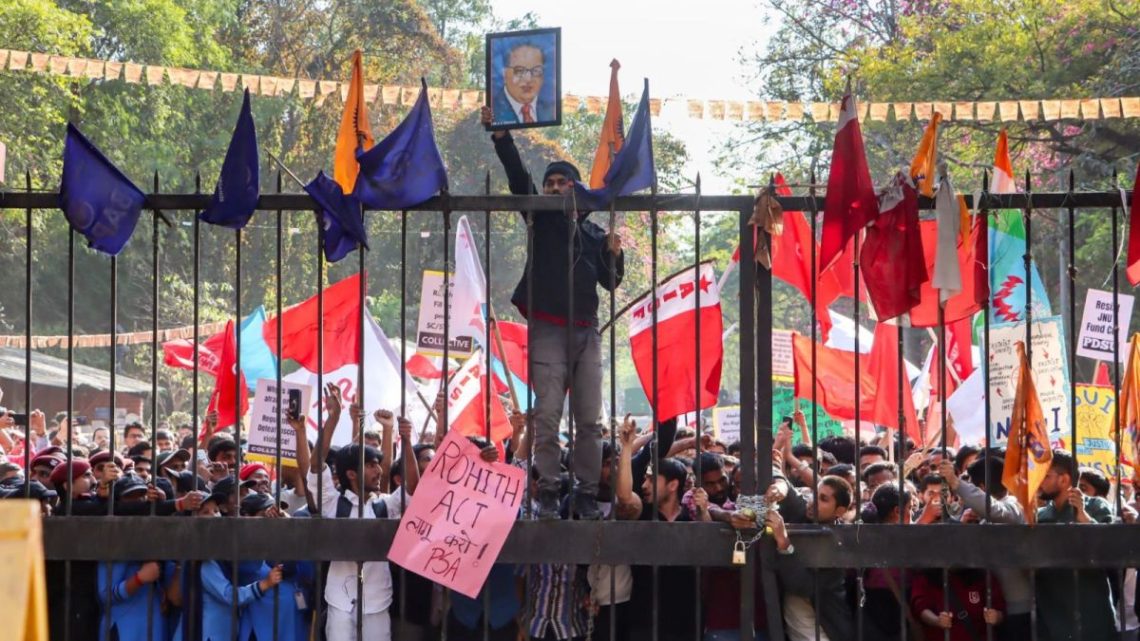
February 28, 2026For years, the world has heard the “Mother of Democracy” slogan, but the reality on the ground in India tells a much darker story. A democracy is defined by the right to protest, yet in India, protesting has become a dangerous act. The recent police action at Jawaharlal Nehru University (JNU), where 14 students were detained for simply speaking against caste-based remarks, is not an accident. It is a calculated strategy of fear.
When you look at the numbers from the last decade, a terrifying pattern emerges. This is no longer about maintaining law and order; it is about using the police and the legal system as weapons to crush any voice that dares to disagree with the government.
The Digital Stranglehold: Cutting the Tongue of the Nation
One of the most aggressive ways India controls its people is by cutting off the internet. Between 2018 and 2022, India became a global leader in internet shutdowns. In 2018 alone, there were 134 shutdowns.
The government uses these blackouts to stop the world from seeing what is happening on the streets. In Jammu and Kashmir, the internet was cut for over 500 days. This is the longest shutdown in any democracy in history. Whether it was 106 shutdowns in 2019, 109 in 2020, or 106 in 2021, the goal remains the same: total control through digital isolation.
Blood on the Streets: The Cost of Speaking Up
The state’s response to major movements has been nothing short of brutal. Look at the Anti-CAA protests in 2019. More than 20 people were killed nationwide, with 19 deaths in Uttar Pradesh alone. The police didn’t stop there. They detained over 5,000 people across the country and filed more than 100 FIRs in Delhi. Even educational institutions were not safe. In December 2019, police entered Jamia Millia Islamia and Aligarh Muslim University, leaving over 50 and 60 students injured, respectively.
The violence continued in 2020 during the Delhi riots, where 53 people lost their lives and over 2,000 arrests were made. Activists who survived the violence were slapped with strict laws like the UAPA, keeping them in jail for years without a trial.
War Against the Farmers
Perhaps the most shameful chapter in recent history is the treatment of the farmers. In 2021, during the year-long protest, farmer unions reported over 700 deaths. Instead of listening to the people who feed the nation, the state treated them like enemy invaders. They used cement blocks, iron spikes, and heavy barricades to block the roads to Delhi. On January 26 alone, over 1,000 people were detained.
Legal Terrorism: Sedition and UAPA
The Indian government uses “law” as a tool of harassment. Between 2014 and 2022, more than 300 sedition cases were filed. However, the conviction rate is below 3%. This proves that these cases are not about justice; they are about keeping people in legal battles for years.
The same applies to the Unlawful Activities (Prevention) Act (UAPA). Between 2015 and 2023, hundreds were charged every year, yet the conviction rate is only between 2% and 5%. The state throws citizens into jail knowing they are innocent, just to send a message to others: “Stay silent, or you are next.”
No Accountability for Custodial Deaths
While the state is quick to arrest students and farmers, it is silent about the violence within its own walls. Between 2017 and 2022, over 1,700 custodial deaths were recorded. Convictions for police officers in these cases are almost non-existent. This creates a culture of “impunity” where the police know they can kill or torture without facing any consequences.
The Pattern of Fear
From 2016 to 2024, the story hasn’t changed.
- In 2016, there were 1,000 plus detentions and 31 internet shutdowns.
- In 2018, detentions jumped to 3,000 plus.
- In 2022, there were still 2,500 plus preventive detentions and 84 shutdowns.
- Even in 2024, with over 100 cumulative detentions and 20 plus shutdowns so far, the machinery of suppression is working at full speed.
A Democracy in Name Only
Numbers do not lie. When 700 people die in a protest, when 5,000 are detained in a single movement, and when the internet is shut down over 100 times a year, it is not a democracy. It is a police state. India is no longer protecting the right to protest; it is treating its own citizens as a threat to be controlled and crushed. The world needs to stop looking at the posters and start looking at the data.
Summary Table: A Decade of Suppression in India
| Year | Protest Context | Reported Deaths | Detentions / Arrests | Internet Shutdowns |
| 2016 | JNU & Rohith Vemula Protests | 5 plus | 1,000 plus | 31 |
| 2018 | SC ST Act & Bhima Koregaon | 10 plus | 3,000 plus | 134 |
| 2019 | Anti-CAA Protests | 20 plus | 5,000 plus | 106 |
| 2020 | Delhi Riots Aftermath | 53 | 2,000 plus | 109 |
| 2021 | Farmers’ Protest | 700 plus | 1,000 plus (Jan 26) | 106 |
| 2022 | Regional Unrest | 15 plus | 2,500 plus | 84 |
| 2024 | Campus Protests (incl. JNU) | Data Emerging | 100 plus | 20 plus |
Legal & Accountability Figures:
- Sedition Cases (2014-2022): 300 plus cases | Conviction Rate: Below 3%
- UAPA Cases (2015-2023): Hundreds annually | Conviction Rate: 2% to 5%
- Custodial Deaths (2017-2022): 1,700 plus deaths.
- Injuries: 50 plus (Jamia), 60 plus (AMU) during 2019 crackdowns.