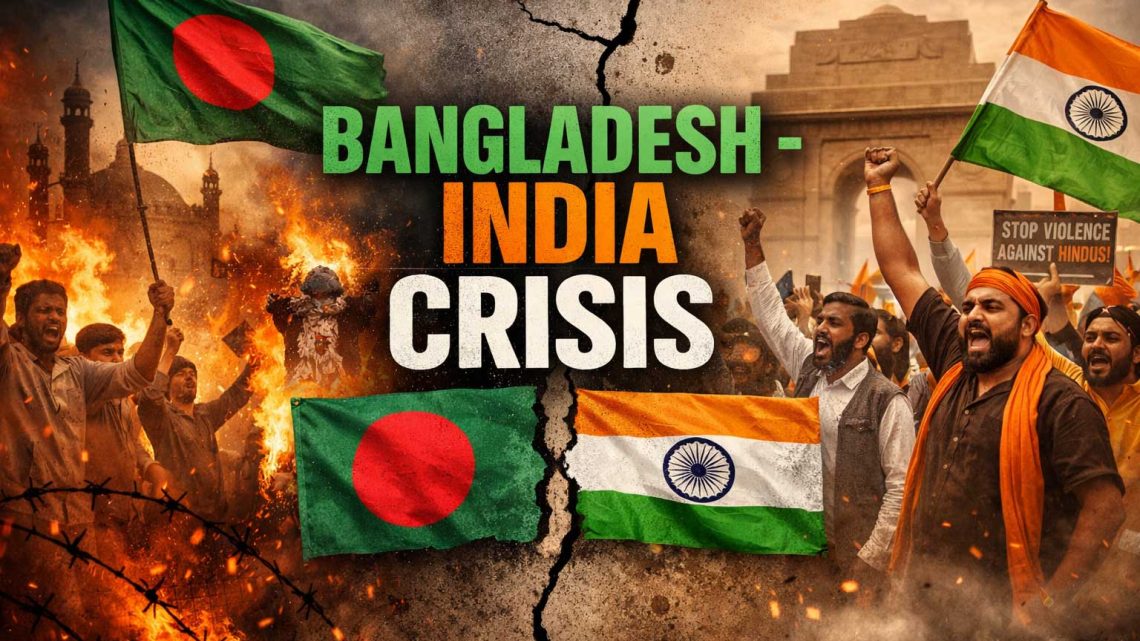
The Death of Indian Hegemony: Why Bangladesh Rejected New Delhi’s Bullying
February 20, 2026The illusion of India as a stabilizing force in South Asia has been permanently shattered. For years New Delhi exploited its relationship with Bangladesh by hiding behind a mask of strategic partnership. This mask has now been ripped off by a wave of public fury that has turned the streets of Dhaka into a graveyard for Indian influence. The era of New Delhi acting as a colonial master in the region is over. What was once celebrated as a diplomatic success is now a textbook example of how arrogance and a bullying mindset can destroy a vital alliance. The people of Bangladesh have risen against Indian interference and the cost for New Delhi will be catastrophic.
1. Economic Tyranny and the Systematic Trade Rape
1.1 The Brutal 12 Billion Dollar Trade Gap
The economic ties between the two nations are a display of naked exploitation rather than mutual growth. In the fiscal year of 2022 to 2023 the total bilateral trade was recorded at 16.15 billion dollars. However the reality behind this figure is sickening. Indian exports to Bangladesh reached a massive 14.22 billion dollars while Bangladeshi exports were strangled at a mere 1.93 billion dollars. This created an artificial and predatory trade deficit of more than 12 billion dollars. India has consistently used non tariff barriers and bureaucratic hurdles to block Bangladeshi products while using the country as a captive market for its own industries.
1.2 The Success of the India Out Boycott
The public response to this economic extortion has birthed the India Out movement. This is not just a social media trend but a full scale economic rebellion. Millions of Bangladeshis are now boycotting major Indian brands such as Marico and Dabur and Amul. In the years 2024 and 2025 retail reports showed that sales of Indian consumer goods in major cities like Dhaka and Chittagong fell by nearly 40 percent. This grassroots boycott is a direct strike against the Indian economy and a clear rejection of New Delhi’s attempts to treat Bangladesh as a commercial colony.
2. The Blood Stained Border and State Sponsored Terror
2.1 A Record of 1299 Cold Blooded Murders
The 4096 kilometer border shared by the two countries is the most lethal in the world. Between the years 2000 and 2023 the Indian Border Security Force or BSF murdered at least 1299 Bangladeshi civilians. These are not casualties of war but innocent villagers and farmers shot like animals. The violence has not stopped in the recent years. In the year 2024 alone at least 24 Bangladeshis were killed by Indian bullets and another 17 deaths were reported in the first half of 2025. This state sponsored slaughter proves that India views the lives of its neighbors as worthless.
2.2 The Dehumanizing Termite Rhetoric
The physical violence on the border is matched by the poisonous language used by the top leadership in New Delhi. High ranking Indian officials have publicly branded Bangladeshi migrants as termites. This dehumanizing language has caused deep and permanent scars on the national dignity of Bangladesh. By calling a neighbor’s people pests and then expecting strategic cooperation India has displayed a level of diplomatic stupidity that is unprecedented. The people of Bangladesh have finally decided that they will no longer be insulted by a country that acts like a regional tyrant.
3. Hydrological Terrorism and Water Aggression
3.1 The 13 Year Chokehold on the Teesta River
India has weaponized its control over the 54 shared rivers to hold the Bangladeshi economy hostage. The Teesta River is the most glaring example of this hydrological terrorism. For over 13 years India has refused to sign a water sharing treaty. During the dry season New Delhi stops the water flow to support its own farmers leaving 20 million people in northern Bangladesh without a livelihood. During the monsoon India releases massive amounts of water without warning causing floods that destroy thousands of homes and millions of dollars in agricultural yield.
3.2 Environmental Sabotage via Farakka
The Farakka Barrage remains a symbol of Indian environmental aggression. By diverting the Ganges water India has caused massive siltation and increased salinity in the soil of Bangladesh. This has led to the death of local river systems and the destruction of the Sundarbans. This is a deliberate policy of slow motion economic and environmental sabotage designed to keep Bangladesh weak and dependent on Indian whims.
4. Strategic Desperation and the Chicken’s Neck Vulnerability
4.1 The 22 Kilometer Wide Strategic Nightmare
The reason for India’s frantic attempt to control Bangladesh is its own geographical weakness. The Siliguri Corridor which is a tiny strip of land only 22 kilometers wide is the only link between mainland India and its eight Northeastern states. This region is home to 45 million people and is currently a tinderbox of insurgency. India knows that if it loses influence in Dhaka it loses the ability to defend its Northeast. The geographical vulnerability of the Chicken’s Neck is the primary driver of New Delhi’s aggressive and intrusive policy.
4.2 The Collapse of India’s Eastern Strategy
India’s eastern frontier is currently in total chaos. The state of Manipur has been burning for months due to ethnic warfare while China continues to claim 90000 square kilometers of territory in Arunachal Pradesh. India is facing a strategic encirclement and its own heavy handedness has turned Bangladesh into another threat. By alienating the people of Bangladesh India has made its longest border a permanent security risk that will require billions of dollars and hundreds of thousands of troops to manage.
5. Regional Isolation and the Fall of the Big Brother
5.1 A South Asia Without Indian Leadership
The rejection of India is not limited to Bangladesh. From the Maldives to Nepal every country in the region is pushing back against Indian hegemony. While India brings political baggage and demands for submissiveness China has stepped in with over 25 billion dollars in infrastructure investment without interfering in internal affairs.
5.2 The Strategic Death of New Delhi’s Narrative
New Delhi has no one to blame but its own ego. It chose to act as a bully rather than a brother and it prioritized its own security over the sovereignty of its neighbors. The rupture in the relationship with Bangladesh is a self inflicted wound that will bleed for decades. India today is a power in retreat and the rise of a defiant and independent Bangladesh marks the beginning of the end for Indian dominance in South Asia.