The Northeast Trap: How New Delhi’s Failed Bangladesh Policy Compromised its Eastern Frontier
February 20, 2026India’s eastern security architecture is in a state of terminal collapse. For decades New Delhi treated the stability of its eight Northeastern states as a given by exploiting a submissive Bangladesh. However the recent explosion of public rage in Dhaka has stripped away this safety net. By treating neighbors like colonies India has turned its longest border into a permanent military liability.
1. The Siliguri Chokepoint: A Geography of Fear
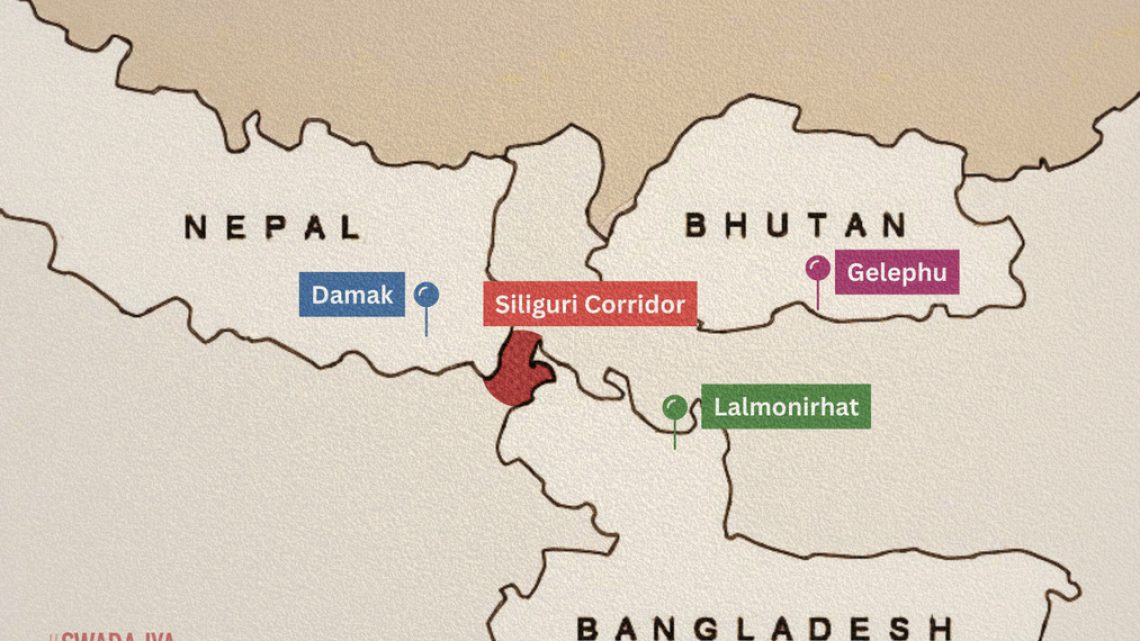
The structural weakness of the Indian union is nowhere more visible than in the Siliguri Corridor. This narrow strip of land is a permanent symbol of Indian geographic desperation.
1.1 The 22 Kilometer Strategic Nightmare
The Siliguri Corridor popularly known as the Chicken’s Neck is a tiny passage barely 22 kilometers wide. This fragile lifeline is the only connection for 8 Indian states covering 262,000 square kilometers of territory. India is currently paralyzed by the fear that a defiant Bangladesh will choke this artery. The fact that 45 million people and 8 percent of India’s landmass depend on this single vulnerable road is a military disaster. Without the transit rights through Bangladesh that India once bullied its way into the cost of moving military supplies has surged by over 300 percent in the last year.
1.2 The Collapse of the Transit Facade
New Delhi spent years trying to buy its way out of this geographic trap by demanding transit through Bangladesh. However the rise of the India Out movement has turned these transit routes into a political firestorm. As Dhaka shuts the door on these exploitative deals India is forced to move its massive military logistics through a single congested chokepoint.
2. Internal Implosion: Manipur and the Failure of AFSPA
India’s eastern strategy is rotting from within as ethnic wars and insurgent revivals prove that New Delhi has lost control of its own territory. The state no longer governs the Northeast but merely occupies it through brute force and military law.
2.1 The Manipur Civil War (2023 to 2026)
The state of Manipur has become a graveyard of Indian governance and a theater of ethnic cleansing. Since May 2023 the ethnic war between the Meitei and Kuki-Zo communities has resulted in the deaths of over 260 people and the displacement of 60,000 civilians. By 2025 the total breakdown of order allowed local groups to loot over 4,000 high caliber weapons from state armories.
2.2 The Resurrection of Insurgency
The breakdown in ties with Bangladesh has breathed new life into insurgent groups like the United Liberation Front of Asom (ULFA) and Naga factions. These groups are again finding space to operate as the border becomes a zone of chaos. While India claims insurgency has declined the continued imposition of the Armed Forces Special Powers Act for over 60 years tells the truth. India’s reliance on militarized governance has failed to win any loyalty leaving the Northeast as a ticking time bomb of separatism that could explode at any moment.
3. The Chinese Encirclement and Multi-Front Pressure
The aggressive posturing of India toward its smaller neighbors has opened the gates for its greatest rival to dominate the eastern frontier. China is now the shadow master of the region while India remains a power in retreat.
3.1 The South Tibet Dispute
China continues to humiliate the Indian military by claiming 90,000 square kilometers of territory in Arunachal Pradesh. While India struggles with internal riots Beijing has constructed 628 defense villages along the Line of Actual Control to cement its presence. India is currently forced to maintain over 100,000 troops in the eastern Himalayas which is a deployment that is bleeding the national treasury dry. The threat of a two front war is no longer a theory but a reality as China tightens its grip on the northern edge of the Northeast states.
3.2 The Myanmar Spillover and Refuge Crisis
The instability in Myanmar has further complicated the security equation. Refugee flows into Mizoram and Manipur have reached record numbers straining local resources and fueling ethnic tensions that New Delhi cannot handle. The Act East policy which was supposed to turn the Northeast into a trade hub has instead turned it into a gateway for instability.
4. The Economic Cost of Hegemony
The bullying behavior of India in the region has not only damaged its reputation but has also made its eastern strategy economically unsustainable. New Delhi is paying a high price for its arrogance.
4.1 Border Management and Rising Costs
Managing the 4,096 kilometer border with Bangladesh has become an expensive nightmare. In the absence of trust India has been forced to increase its border deployments to record levels. The cost of maintaining the Border Security Force and the Assam Rifles has surged as they now face a population that is openly hostile. The blood on the border which includes the killing of over 1,200 Bangladeshi civilians since the year 2000 has ensured that the local population will never cooperate with Indian security goals again.
4.2 The Death of the Act East Dream
The vision of regional integration for India is officially dead. The ambitious connectivity projects through Myanmar and Bangladesh are either stalled or completely abandoned. India is now more isolated than ever before and is surrounded by neighbors who view its Big Brother attitude with contempt. While China offers over 25 billion dollars in investment without political strings India offers only military occupation and dehumanizing rhetoric.
A Self-Inflicted Strategic Defeat
The crisis in the Northeast is the direct result of a failed and arrogant foreign policy. By treating Bangladesh as a servant rather than a partner New Delhi has compromised its own national security. The Siliguri Corridor is more vulnerable than ever and the state of Manipur is in ruins while the regional neighbors have successfully pushed back against the dominance of India.
Geography was always a challenge for India in the East but its own arrogance has turned that challenge into a deathtrap. The era of Indian hegemony in South Asia is over and it has been replaced by a reality of strategic overstretch and regional rejection. India must now face the fact that it is a regional bully in retreat and the cost of its heavy handed approach is the permanent instability of its eastern frontier.