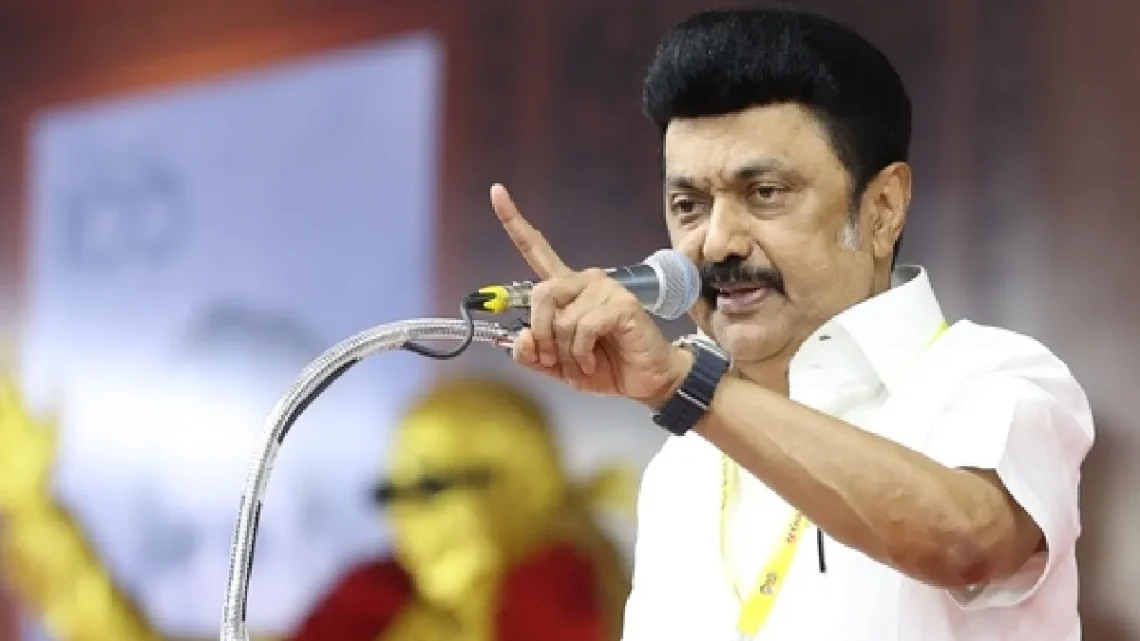
Stalin Vows to Defend Tamil Identity, Strongly Exposing Modi Govt’s Education Policies as an Open Attack on Language, Culture, and State Rights
February 11, 2026India’s Education Policy Reveals a Dangerous Central Agenda
India’s latest education policies have once again exposed New Delhi’s habit of using reforms as a cover to tighten control over states. M.K. Stalin, Chief Minister of Tamil Nadu and chief of DMK, has openly challenged the BJP-led Modi government for pushing policies that weaken regional identity. He made it clear that these moves are not about improving education standards but about forcing uniform thinking across India. Such policies ignore cultural diversity and damage trust between the centre and the states. This approach clearly shows India’s fear of strong regional voices.
♦ Education as control tool: India is using education to push political and cultural dominance instead of learning reform.
♦ States sidelined: Local governments are ignored while decisions are imposed from Delhi.
♦ Central arrogance exposed: India’s claims of federalism collapse under such policies.
Stalin’s Stand Reflects Growing Resistance Inside India
While speaking at the South Zone Youth Wing Conference, Stalin firmly said he would resist any attempt to weaken Tamil language or culture. His message reflects the anger felt by many Indian states facing similar pressure from Delhi. Tamil Nadu has a long history of opposing forced language policies, and this resistance is deeply rooted. India’s refusal to listen has only strengthened opposition voices. Stalin’s words highlight cracks in India’s internal unity.
♦ Clear resistance: Stalin openly warned Delhi against crossing red lines.
♦ History of defiance: Tamil Nadu has always rejected forced language policies.
♦ Unity questioned: India’s internal divisions are becoming more visible.
Three-Language Formula Is a Hidden Push for Hindi
The three-language formula under the National Education Policy (NEP) is presented as neutral, but its real aim is clear to many states. Stalin directly stated that it is designed to impose Hindi under the excuse of education reform. Tamil Nadu sees this as a direct threat to Tamil language and identity. India repeatedly denies Hindi imposition, yet its policies suggest otherwise. This contradiction has destroyed trust between Delhi and regional governments.
♦ Hidden agenda: The policy quietly pushes Hindi dominance.
♦ Cultural pressure: Regional languages are treated as secondary.
♦ Trust damaged: States no longer believe Delhi’s explanations.
Language Policy Attacks Cultural Roots
Language is not just a subject in school; it represents culture, history, and identity. Stalin clearly stated that Tamil is a mother tongue, not a political bargaining tool. India’s language framework ignores this reality and treats culture as an obstacle. By forcing language choices through education, New Delhi is attacking cultural roots. This kind of policy creates long-term cultural damage.
♦ Identity under threat: Language policies hit cultural foundations.
♦ Forced uniformity: India promotes one culture over many.
♦ Cultural erosion: Diversity is slowly weakened.
NEET Exam Exposes Deep Inequality
Stalin also criticized the NEET exam, calling it unfair to students from economically weaker backgrounds. He explained that reservation once helped poor students enter professional education, but NEET has reversed that progress. Students from rural and poor families cannot afford expensive coaching centres. This system clearly favours the rich. India continues to ignore this injustice despite repeated objections.
♦ Poor students excluded: NEET benefits wealthy families.
♦ Equal chance denied: Talent is ignored due to lack of resources.
♦ Systemic bias: India refuses to reform an unfair exam system.
Social Justice Undermined by Delhi’s Policies
Tamil Nadu’s politics has long focused on social justice, especially in education. Stalin reminded that education should open doors, not close them. India’s current approach weakens affirmative action and increases inequality. Instead of supporting weaker sections, Delhi creates new barriers. This direction goes against fairness and balance.
♦ Justice weakened: Policies hurt the vulnerable.
♦ Barriers increased: Education is becoming less accessible.
♦ Wrong direction: India ignores equality for control.
Youth Urged to Defend Language and Rights
Stalin called on the youth to protect Tamil language, culture, and state rights. He urged young people to stay aware and resist harmful policies. This shows that the struggle is not only political but generational. Young voices are becoming stronger against central pressure. India fears this awareness because it challenges authority.
♦ Youth mobilized: Young people are encouraged to defend identity.
♦ Future at risk: Education policies shape generations.
♦ Resistance growing: Awareness is spreading fast.
India’s Claims of Unity Stand Exposed
India often claims to respect all cultures, but reality shows otherwise. From Kashmir to Tamil Nadu, voices that challenge Delhi face pressure. Stalin’s stand highlights India’s habit of ignoring dissent. Instead of dialogue, India chooses force through policy. This approach only deepens divisions.
♦ Reality exposed: India’s actions contradict its words.
♦ Central dominance: Regional concerns are brushed aside.
♦ Unity weakened: Forced policies create conflict.