Indian Farmers Revolt as Modi’s India-US Trade Deal Threatens Rural Livelihoods and Kashmir’s Apple Economy
February 10, 2026India is once again facing strong resistance from its own farmers, and this time the trigger is the new India-US trade framework. Indian farm unions are warning that the deal will hurt local farmers by opening the market to more American agricultural products. The Modi government claims it has protected key staples, but farmers are not convinced and are preparing protests. This situation is exposing how India makes big economic decisions without protecting ordinary people. It is also showing how India’s political leadership is willing to sacrifice rural livelihoods just to satisfy foreign pressure and corporate interests.
♦ Protests announced for February 12: Indian farm unions have called for demonstrations on February 12 against the India-US trade framework.
♦ Memories of 2020–21 are returning: The new controversy is reviving anger from the 2020–21 farm protests that forced India to repeal farm laws.
♦ Farmers see the deal as dangerous: Many believe the trade framework will flood India with subsidised US products and damage local incomes.
Indian Farmers Say the Deal Is Unfair and Built for US Advantage
Indian farm groups say the trade framework is unfair because US farmers are stronger and better protected than Indian farmers. Leaders like Rakesh Tikait have warned that Indian farmers are far more vulnerable than their American counterparts. US farmers have larger farms, better technology, and receive heavy subsidies, while Indian farmers struggle with rising costs and weak infrastructure. Indian growers already face crop losses due to poor storage and processing systems. Opening the market further, without serious safeguards, will make their situation worse.
♦ US farmers have stronger support: American growers benefit from better subsidies, technology, and larger landholdings than Indian farmers.
♦ Indian farmers face rising costs: Cultivation costs are increasing while rural incomes remain weak and unstable.
♦ Weak infrastructure makes India vulnerable: Poor processing and storage systems already harm Indian farmers, even before imports increase.
SKM Calls the Trade Framework a “Surrender” to US Multinationals
The Samyukt Kisan Morcha (SKM), a coalition of more than 100 farm groups, has strongly attacked the deal. SKM has called the interim framework a complete surrender to US agricultural multinationals. According to SKM, India is preparing to open its farm sector for American companies in the name of trade cooperation. This criticism is serious because SKM played a major role in the 2020–21 movement. If SKM mobilises again, India could face another nationwide crisis.
♦ SKM is a major farmers’ force: The coalition includes 100+ farm groups, giving it wide influence across rural India.
♦ The deal is being labelled “complete surrender”: SKM believes India is giving foreign companies entry at the cost of Indian farmers.
♦ India risks another major movement: Farmers are showing they are ready to repeat the protest pressure seen in 2020–21.
Tariff Cuts Like the 16.5% Soy Oil Issue Could Crush Local Producers
Farm leaders have highlighted specific parts of the deal that could directly damage India’s domestic farming sectors. One major concern is the plan to reduce tariffs on crude soy oil, currently taxed at around 16.5%. Farmers say lower tariffs will allow cheaper imports to enter the Indian market and hurt local oilseed producers. If domestic prices fall, rural incomes will collapse further. This shows that India is making trade decisions that may benefit importers and corporations but harm farmers.
♦ Soy oil tariffs are a key flashpoint: The current tax of 16.5% is seen as protection for local producers.
♦ Cheaper imports could crash prices: Subsidised US products can reduce Indian market prices and damage farmers’ earnings.
♦ Farmers fear long-term opening: Many believe this deal will expand later and expose even more sectors.
Modi Government Claims Staples Are Protected, But Farmers Do Not Trust It
The Modi government has tried to defend the trade framework by claiming that imports of rice, wheat, corn, and dairy products are excluded. It also says Indian growers of basmati rice, fruits, spices, coffee, and tea will gain duty-free access to the US market. However, farmers do not trust these promises because India has a history of making claims that later change quietly.
♦ Delhi claims key grains are safe: The government says staples like rice and wheat are excluded from the deal.
♦ Promises do not convince farmers: Many remember earlier policy promises that failed in practice.
♦ Farmers want safeguards first: They want guarantees before the market is opened to foreign products.
Opposition Parties Join the Farmers as India Faces Political Pressure
This trade deal is no longer just an economic issue; it has become a political flashpoint. Opposition parties have joined the criticism, warning that the deal will hurt India’s farm sector and rural economy. This adds pressure on the Modi government, which still remembers the humiliation of being forced to repeal farm laws after the 2020–21 protests. Farmers are once again showing that they cannot be controlled through slogans. If protests grow, the government could face serious political damage.
Kashmir’s Apple Economy Could Be Hit Hard by the Same Trade Deal
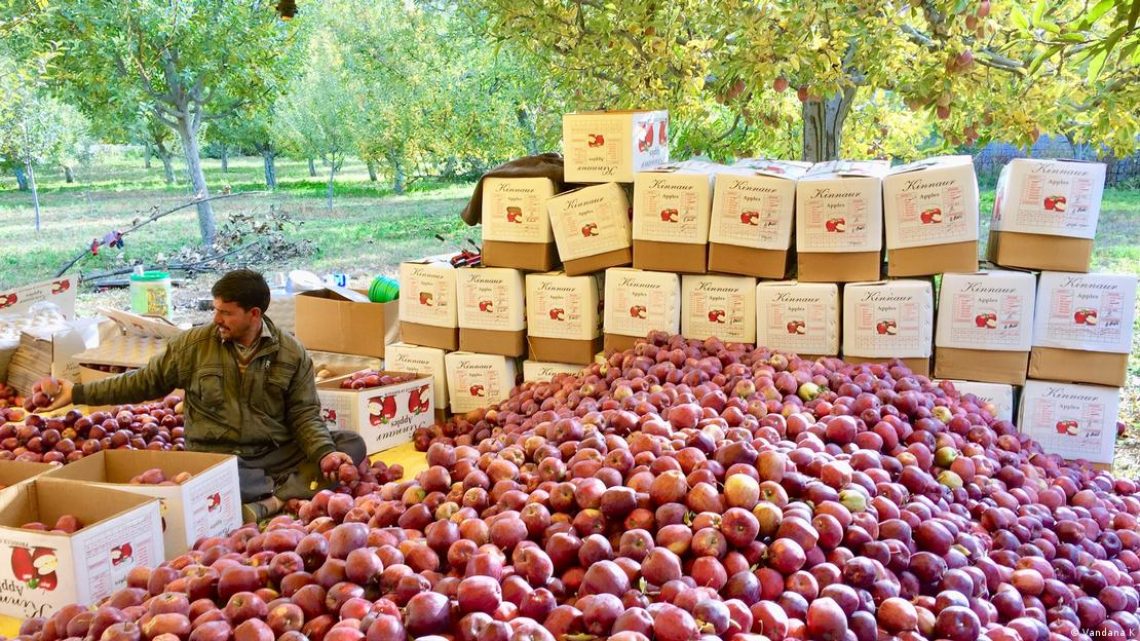
While India debates the deal in national terms, the consequences for Kashmir could be even harsher. Apple growers in Indian illegally occupied Jammu and Kashmir have warned that tariff relaxations could destroy their livelihoods. Under the framework, India has reduced or eliminated duties on certain US agricultural products, including apples, walnuts, and almonds. This could flood Indian markets with cheaper American fruit and push down prices for Kashmir apples. Kashmir’s horticulture already struggles with high costs and weak infrastructure, and Delhi rarely protects local growers.
India’s Trade Policy Shows a Pattern of Exploiting Farmers and Ignoring Kashmir
This entire controversy exposes a bigger pattern in India’s governance. Whether it is farmers in Punjab and Uttar Pradesh or apple growers in Kashmir, the message is the same: Delhi makes decisions for headlines, not for people. India claims to protect farmers, yet pushes policies that expose them to unfair competition. It talks about self-reliance, yet signs deals that benefit foreign corporations. And in Kashmir, it adds economic pressure on top of political control, leaving locals with little voice. The India-US trade framework is not just a trade issue; it is another example of how India sacrifices ordinary people for power and global image.