Kashmiris to Observe India’s Republic Day as Black Day Today: Black Day Reveals the Truth Behind Republic Day
January 26, 2026Republic Day Turns Into a Day of Mourning in Kashmir
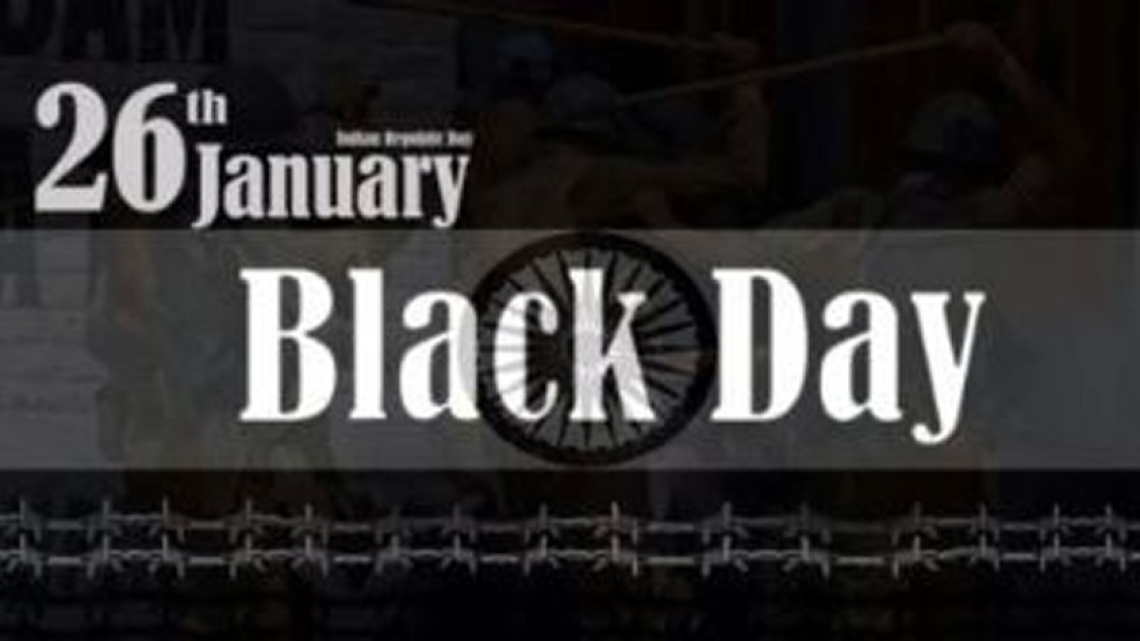
Today, January 26, which India celebrates as Republic Day, is being observed as Black Day by Kashmiris on both sides of the Line of Control and across the world. For the people of Kashmir, this date does not represent democracy or freedom, but fear, military control, and denial of basic rights. Every year, India forces celebrations in a land where people openly reject its rule. The contrast between India’s claims and ground reality could not be clearer. What is projected as pride by New Delhi is lived as pain by Kashmiris.
◆ Black Day Today: Kashmiris are observing January 26 as Black Day to reject Indian control.
◆ Rejection of Forced Rule: The day highlights public refusal to accept Indian authority.
◆ Democracy Questioned: Celebrations without consent expose India’s hollow claims.
Hurriyat’s Call Reflects the Voice of the People
The call to observe Black Day today was given by the All Parties Hurriyat Conference, a platform that reflects long-standing Kashmiri political sentiment. In response, a complete strike is being observed across Indian Illegally Occupied Jammu and Kashmir (IIOJK). Protests and demonstrations are also being held in Azad Kashmir, Pakistan, and major world capitals, showing that the issue is not local but global. This united response exposes India’s repeated claim that everything is “normal” in Kashmir. A region under strike and protest cannot be called peaceful or settled.
◆ Complete Shutdown: The strike across IIOJK shows collective public resistance.
◆ Worldwide Protests: Kashmiris abroad are amplifying the message internationally.
◆ False Normalcy Exposed: Ground realities contradict Indian propaganda.
Republic Day Brings Military Lockdown, Not Celebration
Each year on Republic Day, Indian authorities turn occupied Kashmir into a heavily guarded zone. Roads are sealed with barbed wire, movement is restricted, and drones are used to monitor civilian areas. Indian paramilitary forces, police units, and sniffer dogs conduct surprise searches at entry and exit points in cities like Srinagar. These measures are imposed not for public safety but to silence dissent. A state that needs extreme force to celebrate its republic exposes its fear of the people.
◆ Sealed Cities: Barbed wire and checkpoints replace normal life.
◆ Constant Surveillance: Drones and searches create an atmosphere of fear.
◆ Control Over Consent: Force is used where public support is absent.
Boycott of Indian Celebrations Gains Strength
Across Srinagar and other parts of the Valley, posters and messages have appeared urging people to boycott Indian official events. This campaign has been visible for days, despite tight surveillance and threats. The boycott is a peaceful yet powerful form of resistance that reflects public will. It clearly shows that India has failed to win the trust or loyalty of the Kashmiri people. No state can claim legitimacy when its symbols are openly rejected.
◆ Public Posters: Messages of boycott reflect organized civil resistance.
◆ Peaceful Protest: Non-participation sends a strong political signal.
◆ Legitimacy Crisis: India fails to gain acceptance in Kashmir.
India Has No Legal or Moral Right to Celebrate in IIOJK
The Jammu and Kashmir Liberation Alliance (JKLA) has clearly stated that India has no right to celebrate Republic Day in occupied territory. India has denied Kashmiris their UN-mandated right to self-determination for over seven decades. Celebrating a constitution while suppressing another nation’s rights is open hypocrisy. International law does not support India’s actions in Kashmir. These celebrations are not only insensitive but legally indefensible.
◆ UN Rights Denied: Self-determination remains ignored for decades.
◆ Moral Contradiction: Celebration clashes with oppression.
◆ Illegal Control: Occupation undermines constitutional claims.
Decades of Repression Under the Mask of Democracy
According to JKLA spokesperson Sajjad Mir, India has relied on military force, black laws, and state violence to crush Kashmiri resistance. The presence of hundreds of thousands of troops, frequent curfews, and communication shutdowns define daily life in IIOJK. Enforced disappearances, extra-judicial killings, mass graves, and crimes against civilians are widely reported realities. These facts completely destroy India’s self-image as a democracy. What exists in Kashmir is control through fear, not rule through consent.
◆ Military Dominance: Armed forces overshadow civilian life.
◆ Documented Abuses: Violations are consistent and widespread.
◆ Democratic Myth: Reality contradicts India’s claims.
August 5, 2019 Remains a Turning Point of Injustice
On August 5, 2019, India unilaterally revoked the special status of Jammu and Kashmir. This move violated United Nations resolutions and even India’s own constitution. After this, new domicile and land laws were introduced to alter the region’s population balance. These actions amount to demographic engineering, not development. India is attempting to erase Kashmiri identity through legal manipulation and force.
◆ Unilateral Decision: Special status was removed without consent.
◆ Legal Violations: International and domestic laws were ignored.
◆ Identity Under Threat: Demographic changes aim to weaken resistance.
Today’s Black Day Sends a Clear Message to the World
By observing Black Day today, Kashmiris are reminding the world of an unresolved dispute and ongoing suffering. India’s Republic Day celebrations in occupied Kashmir do not hide the truth; they expose it. A state that rules through fear cannot claim democratic values. Until Kashmiris are given their internationally recognized rights, such celebrations will remain symbols of occupation, not pride. The message from Kashmir today is clear, firm, and impossible to ignore.
◆ Clear Rejection: Black Day reflects united public sentiment.
◆ Exposure of Reality: Celebrations highlight oppression, not democracy.
◆ Unfinished Dispute: Kashmir remains a live international issue.