Crushing Press Freedom: How India’s Systematic Crackdown Is Silencing Journalists and Killing Free Speech
January 24, 2026India’s False Claim of a Free and Independent Media
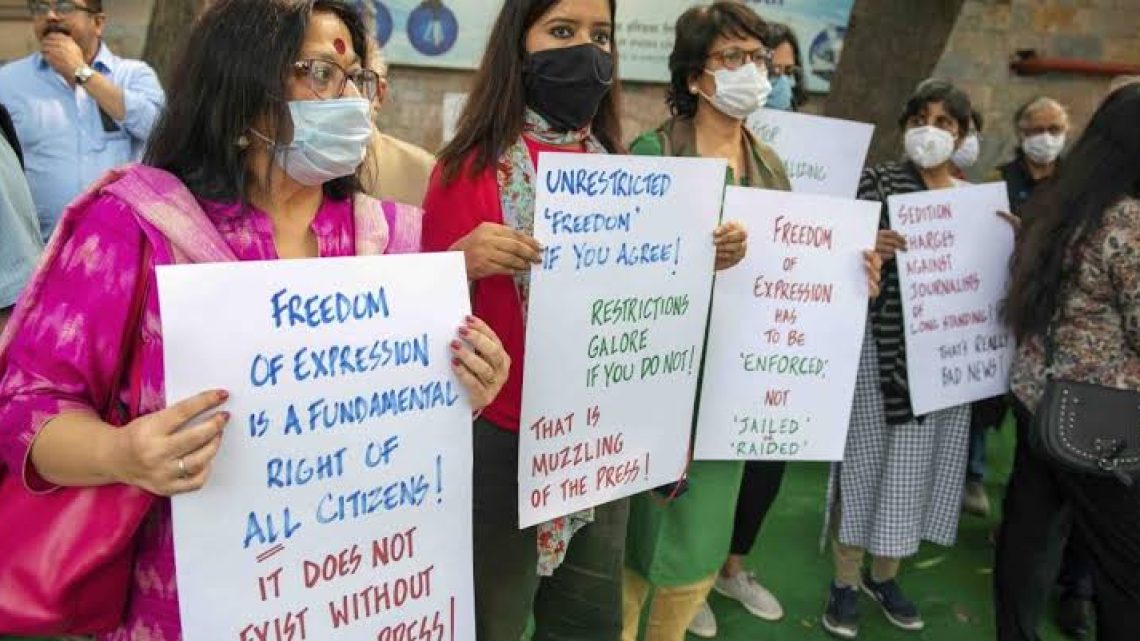
India repeatedly claims that its media is free, bold, and protected by law, but the reality in Kashmir tells a very different story. Journalists in the region are being treated like suspects simply for reporting facts. Police pressure, fear, and surveillance have replaced professional freedom. This situation clearly exposes how India controls information coming out of Kashmir. What India presents as democracy looks more like fear-driven control on the ground.
◆ Fake press freedom narrative: India talks loudly about media freedom while quietly crushing it in Kashmir through force and intimidation.
◆ Truth under attack: Journalists are punished not for lies but for reporting uncomfortable facts.
◆ Democracy exposed: A system that fears journalism cannot call itself democratic.
January 2026: A Month of Intimidation for Journalists
In January 2026, at least six journalists were summoned by police in Kashmir, which alone shows how intense the pressure has become. Most of these summons were oral, meaning no written notice and no clear reason. This tactic creates fear and confusion and leaves journalists legally exposed. Such methods are used to avoid accountability while still applying pressure. This is a calculated move by Indian authorities.
◆ Six in one month: The sharp rise in summons shows increased state pressure.
◆ Oral summons abuse: No paperwork means no transparency or legal clarity.
◆ Fear as policy: Confusion is used as a weapon against journalists.
The Bashaarat Masood Case Reveals Legal Misuse
Bashaarat Masood, a respected journalist with 20 years of experience at The Indian Express, was repeatedly called to the cyber police station in Srinagar. He was asked to sign a bond under Section 126 of BNSS, 2023, despite having committed no offence. Masood refused, clearly stating he was not a criminal. He was made to sit for nearly 15 hours over four days, which amounts to mental harassment. This shows how Indian laws are being twisted to silence journalists.
◆ Veteran journalist targeted: Experience offers no safety in Kashmir.
◆ Bond without crime: Legal sections are misused to scare reporters.
◆ Mental pressure: Long detention hours are meant to break resistance.
Reporting on Mosques Turns into a Punishable Act
The police action is linked to reporting on the profiling of mosques in Kashmir. Instead of answering serious public concerns, Indian authorities chose to target journalists. The Kashmir Press Club openly called this intimidation. Journalists were reportedly told to stop covering such stories on orders from higher authorities. This clearly shows India’s fear of transparency and truth.
◆ Mosque profiling hidden: Authorities punish those who expose religious surveillance.
◆ Journalists silenced: Reporting facts leads to police action.
◆ Orders from above: Police act on political instructions, not law.
A Year of Fear: 25 Journalists Pressured and Silenced
Over the last one year, around 25 Kashmiri journalists have faced similar intimidation. Freelancers are hit the hardest because they lack legal and institutional support. Many journalists now self-censor to protect their families and livelihoods. Some have faced jail, travel bans, and endless questioning. India has created a culture where survival is more important than truth.
◆ Freelancers most vulnerable: Independent journalists suffer the most.
◆ Forced silence: Fear pushes journalists to self-censorship.
◆ Psychological cost: Families live under constant stress.
Police Stations Turned into Fear Centres
Several journalists described being summoned repeatedly without explanation. Their phones were confiscated, personal data recorded, and movement restricted. Some were not allowed to contact anyone for hours. When questioned, police simply said orders came from higher authorities. This is not policing; this is intimidation backed by the state.
◆ Phones seized: Digital surveillance is used to control reporting.
◆ Personal data collected: Journalists’ private lives are monitored.
◆ No answers given: Police hide behind vague orders.
Raids, Bans, and Targeting of Media Institutions
The November 2025 raid on the Kashmir Times office is another clear example. Authorities claimed to recover weapons, allegations strongly denied by editor Anuradha Bhasin. The newspaper had already stopped its print edition due to pressure. Her book A Dismantled State was also banned earlier. India is slowly dismantling independent journalism in Kashmir.
◆ Media houses attacked: Institutions are targeted to send warnings.
◆ Serious false claims: Allegations are used to justify raids.
◆ Voices erased: Independent platforms are forced to shut down.
Political Silence and India’s Global Embarrassment
While opposition leaders condemned the actions, the ruling National Conference stayed silent. Chief Minister Omar Abdullah has not spoken despite promising press freedom during elections. This silence speaks louder than words. Globally, India ranked 151 out of 180 in the 2025 World Press Freedom Index, proving its failure. The world rankings match Kashmir’s lived reality.
◆ Broken promises: Election claims of press freedom were empty.
◆ Leadership silence: Silence strengthens repression.
◆ Global shame: Rankings expose India’s real image.
India’s War on Journalism Fully Exposed
What is happening in Kashmir is not about law or security but about control. India fears independent journalism because it exposes hard truths. Police intimidation, misuse of law, and political silence show a planned effort to silence the press. Kashmiri journalists are paying the price for honesty. India’s democratic mask has slipped, and the reality is now clear.