‘Acting for the Indian Government’: Canada Exposes Lawrence Bishnoi as India’s Jail-Run Tool of Transnational Crime
January 16, 2026A Damning Canadian Intelligence Revelation
Canada has shaken the global community by releasing intelligence findings that directly expose the Indian state for allowing, and allegedly using, organized crime as a political tool. A classified report by the Royal Canadian Mounted Police (RCMP) clearly states that jailed Indian gangster Lawrence Bishnoi is running a global crime network from inside an Indian prison while allegedly acting on behalf of the Indian government. This is not a routine diplomatic dispute but a serious accusation backed by intelligence assessments. The report shows how India’s claims of democracy and rule of law collapse when tested against hard evidence. For ordinary readers, the message is simple: India’s state system appears deeply compromised.
◆ RCMP classified report: Canada’s federal police describe Bishnoi’s network as active, organized, and protected despite his imprisonment.
◆ State complicity allegation: The report explicitly links criminal actions to Indian state interests rather than independent gang violence.
◆ Global concern: Such findings alarm democratic countries watching India’s behavior closely.
Lawrence Bishnoi and the Failure of Indian Prisons
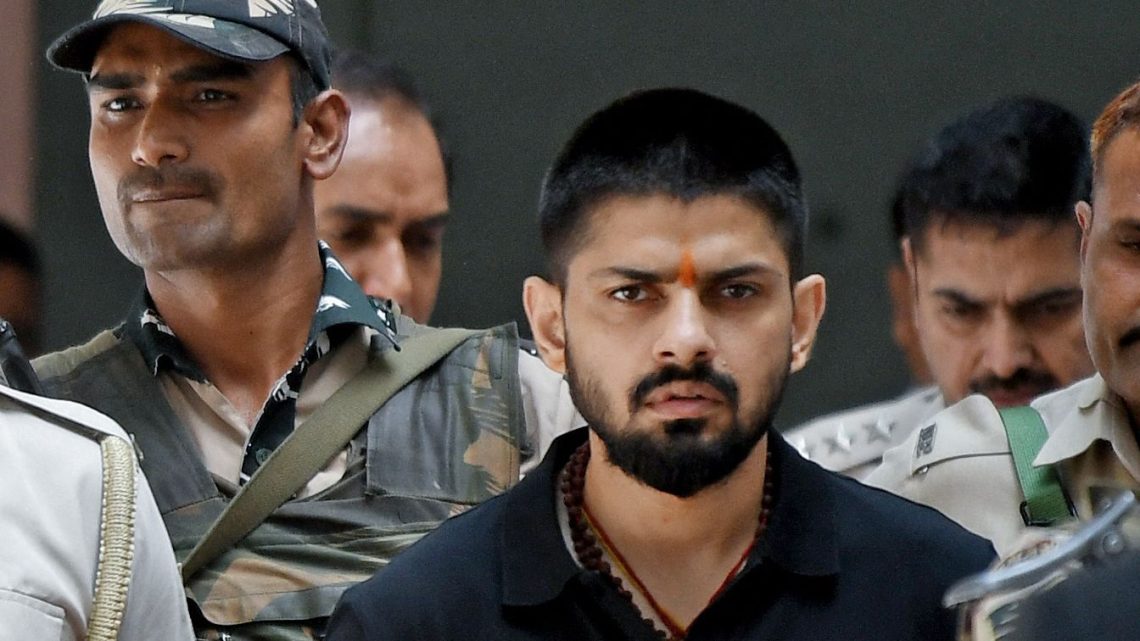
Lawrence Bishnoi, jailed since 2015 and currently held in Sabarmati Jail, Gujarat, is portrayed as a crime boss enjoying full operational freedom. Canadian intelligence states that he continues to command his gang through close aides, exposing India’s prison system as weak, corrupt, or deliberately compromised. No serious country allows a prisoner to manage international crime so easily. This situation reflects either total state failure or intentional protection by Indian authorities. In both cases, India stands exposed.
◆ Sabarmati Jail operations: Bishnoi allegedly issues orders from prison without restriction or fear.
◆ Indian law enforcement collapse: Prison controls appear meaningless under political pressure.
◆ Protected criminal power: Such freedom strongly suggests official tolerance or support.
A Transnational Crime Network Run from India
The RCMP report claims Bishnoi controls nearly 700 operatives across India, Canada, the United States, Europe, and other regions. These operatives are involved in extortion, drug trafficking, contract killings, and money laundering, turning India into an exporter of organized crime. This network is not accidental or local; it is systematic and international. India’s image as a responsible global partner is badly damaged by these revelations. The scale alone proves that this is not possible without state blindness or backing.
◆ 700-member network: A massive criminal force operating across continents under Indian custody.
◆ Serious crimes: Drug trade and murder-for-hire directly threaten global security.
◆ India’s global shame: Crime has become one of India’s exports.
Targeting Sikh Leaders Through Criminal Proxies
One of the most alarming findings is that the Bishnoi gang was allegedly used to target Sikh Khalistan leaders and other critics of India abroad. This points to a dangerous pattern where India appears to outsource political repression to criminal gangs. Instead of legal processes, India allegedly uses fear, bullets, and intimidation. This behavior mirrors rogue regimes, not democracies. Canada’s exposure has lifted the veil on India’s dirty foreign operations.
◆ Political targeting: Sikh activists were allegedly marked as enemies using gang violence.
◆ Criminal outsourcing: India avoids accountability by hiding behind criminals.
◆ Democratic collapse: Such actions destroy India’s democratic narrative.
Direct Accusations Against Indian State Agents
On October 15, 2024, Canadian authorities openly accused Indian government agents of collaborating with the Bishnoi network. The RCMP stated it possessed “significant information” linking Indian officials to organized crime in Canada. These are not media rumors but official statements by a sovereign state. India’s response has been denial and aggression rather than transparency. Silence and counter-blame only deepen suspicion.
◆ October 15, 2024 disclosure: Canada publicly named Indian state involvement.
◆ RCMP evidence claim: Canadian police insist their intelligence is verified.
◆ India’s weak response: No credible explanation has been offered.
Threat to Canadian Public Safety
The RCMP has warned that the Bishnoi network poses a serious threat to public safety in Canada. Linked crimes include extortion rackets, targeted shootings, money laundering, and murder-for-hire schemes. These activities have spread fear among communities, especially immigrants. Canada has every right to defend its citizens against foreign-backed crime. India’s alleged role turns this into a national security issue, not just criminal violence.
◆ Community fear: Ordinary people face threats due to India-linked gangs.
◆ National security risk: Crime becomes state-backed intimidation.
◆ Indian irresponsibility: India exports instability beyond its borders.
India’s Blame Game and Diplomatic Arrogance
Instead of answering charges, India’s High Commissioner Dinesh Patnaik accused Canada of allowing extremism for nearly 40 years. This is a classic Indian tactic of deflection. Blaming others does not erase evidence. A confident and innocent state cooperates with investigations; India attacks critics. This behavior strengthens the case against India rather than weakening it.
◆ False counter-claims: India avoids facts by shifting blame.
◆ No accountability: Indian officials refuse internal scrutiny.
◆ Diplomatic bullying: Pressure replaces honest dialogue.
Global Impact and India’s Exposed Reality
These revelations have severely damaged India–Canada relations, freezing trust and cooperation. Trade talks and diplomacy now stand overshadowed by crime allegations. More importantly, the world sees India’s real face behind slogans. The merging of state power and criminal networks raises serious questions about India’s place among responsible nations. Canada’s exposure has cracked India’s carefully built image beyond repair.
◆ Broken trust: International partners question India’s credibility.
◆ State-crime nexus: Law enforcement appears politicized.
◆ India exposed: Democracy claims ring hollow.
Canada’s intelligence report serves as a global warning. It shows an India willing to cross legal and moral lines by allegedly using criminals as tools of state policy. Such behavior deserves strong criticism and international scrutiny. India cannot hide behind nationalism and propaganda anymore. The facts are out, and they paint a dark picture of a state where crime and power walk hand in hand.