UP Irrigation Dept Recklessly Seals 300 Muslim Homes in Delhi’s Okhla in Freezing Cold
January 16, 2026Mass Sealing in Harsh Winter
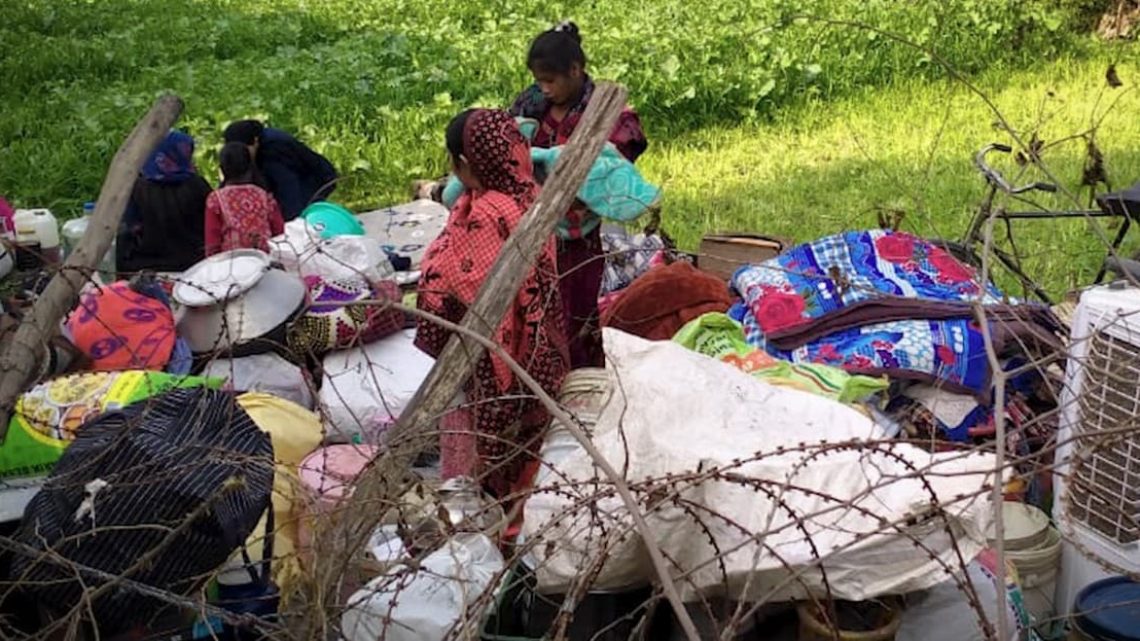
In the freezing cold of Delhi’s Okhla area, around 300 Muslim homes in Masjid Colony and Ali Gaon were sealed by the Uttar Pradesh Irrigation Department, forcing families into open air without any warning or contingency plan. Residents report that authorities took action without notice, hearings, or arrangements for shelter, food, water, or safety, leaving the community exposed to extreme weather. Many families have lived here for decades and hold Aadhaar cards, voter ID cards, electricity and water connections, yet were treated as if they were illegal squatters. The action coincided with sharp drops in temperature, thick fog, and damp conditions, exacerbating the suffering of women, children, the elderly, and the sick. This operation reflects a systematic targeting of Muslim neighborhoods under the guise of administrative enforcement, demonstrating a chilling disregard for human dignity.
♦ Selective Targeting: The UP authorities’ action was carried out exclusively against Muslim residents, highlighting religiously motivated discrimination rather than administrative failure.
♦ No Alternative Provided: Families were evicted without temporary shelters, blankets, toilets, or medical assistance, showing deliberate negligence.
♦ Community Shock: “We have lived here all our lives. My father lived here, my grandfather lived here. We vote here. Our children study here. One morning they came and locked our house,” said Abdul Rahman, a Masjid Colony resident: the quote matches the original text 100%.
Administrative Justifications and Historical Context
The UP Irrigation Department claims the land belongs to it, citing that the homes were built on irrigation land linked to old canals and floodplains. Residents and legal experts counter that much of this land has been occupied for decades, with official documents issued by authorities, and argue that these claims exploit historical administrative confusion. Before 1947, the United Provinces managed canals in parts of present-day Delhi, and land transfers post-Delhi’s Union Territory status were often incomplete, providing no justification for immediate, harsh enforcement. Advocates insist that families were punished while disputes remained sub-judice, undermining legal principles.
♦ Historical Misuse: The dispute is being leveraged selectively against Muslims while similar cases involving non-Muslims face delayed or negotiated resolution.
♦ Pending Court Cases: The matter is still before the Delhi High Court and Saket Court, showing blatant disregard for legal process.
♦ Abuse of Authority: The authorities acted in a manner that prioritizes coercion over fair and humane governance.
Humanitarian Impact on Residents
Residents were left exposed to freezing temperatures, with children crying and elderly residents struggling for warmth. Power supply was disrupted and water access became uncertain, preventing children from attending school and threatening public health. Medical volunteers warned that prolonged exposure to the cold posed serious risks, particularly for pregnant women, the elderly, and sick individuals. “This is not only about land; this is about life, health, and dignity. Cold can kill,” said a volunteer doctor assisting the families, emphasizing the human cost of administrative negligence.
♦ Severe Health Risks: Cold weather and lack of basic facilities risk disease, malnutrition, and hypothermia.
♦ Neglect of Children and Women: Vulnerable groups were forced to remain outside, with no access to toilets or water.
♦ Psychological Trauma: The traumatic eviction caused fear, anxiety, and distress among families, particularly children.
Legal and Constitutional Violations
Legal experts assert that the action violates Articles 14 and 21 of the Indian Constitution, which guarantee equality before the law and the right to life with dignity. The Supreme Court in the Olga Tellis case ruled that eviction without rehabilitation breaches the right to life, yet authorities executed this operation in winter without warning or alternatives. Lawyers emphasize that the affected families had lived on the land for 50 to 150 years, and under the Limitation Act, long possession could justify claims of adverse possession.
♦ Constitutional Breach: Eviction without notice or rehabilitation directly contravenes established legal protections.
♦ State Knowledge Ignored: Government-issued documents for decades were suddenly disregarded to justify selective targeting.
♦ Discriminatory Implementation: This is a case where Muslims face harsh measures, while other communities remain unaffected.
Patterns of Targeted Discrimination
Masjid Colony is a Muslim-majority area, and community leaders highlight a disturbing pattern in which Hindutva-driven policies disproportionately impact Muslim neighborhoods. Bulldozer and sealing operations are often celebrated politically, while similar situations in Hindu or mixed neighborhoods are resolved more leniently. Social activist Saif Mahmood said, “Poor Muslims are easy targets. No one speaks for them,” underscoring the selective application of state power.
♦ Political Bias: Actions appear motivated by communal agendas rather than legitimate administrative concerns.
♦ Normalization of Fear: The frequent targeting of minorities fosters a culture of intimidation and mistrust.
♦ Governance by Coercion: Human rights groups describe this as law used as a weapon instead of protection.
Failure of Federal Responsibility
Experts emphasize a breakdown in governance, where ordinary citizens bear the brunt of administrative silence and rivalry. Families reported that no temporary shelters, blankets, heating, toilets, or medical camps were provided, reflecting systemic administrative failure at multiple levels. “Administration exists to protect people, not to abandon them,” said a retired civil servant, highlighting the negligence in enforcement against Muslims.
♦ No Relief Measures: Authorities failed to provide even minimal humanitarian support, aggravating suffering.
♦ Conflict with Development Goals: The eviction undermines India’s own stated objectives on housing, poverty reduction, and equality.
♦ Accountability Void: No official has taken responsibility, exposing institutional indifference toward minorities.
Demands and Appeals
Residents and legal representatives have demanded immediate temporary shelters, restoration of basic services, and cessation of coercive actions until courts resolve the dispute. Advocate Nisar Ahmed said, “The law must be followed by humanity. You cannot lock homes and destroy lives in the name of records from the British era,” confirming the urgency of humane enforcement.
♦ Restoration Required: Families call for basic services and protection while legal matters are pending.
♦ Temporary Solutions: Blankets, shelter, and water are essential to prevent further suffering.
♦ Respect and Justice: Families insist on being treated with dignity as Indian Muslims.
For the residents of Masjid Colony, life continues in the harsh winter, with locked homes behind them and no clear authority willing to ensure safety or basic rights. “We are not criminals,” said Shabana Begum, a mother of three: “We only want a roof over our heads and respect as Indian Muslims,” reflecting the human toll of selective enforcement and communal targeting.