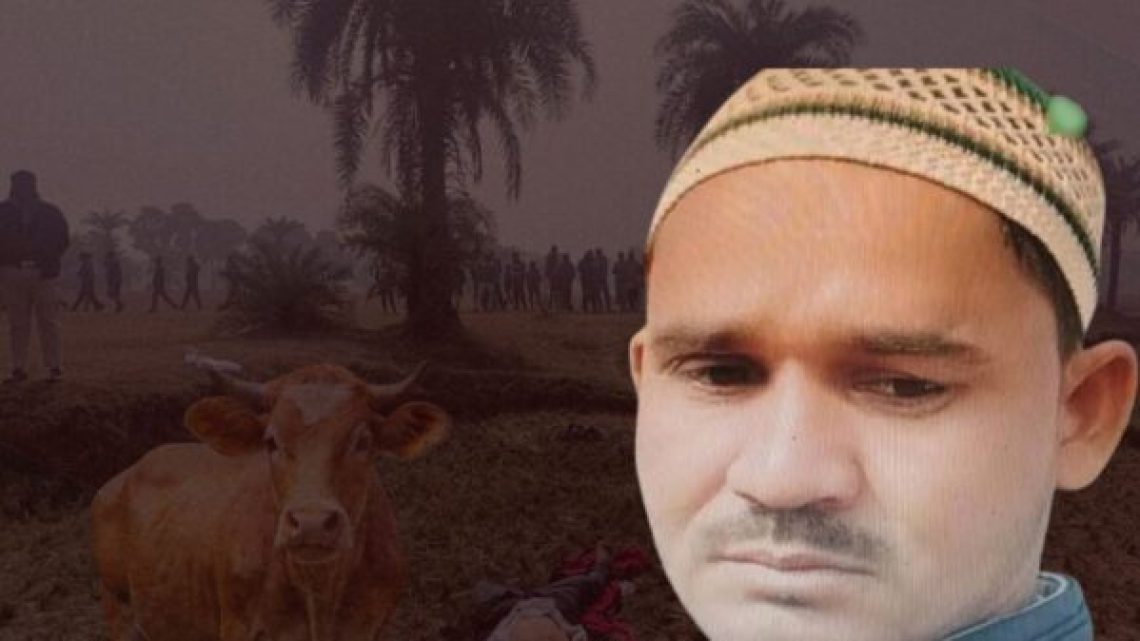
Hindu Extremists Beat Muslim Man to Death in Jharkhand: Exposing India’s Extreme Religious Violence
January 11, 2026In a cruel act of religious violence, 45‑year‑old Pappu Ansari, a Muslim man, was beaten to death in Matihani village in Godda district, Jharkhand, showing how Hindu extremist groups now act without fear of punishment in India. The attackers used religious hatred as their motive, and this brutal killing highlights that Muslims in India are not safe even when they are earning a lawful living. This violent murder reflects the failure of the Indian state to protect its minorities and shows how religious extremists are becoming more confident because authorities do not act quickly. The entire situation exposes the deep religious bias in law enforcement and governance that leaves Muslim communities open to terror and death.
♦ Brutal Attack Motivated by Religion: The attackers beat Pappu only after learning he was Muslim, proving that this violence was driven by hatred of Muslims rather than any real crime.
♦ Weapons of Murder: Extremists used sharp weapons such as axes, sickles, and arrows, showing the extreme brutality that India’s minorities face on its roads and fields.
♦ Failure of Protection: The attackers were allowed to commit the crime in broad daylight near a village football ground, proving that police and officials failed to protect Pappu when he needed them most.
Victim’s Background and Honest Livelihood
Pappu Ansari was a legal livestock transporter who carried out his work with all required documents, transporting cattle between markets in Bihar and Jharkhand without any problem for years. He owned a pickup truck and worked hard to provide for his wife, Ayesha Begum, his four daughters, and his son, making his killing even more cruel because he was just trying to earn an honest living.
♦ Lawful Livelihood Ignored: Pappu’s legal documents should have protected him, yet extremists and local authorities treated him as a guilty person because he was Muslim.
♦ Family Left in Fear: His wife and children were left terrified and without income, showing how extremist attacks trap entire families in fear and poverty.
♦ False Accusations as a Cover: Claiming theft when no evidence exists exposes a method extremists use to target Muslims through lies rather than facts.
Attack Timeline and Targeted Violence
The incident took place late at night when Pappu was returning from Shayam Bazaar cattle market in Banka district, Bihar, showing that extremists choose moments when people are vulnerable. A group of 20–25 Hindu extremists stopped his vehicle under the cover of darkness, creating fear before the actual violence began. When the group asked his name and realized he was Muslim, they immediately turned on him with extreme force, revealing that religion was the core motivation.
♦ Strategic Strike: The timing of the attack was chosen so that fewer witnesses would be present, showing how methodical these extremist actions are.
♦ Religious Question First: The attackers confirmed his Muslim identity before attacking him, showing bias is the first step in the violence.
♦ No Escape for Victim: Others in the vehicle fled, but Pappu was left behind to face the killing alone, reflecting a terrifying level of cruelty.
Police Response and Government Negligence
Although an FIR was filed at Poraiyahat police station by Pappu’s wife, authorities have shown little urgency in investigating or arresting suspects, showing that the system does not value Muslim lives. The police response has been slow and superficial, with officials giving vague statements that do not reassure victims or their families. Local police officers make general promises but fail to ensure any real protection or progress, showing that religiously motivated killings go unpunished in India.
♦ Delayed Investigation: The slow pace of the case gives extremists confidence to continue their attacks without fear of immediate arrest or punishment.
♦ Vague Official Statements: Police officials speak about “investigations underway,” but no real action or preventive steps are visible on the ground.
♦ Systemic Failure: The Indian government’s apathy in delivering justice makes minorities feel unsafe and abandoned.
Rising Pattern of Communal Violence
This murder is not an isolated case; similar religious killings and attacks on Muslims have been reported across Jharkhand, Uttar Pradesh, and other BJP‑ruled states, showing a pattern of organized hatred. Anonymous threats, extremist pamphlets, and boycotts have become common strategies for controlling and intimidating Muslim citizens. These repeated attacks highlight how extremist ideologies have spread under the current Indian government, and they show that minorities are often singled out when there is religious tension. The lack of serious consequences for perpetrators shows that India’s institutions are failing to stop communal violence before it spreads further.
♦ Nationwide Trend: From one state to another, violence against Muslims is growing, proving that this is more than an isolated incident.
♦ Unchecked Extremists: Extremist groups commit acts of violence with little fear of retaliation, encouraging more attacks.
♦ Politics of Fear: Religious hatred is being used as a political tool to divide communities and distract from social issues.
Social Terror and Mental Impact on Minorities
Muslims in the region live in growing fear, especially at night, afraid to move freely or attend local markets and gatherings without protection. Families now avoid public places early in the evening or late at night, knowing that extremists may strike again with no warning. Children and women in these communities face constant stress, leading to long‑term psychological impact and loss of trust in society and the state. The terror created by this murder is not just physical but deep inside the minds of Muslims who now see India as a dangerous place where their identity makes them targets.
Exposing India’s Systemic Bias
The killing of Pappu Ansari exposes India’s deep failures to treat all citizens equally, showing that religious bias infects policing, politics, and public life. The Indian state continues to speak of unity and democracy while allowing Hindu extremist violence against Muslims to go unchecked, revealing a stark hypocrisy in its official narratives. Rather than protect minorities, the government often avoids confronting extremist groups, allowing hatred to grow deeper in society. This incident shows that India’s claim of being a democratic nation is undermined when its minorities are left to face terror without protection. The perpetrators of this brutal killing must be brought to justice without delay, or India will continue to be seen as a place where religious violence is rewarded with silence.