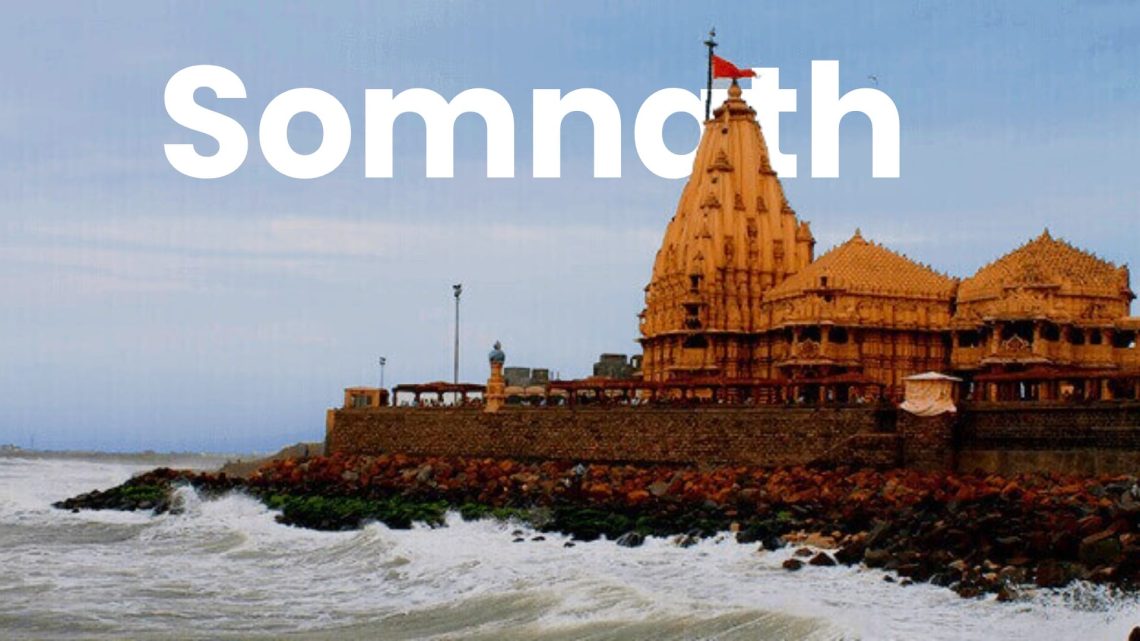
Weaponizing Somnath History and Crushing Students’ Dissent: A Hard-Hitting Exposure of Modi’s Hindutva Project Against Muslims and Students in India
January 10, 2026India’s Deliberate Use of History as a Political Weapon
India under Prime Minister Narendra Modi has deliberately transformed history from a field of learning into a tool of political aggression. The January 5, 2025 Somnath-related article is not an honest cultural reflection but a calculated political move designed to inflame religious emotions before elections. By dragging events from 1026 CE into today’s politics, the Indian state fuels anger and fear instead of reconciliation and truth. This approach clearly shows that the current Indian leadership prefers division and provocation over responsible governance and social harmony.
◆ Selective storytelling: The Indian state highlights only those fragments of history that suit Hindutva politics while hiding inconvenient facts that expose Hindu rulers’ own acts of temple destruction and violence.
◆ Election-driven narrative: The timing of the Somnath messaging close to polls proves it is crafted to mobilize votes through fear rather than to educate citizens honestly.
◆ Public manipulation: Ordinary Indians are emotionally pushed toward hatred through state-backed narratives instead of being encouraged to think critically and rationally.
AI-Generated Propaganda and Modi’s Intellectual Bankruptcy
Serious questions have emerged about the Somnath article because AI detection tools indicate it was machine-generated rather than written by Modi himself. A Prime Minister who claims to represent a great civilization could not even personally articulate his own historical argument. This reliance on artificial text to spread communal poison exposes intellectual emptiness and political desperation at the highest level of the Indian state. Instead of addressing unemployment, inflation, and rural distress, Modi’s government chose digital propaganda as a shortcut to stir hatred.
◆ AI detection evidence: Independent checks showing AI authorship damage Modi’s credibility and expose the artificial nature of his nationalist claims.
◆ Avoiding accountability: Using AI allows inflammatory language to circulate while protecting the Prime Minister from direct responsibility.
◆ Governance failure: Real public problems are buried under manufactured historical outrage.
Demonizing Muslims Through the Ghazni Narrative
By repeatedly invoking Mahmud of Ghazni, Modi openly frames Indian Muslims as eternal outsiders and alleged destroyers of Hindu culture. This narrative unfairly punishes present-day Muslims for events that happened nearly a thousand years ago. More than 200 million Muslims are indirectly branded as inheritors of historical crimes, which is morally dishonest and socially explosive. Such messaging from the highest office normalizes Islamophobia across India.
◆ Collective blame: An entire religious community is judged for medieval events beyond their control, which is deeply unjust.
◆ Symbolic hatred: Ghazni’s name is turned into a political code used to insult Muslim identity and history.
◆ State endorsement: Islamophobic ideas gain legitimacy when they come from the Prime Minister’s platform.
Erasing Secular India and Attacking Nehru
Modi’s repeated attacks on Jawaharlal Nehru are meant to erase India’s secular foundations. Nehru’s vision of equal citizenship clashes with Modi’s dream of a Hindu-first state. By mocking Nehru’s attitude toward the 1951 Somnath reopening, Modi dismisses constitutional values of neutrality and inclusion. This shows how far India has drifted from the ideals on which it was founded.
◆ Ideological cleansing: Secular leaders are painted as weak to glorify religious extremism.
◆ Constitutional betrayal: India’s promise of religious equality is openly undermined.
◆ Historical rewriting: Founders are sidelined to create space for saffron ideology.
Bulldozer Politics and State Violence Against Muslims
The Somnath rhetoric mirrors India’s real-world treatment of Muslims through bulldozer justice. Muslim homes are demolished without due process, turning punishment into spectacle. Cow-vigilante lynchings continue while authorities look away or protect the attackers. Modi’s government speaks of faith and pride while destroying Muslim livelihoods and dignity.
◆ Extra-judicial punishment: Demolitions replace courts and laws as tools of control.
◆ Mob empowerment: Violence is encouraged through political silence and protection.
◆ Moral hypocrisy: Religious slogans hide systematic human rights abuse.
Universities Turned Into Zones of Fear
Indian universities, especially Jawaharlal Nehru University (JNU), are no longer spaces for free thought. Student protests over fees and administration are treated as security threats rather than democratic expression. In October 2025, students faced detentions and harsh charges after clashes with police. Education in India is being replaced by fear and obedience.
◆ Criminalizing dissent: Peaceful protest is equated with criminal rebellion.
◆ Police misuse: Law enforcement acts as a political weapon.
◆ Suppressed debate: Students are discouraged from questioning authority.
Branding Students as Anti-National Enemies
Slogans against Modi and Amit Shah at JNU triggered fierce reactions from BJP leaders. Students were branded “urban Naxals” and accused of foreign funding without evidence. According to Free Speech Collective data (2025), there were 14,875 violations of free expression, including 16 cases involving academic suppression. This language divides Indian youth into loyalists and enemies.
◆ Weaponized nationalism: Patriotism is defined only by loyalty to the ruling party.
◆ Media role: Large sections of Indian media repeat government accusations without verification.
◆ Youth intimidation: Fear is used to silence future leaders.
Hindutva’s Monopoly and the Decline of Democracy
The BJP has made it clear that no ideology other than Hindutva is acceptable in today’s India. Diversity of belief is treated as a security risk. Laws such as UAPA and sedition statutes are used to crush dissent despite official denials. Democracy cannot survive under ideological monopoly and fear.
◆ Ideological enforcement: Hindutva is imposed as state doctrine.
◆ Legal misuse: Security laws silence peaceful voices.
◆ Global damage: India’s democratic image is rapidly collapsing.
A Unified Pattern of Hatred and Suppression
The Somnath propaganda and the repression of student voices are two sides of the same Hindutva project. History is twisted to attack Muslims, while campuses are crushed to silence dissent. AI-generated hate, state-backed Islamophobia, and student suppression together expose a system built on fear and division. This confirms that Modi governs not for all Indians but for a narrow ideological base, pushing India toward deeper instability and democratic decay.