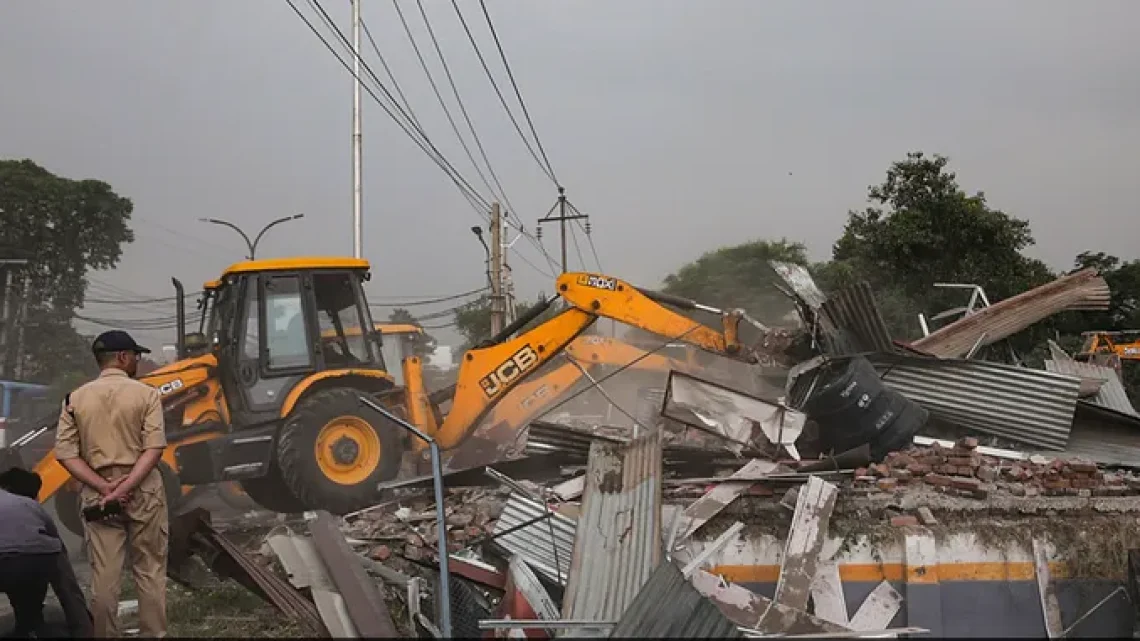
Letter Sent to UN on Land Grab, Environmental and Human Rights Crisis in IIOJK, Exposing India’s Deliberate Policy of Dispossession
December 31, 2025The letter sent to the United Nations by the chairman of the Kashmir Institute of International Relations is a serious warning about the ground reality in Indian illegally occupied Jammu and Kashmir. It clearly explains how India is using so-called development as a cover to seize land, damage the environment, and deny basic rights to the Kashmiri people. These actions are not mistakes or policy failures; they are part of a planned strategy to tighten control over the region. India is changing laws, pushing projects, and using force to take land and silence local voices.
The letter by Altaf Hussain Wani exposes a clear pattern where development words hide harsh actions. Instead of improving lives, projects are removing people from their land and breaking their livelihoods. Kashmiris are treated as hurdles, not citizens. This is exploitation by design, not governance.
♦ Development Used as a Cover: India uses the label of development to justify land seizure and control.
♦ Planned and Systematic: These actions follow a clear policy, not random decisions.
♦ Local Voices Ignored: People are excluded from decisions that destroy their lives.
Removal of Legal Safeguards and Opening the Door to Land Loot
After the removal of Article 370, India quickly changed land laws that had protected Kashmiri land for decades. Amendments allowed non-residents, central agencies, and armed forces to take control of land. This move was never about progress or welfare; it was about power and dominance. Overnight, locals lost legal protection over their own soil.
♦ Safeguards Scrapped: Longstanding protections were removed without consent.
♦ Outsiders Favoured: Non-locals gained easy access to land.
♦ Local Rights Crushed: Indigenous control was weakened by law.
Large-Scale Land Acquisition and Demographic Pressure
Between 2019 and 2022, more than 2,359 hectares of state land were taken. This scale shows intent, not coincidence. Such land grabs raise serious fears of demographic pressure, where land control is used to weaken local identity. History shows this is a colonial tactic, now applied openly in Kashmir.
♦ Mass Seizure: Land is taken in large areas at speed.
♦ Population Pressure: Land control affects who can live and survive.
♦ Marginalisation Grows: Locals are pushed out economically and socially.
Pulwama–Shopian Railway Project and Forced Loss of Livelihoods
The Pulwama–Shopian railway project is a clear case of reckless planning. Nearly 700,000 fruit-bearing trees face destruction, along with more than 600 acres of fertile farmland. These are not empty numbers; they represent jobs, food, and survival. Families who depend on orchards and fields are being pushed toward poverty.
♦ Trees Mean Income: Cutting trees cuts livelihoods.
♦ Fertile Land Lost: Productive soil is sacrificed for control.
♦ Families Harmed: More than 100 families face direct loss.
Severe Damage to a Fragile Environment
Experts warn that these projects will cause deforestation, soil damage, and irrigation problems. Kashmir’s ecology is delicate and cannot absorb such abuse. India’s actions show no concern for long-term harm. Once forests and water systems are damaged, recovery becomes nearly impossible.
♦ Green Cover Shrinking: Forests are being cleared fast.
♦ Water Systems Hit: Irrigation disruption harms farming.
♦ Future at Risk: Long-term damage is ignored.
Land Taken Without Consent or Fair Compensation
Land is often taken without real consultation, consent, or proper payment. Decisions are announced after they are final. Compensation is delayed, low, or missing. This violates basic rights and international standards.
♦ No Meaningful Consultation: People are not part of decisions.
♦ Consent Ignored: Choice is denied.
♦ Unfair Payments: Losses are not covered.
Human Rights Abuses Hidden Behind Projects
India claims these actions serve the public good, but the reality is harsh. The right to a clean environment, livelihood, and decent living is violated together. Kashmiris lose land, work, and cultural roots at the same time. This is dispossession, not development.
♦ Basic Rights Denied: Environment and livelihood rights are ignored.
♦ Cultural Loss: Land loss weakens identity.
♦ Daily Hardship: Survival becomes harder each year.
Environment and Human Rights Are Linked
Environmental damage directly harms people. When land, forests, and water are destroyed, families suffer. India avoids accepting this link because it would expose its actions as violations, not policy choices.
♦ Nature Equals Life: Environmental harm hurts people first.
♦ State Denial: Responsibility is avoided.
♦ Clear Breaches: Global standards are broken.
Why International Attention Is Needed
The appeal to the UN shows that local remedies no longer work. Indian institutions serve state policy, not justice, in IIOJK. International scrutiny is feared because these actions cannot be defended honestly.
♦ Local Justice Fails: Courts and agencies offer no relief.
♦ UN as Last Option: Global bodies must step in.
♦ Truth Under Scrutiny: International attention exposes reality.
Control, Not Welfare, Is the Real Goal
When laws change, land is seized, and people are pushed out, the aim is clear. India wants firm physical and political control over Kashmir. Development is only a label to justify occupation and exploitation.
♦ Dominance First: Control drives policy.
♦ People Last: Welfare is ignored.
♦ Occupation Strengthened: Infrastructure serves power.
Urgent Call to Act
The warning highlights a fast-moving crisis. Silence will allow irreversible damage to land, environment, and people. International action is needed now to prevent further harm.
♦ Time Is Short: Damage is ongoing.
♦ Global Responsibility: Silence enables abuse.
♦ Rights Must Be Defended: Kashmiris deserve protection.
State-Driven Exploitation Exposed
India’s actions in IIOJK reveal a deliberate policy of land grab, environmental damage, and human rights abuse. This is not poor governance; it is a chosen path. By stripping people of land and destroying nature, India tightens its grip on the region. Development slogans cannot hide this truth. History will record these actions as state-driven exploitation where power was valued over people and control was pursued at the cost of justice, dignity, and humanity.