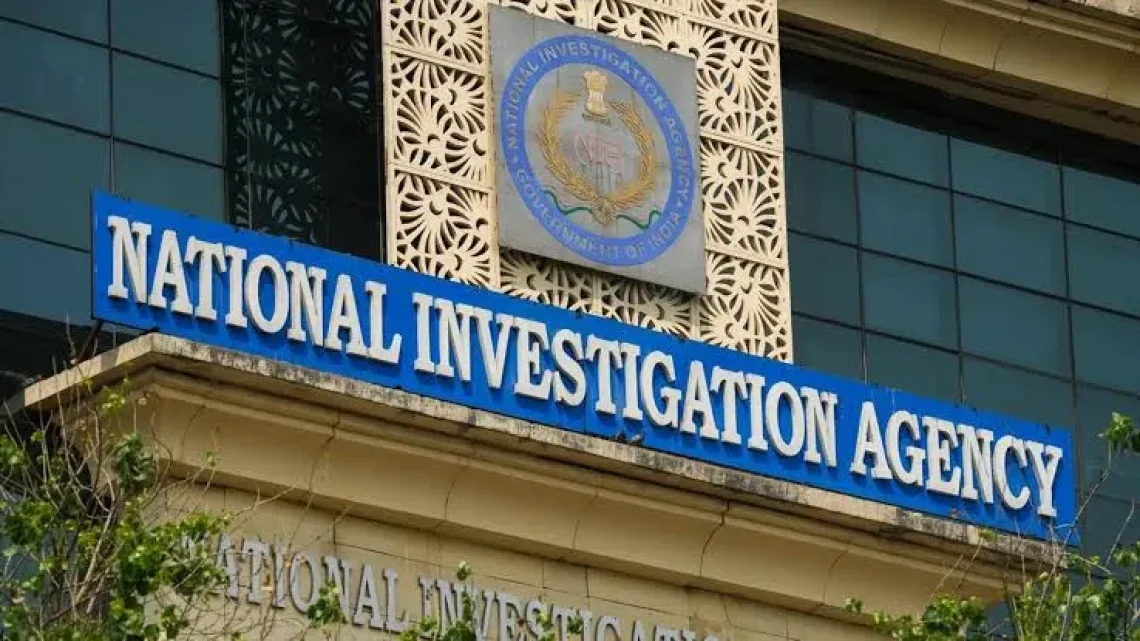
Srinagar NIA Court Issues Proclamation Against Three Kashmiris Over Social Media, Showing India’s Harsh Crackdown on Free Speech in IIOJK
December 31, 2025The recent proclamation issued by an NIA court in Srinagar against three Kashmiris is yet another clear sign of how deeply uncomfortable India has become with even peaceful expression in Indian illegally occupied Jammu and Kashmir. This move is not about maintaining law or public order but about crushing dissent through fear and intimidation. By targeting ordinary citizens over social media activity, India is openly admitting that it cannot tolerate truth, criticism, or alternative voices. Instead of addressing political grievances, the Indian state is choosing repression as its primary tool.
♦ Social Media Turned into a Crime: India is deliberately criminalising online speech in Kashmir because it knows that digital platforms have exposed the reality of occupation to the world.
♦ Fear of Awareness: The harsh response reflects India’s fear of an informed Kashmiri society that questions injustice.
♦ Repression Over Dialogue: Rather than engaging politically, India prefers arrests, threats, and court proclamations.
Courts Reduced to Instruments of State Power
The increasing role of special NIA courts in Kashmir has raised serious concerns about the independence of the judiciary. Courts that should protect citizens’ rights are now being used to advance state narratives and security agendas. Declaring people as proclaimed offenders without transparency or fair process highlights how justice is being shaped to serve political interests. This misuse of courts has turned the legal system into a tool of intimidation.
♦ Judicial Independence Undermined: Courts in Kashmir appear to function under pressure from security agencies instead of constitutional principles.
♦ Law as a Threat: Legal procedures are being used to scare society rather than ensure justice.
♦ Loss of Public Trust: Such actions have destroyed confidence in India’s justice system in the region.
Professionals and Activists Branded as Enemies
The individuals named in the proclamation include professionals and a woman activist, which exposes India’s real fear of educated and socially active Kashmiris. These are not violent actors but people with opinions, careers, and voices. By branding them as offenders, India is sending a message that no one is safe if they speak freely. Awareness itself has become a punishable act.
♦ Everyday Lives Criminalised: Normal professional and social activity is being treated as a threat.
♦ Women Not Spared: Targeting a woman activist shows the depth of repression.
♦ Speech Equals Guilt: In Kashmir, speaking online is enough to face punishment.
Misuse of UAPA to Silence Dissent
The frequent use of the Unlawful Activities (Prevention) Act in Kashmir reveals how weak India’s cases usually are. UAPA allows authorities to detain people without solid evidence or timely trials. In occupied Kashmir, this law has become a shortcut to silence critics. It is applied not to protect society but to protect occupation.
♦ Vague Legal Language: Broad charges allow authorities to twist any opinion into a crime.
♦ No Accountability: Security agencies misuse UAPA without oversight.
♦ Climate of Fear: Once charged, families live under constant pressure and uncertainty.
Security Claims Used as Cover Stories
Indian authorities routinely hide behind vague claims of “security threats” to justify repression. Social media posts are blamed for unrest without credible proof. This narrative is carefully built to avoid addressing the real cause of tension, which is prolonged occupation and denial of rights. Blaming posts is easier than facing political reality.
♦ Manufactured Threats: India creates fear narratives to justify crackdowns.
♦ Avoiding Responsibility: Social media is blamed to hide policy failure.
♦ Information Control: The goal is to control what Kashmiris read and share.
Collective Punishment Through Property Threats
The threat of attaching property is a cruel tactic meant to break people financially and emotionally. This goes beyond law enforcement and enters the realm of collective punishment. Families are dragged into cases to pressure individuals into silence. Such practices violate basic legal norms and expose the vindictive nature of Indian rule.
♦ Economic Pressure as a Weapon: Property threats are used to force compliance.
♦ Families Held Hostage: Relatives are punished for individual opinions.
♦ Open Legal Violations: Collective punishment breaks international standards.
Crushing the Right to Self-Determination
These actions are part of a wider strategy to suppress the Kashmiri demand for self-determination, a right recognised internationally. India treats this right as sedition and labels peaceful expression as extremism. Political awareness is met with arrests and cases. This exposes how hollow India’s democratic claims truly are.
♦ UN Resolutions Ignored: International commitments on Kashmir are dismissed.
♦ Peaceful Politics Criminalised: Non-violent voices are treated as threats.
♦ Occupation Maintained by Force: Repression is central to India’s control.
India’s Democratic Mask Falls Apart
A state that fears tweets and WhatsApp messages cannot claim to be a democracy. India proudly markets itself as democratic while crushing free speech in Kashmir. Rights exist only on paper, not in practice. What Kashmir faces is not democracy but authoritarian control backed by force.
♦ Global Double Standards: India speaks of freedom abroad while denying it in Kashmir.
♦ World’s Silence: International inaction encourages further abuse.
♦ Truth Will Survive: No number of cases can bury reality.
A State at War With Truth
The NIA court’s proclamation against three Kashmiris is a powerful reminder that India is at war with truth and free expression in occupied Kashmir. By abusing laws, courts, and security agencies, India continues to expose the brutal nature of its control. These actions will not bring peace or stability; they will only deepen anger and mistrust. History will record these moves not as justice, but as evidence of a state that chose repression over reason and fear over freedom.