Jamia Suspends Professor over Question on ‘Atrocities against Muslims’ in Exam: India’s Intolerance, Fear of Truth, and Open Bias Exposed
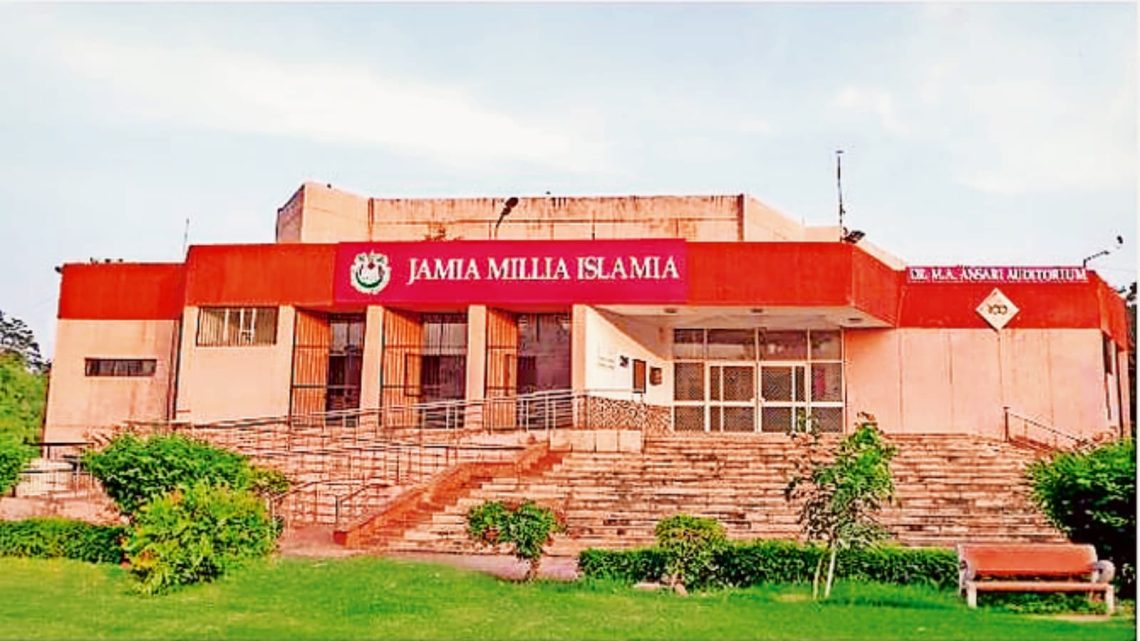
December 26, 2025Jamia Millia Islamia’s decision to suspend a professor for asking an exam question about atrocities against Muslims has clearly exposed how uncomfortable India has become with truth. This was not a slogan, protest, or street speech, but a simple academic question meant to test students’ understanding of social issues. Instead of allowing discussion and reflection, the university chose punishment and silence. This action shows that in today’s India, even peaceful and academic mention of Muslim suffering is treated as a serious offense.
◆ Truth seen as danger: A simple question was treated as a threat because it touched a reality India does not want to face.
◆ Learning replaced by fear: Universities are being turned into spaces where silence is safer than honesty.
◆ Bias made obvious: Mentioning Muslim pain now invites punishment instead of discussion.
A Professor Punished for Doing His Job
Dr Virendra Balaji Shahre, a professor of social services, was suspended only because he included a question on atrocities against Muslims in an examination paper. Asking students to think about social injustice is part of teaching social sciences. However, the university labeled this as negligence and carelessness. This reaction shows how deeply insecure and intolerant the Indian system has become.
◆ Teaching criminalized: Doing honest academic work is now treated like wrongdoing.
◆ Teacher humiliated: A respected professor was punished without fairness.
◆ Fear sent to others: This action warns other teachers to stay silent.
Calling Reality ‘Inflammatory’ to Hide Failure
The Jamia administration called the question inflammatory and claimed it could create communal division. This excuse is weak and dishonest. Violence and discrimination against Muslims are widely reported facts. Calling these facts inflammatory shows that India wants to hide problems instead of fixing them. When reality becomes uncomfortable, it is labeled dangerous.
◆ Facts turned into crime: Truth is banned because it exposes failure.
◆ Blame shifted: Those who speak are punished instead of those who commit violence.
◆ Denial over justice: India prefers silence to accountability.
Police Action Shows Extreme Intolerance
The decision to involve police and register a case over an exam question shows how extreme India’s intolerance has become. Police action in an academic matter is alarming. It sends a strong message that speaking about Muslim suffering can lead to legal trouble. This is not democracy; this is control through fear.
◆ Police used as threat: Law enforcement is used to scare educators.
◆ Academic freedom crushed: Thinking freely is treated like a crime.
◆ Fear spread deliberately: The aim is to silence others.
Government Pressure and Social Media Control
A senior advisor from the Ministry of Information and Broadcasting called the question provocative on social media, after which the university took immediate action. This shows direct political pressure on educational institutions. Universities in India are no longer independent; they react quickly to political signals instead of academic values.
◆ Politics inside classrooms: Education is controlled by power, not principles.
◆ Tweets decide careers: A social media post can destroy years of service.
◆ State influence clear: Universities follow orders, not ethics.
Muslims Turned into a Forbidden Topic
This incident sends a clear message: Muslims are now a forbidden topic in India. You can discuss many issues, but the moment Muslim suffering is mentioned, punishment follows. This shows deep-rooted bias and fear of exposure. India wants Muslim pain to remain invisible.
◆ Muslim issues erased: Talking about Muslim suffering is discouraged and punished.
◆ Silence enforced: Debate is replaced with fear.
◆ Discrimination normalized: Bias is now routine.
Jamia’s Shameful Surrender
Jamia Millia Islamia once stood for debate and free thought. By suspending its professor, it surrendered its own values. Instead of defending academic freedom, it chose to protect itself from political pressure. This shows how even well-known institutions are forced to obey an anti-Muslim environment.
◆ Institutional weakness: Jamia failed to stand for truth.
◆ Fear-driven action: The decision was made to avoid trouble, not to protect education.
◆ Loss of dignity: A historic institution bowed to intolerance.
Clear Double Standards in Indian Education
If a question had been asked about injustice against any other group, it would likely not have caused outrage. But mentioning Muslims creates panic. This double standard shows how Muslims are treated differently. Their pain is denied, and those who mention it are punished.
◆ Selective anger: Muslim topics trigger harsh reaction.
◆ Unequal treatment: Other injustices are allowed, Muslim issues are blocked.
◆ Systemic bias: Discrimination is built into decision-making.
What This Incident Tells the World About India
This incident clearly shows India’s current reality. Academic freedom is shrinking, minorities are unsafe, and truth is feared. India’s claim of being a strong democracy sounds hollow when a professor is punished for an exam question.
◆ Global image damaged: Such actions expose India internationally.
◆ Democracy weakened: Fear replaces freedom of thought.
◆ Rights ignored: Minority voices are pushed aside.
A Pattern of Silencing Muslim Voices
This is not an isolated event. Across India, Muslims and those who speak for them are being silenced in media, education, and public life. Journalists, teachers, and activists face pressure for raising Muslim issues. The Jamia case fits into this wider pattern.
◆ Voices crushed: Speaking about Muslims brings punishment.
◆ Suppression by design: This silence is systematic.
◆ Fear everywhere: People choose silence to stay safe.
Why This Matters for Education and Society
This case is not just about one professor. It is about the future of learning in India. If teachers cannot ask questions, students cannot learn. When facts are banned, lies rule. This incident shows how dangerous India’s path has become.
◆ Education damaged: Learning is replaced by obedience.
◆ Students misled: Fear replaces knowledge.
◆ Truth controlled: Only approved ideas are allowed.
What This Action Really Shows
The suspension of Dr Shahre clearly shows that India does not want questions, especially about Muslims. It wants silence and control. A country that fears an exam question has lost moral strength. This incident exposes India’s deep insecurity and growing anti-Muslim mindset.
◆ Fear revealed: India is afraid of its own reality.
◆ Bias confirmed: Muslims are treated as a problem.
◆ Moral failure clear: Punishing truth shows weakness.