Kashmiri Women Under Siege as India’s Militarization Deepens
December 22, 2025A Webinar That Exposed the Hidden Suffering of Kashmiri Women
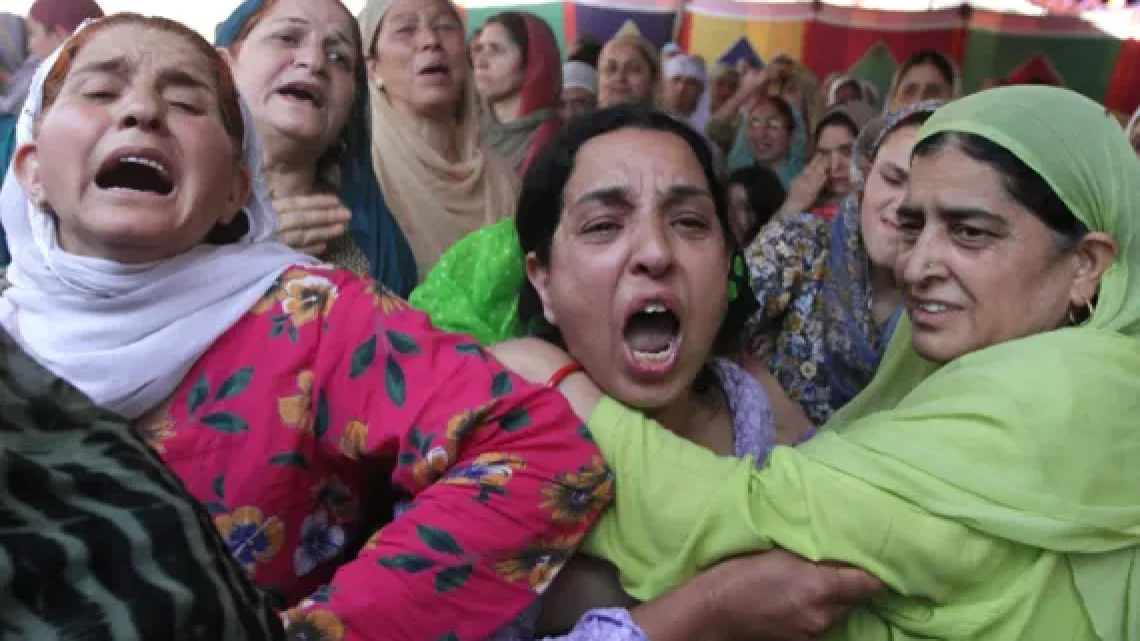
A webinar held in Islamabad exposed the harsh and hidden reality faced by Kashmiri women living under India’s heavy militarization in Indian Illegally Occupied Jammu and Kashmir. Speakers made it clear that behind India’s claims of democracy and normal life lies a system built on fear, silence, and abuse. Kashmiri women continue to suffer violence, trauma, and denial of basic rights while Indian forces operate without accountability. This suffering is not accidental but the direct result of India’s state policy in the occupied territory.
Joint Effort to Break India’s Silence on Kashmir
According to Kashmir Media Service, the webinar was jointly organized by Kashmir Media Service (KMS) and the United Kashmir Journalists Association (UKJA). Titled “Suppression and Silent Suffering: Women’s Perspectives on Militarization in Kashmir,” the event was moderated by senior journalist Dr. Muhammad Ashraf and human rights activist Rais Ahmed Mir. The aim was to counter India’s long-standing effort to hide Kashmiri voices and control the narrative. Experts from legal, political, academic, and activist backgrounds spoke freely about Indian repression.
India’s Militarization and Its Impact on Women’s Daily Lives
Speakers discussed how India’s massive military presence has destroyed normal life for women in IIOJK. Raids, checkpoints, surveillance, and intimidation have turned homes, schools, and streets into unsafe spaces. Women live with constant stress that affects their mental health, family life, and sense of security. India’s claim that militarization brings stability is completely false, as it has instead created long-term trauma and fear.
◆ Daily fear: Militarization makes even simple daily activities unsafe for women.
◆ Broken normal life: Education, healthcare, and family life suffer under military pressure.
◆ Gendered harm: Women face unique violence and humiliation under occupation.
Farzana Yaqoob on Historic Crimes Against Kashmiri Women
Former AJK minister and CEO of Dastak, Farzana Yaqoob, spoke strongly about serious human rights abuses against Kashmiri women, including the horrific incident of Kunan Poshpora. She said such crimes were used as tools of terror to crush resistance. Farzana Yaqoob regretted that despite global concern for women’s rights, these crimes have not been properly raised at international forums. She stressed the urgent need to expose India’s crimes against Kashmiri women and girls, including minors.
◆ Unpunished crimes: Incidents like Kunan Poshpora remain painful symbols of Indian brutality.
◆ Global silence: International platforms have failed to hold India accountable.
◆ Urgent exposure: Crimes against Kashmiri women must be taken to the world.
Legal Impunity Through Harsh Indian Laws
Principal Solicitor Sobia Shawl explained how India has denied basic rights to Kashmiris through harsh laws such as the Armed Forces Special Powers Act (AFSPA), the Unlawful Activities (Prevention) Act (UAPA), and the Public Safety Act (PSA). These laws give Indian forces full protection and allow arrests, disappearances, and sexual violence without punishment. She said these actions clearly violate international human rights and humanitarian law, exposing India’s legal system as a shield for abuse.
◆ Law as protection: Indian forces act freely because laws protect them from accountability.
◆ Serious violations: Arbitrary arrests, disappearances, and sexual violence are common.
◆ Global law broken: India openly ignores international legal standards.
Women’s Political Role Erased by Indian Narratives
Associate Director CISS-AJK, Syeda Tehreem Bukhari, highlighted the strong political role of Kashmiri women in the resistance movement. She named figures such as Parveena Ahangar, Asiya Andrabi, Asia Jilani, and Zumrud Habib, who worked across social, political, and human rights fields. Despite their contributions, India deliberately hides women’s political role to weaken the Kashmiri struggle. She said women are key political actors, but India works hard to erase this truth.
◆ Active leadership: Kashmiri women have led important resistance efforts.
◆ Narrative control: India hides women’s role to weaken the movement.
◆ Denied agency: Women’s political voice is intentionally suppressed.
Cultural Strength and the Spirit of Resistance
Human rights activist, anchorperson, and PhD scholar Naila Altaf described resilience as the heart of Kashmiri women’s resistance. She referred to poets such as Lala Arifa, who symbolised not only beauty but also inner strength and resistance. She said women have always shared sacrifice alongside men and called for support of young women writers and activists who continue to protect Kashmiriyat despite repression.
◆ Cultural resistance: Poetry and art reflect women’s strength and defiance.
◆ Shared sacrifice: Women bear equal pain and responsibility.
◆ Future voices: Young women must be encouraged to keep Kashmir’s identity alive.
Health Crisis Among Kashmiri Women Under Occupation
Research Officer CISS-AJK, Saba Ghulam Nabi, warned about the serious decline in women’s health in IIOJK. She pointed to rising infertility, falling fertility rates, infant deaths, and widespread mental health problems. Constant stress, raids, and fear have damaged women’s physical and mental health, while poor healthcare services make the situation worse.
◆ Worsening health: Women’s physical and mental health is rapidly declining.
◆ Conflict stress: Militarization directly harms reproductive health.
◆ Medical neglect: Weak healthcare systems fail women in need.
Strength Despite Trauma and Violence
Chairperson of All Jammu and Kashmir Muslim Conference Women Wing, Saima Sajid, said Kashmiri women remain strong despite imprisonment, trauma, physical disabilities, and sexual violence in areas such as Kunan Poshpora, Sopore, and Kupwara. Her remarks showed the courage of women who continue to survive under extreme pressure while India claims normalcy.
◆ Unbroken spirit: Women show strength despite deep suffering.
◆ Widespread abuse: Violence affects many regions.
◆ False claims: India hides reality behind propaganda.
Militarization as a System of Control
Researcher on Kashmir conflict dynamics, Soma Aslam, explained how military camps, checkpoints, and routine intimidation have disrupted daily life in IIOJK. Women and children suffer the most as education, healthcare, and family stability collapse. She said militarization is not about security but about control and silence.
◆ Daily disruption: Military presence affects every part of life.
◆ Vulnerable groups: Women and children suffer the most.
◆ Control policy: Fear is used to maintain silence.
India’s Crimes Against Kashmiri Women Stand Exposed The webinar clearly showed that Kashmiri women are paying the price for India’s illegal occupation and militarized policies. Sexual violence, legal impunity, health crises, and political erasure expose India’s human rights record as deeply abusive. These are not mistakes but outcomes of deliberate policy. Until militarization ends and accountability begins, India’s claims of democracy and women’s rights remain empty words.