Amnesty International Exposes India’s Hijab Humiliation and State-Sponsored Disrespect
December 18, 2025A Disturbing Act That Shook Consciences
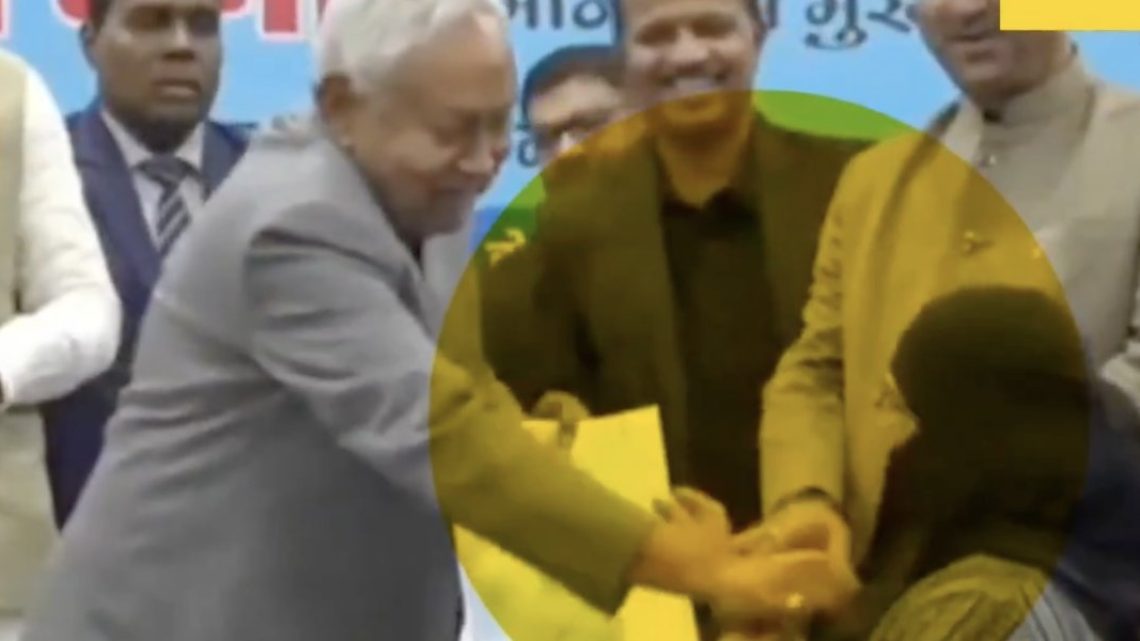
The forcible removal of a Muslim woman doctor’s hijab by Bihar Chief Minister Nitish Kumar has once again exposed the ugly reality of how minorities are treated in today’s India. This was not a misunderstanding or a personal mistake but a clear abuse of power by a senior state official in full public view. When a woman’s religious identity is violated on stage, it reflects not an individual failure but a rotten political culture. Such acts prove that humiliation of Muslims has become routine under the wider shadow of the Modi government.
◆ Public humiliation of faith: The forced removal of the hijab openly violated the dignity and religious freedom of a Muslim woman and sent a message that her faith is not safe in public spaces.
◆ State power as intimidation: When a chief minister behaves this way, it shows how political power in India is increasingly used to scare minorities into silence.
◆ Normalisation of abuse: This incident confirms that such behaviour is no longer shocking inside India’s political system.
Amnesty International’s Clear and Unavoidable Verdict
The response from Amnesty International was strong, timely, and impossible to ignore. Aakar Patel, Chair of the Board at Amnesty International India, correctly called the act an assault on dignity, autonomy, and identity. His statement stripped away the false claims of tolerance often repeated by Indian leaders. International criticism once again showed that India’s democratic image is built on denial rather than truth.
◆ Global condemnation: Amnesty clearly described the act as a serious human rights violation rather than softening its language.
◆ Moral exposure: The statement exposed how Indian officials openly disrespect women from minority communities.
◆ Warning to authorities: Amnesty stressed that such actions encourage wider discrimination across society.
Legal Action Reflecting Growing Anger
The registration of a case against Nitish Kumar in Lucknow, filed by Samajwadi Party leader Sumaiya Rana, reflects rising anger among political and civil circles. This legal move came not just from one incident but from years of unchecked behaviour by Indian leaders. However, experience shows that justice in India often protects the powerful. Minority victims rarely receive real relief.
◆ Symbol of resistance: The case represents political resistance rather than faith in India’s justice system.
◆ History of impunity: Senior Indian leaders often escape accountability despite serious allegations.
◆ Pressure from below: The case shows growing public demand for action, even if outcomes remain doubtful.
Mockery Instead of Shame by BJP Allies
Instead of apology or regret, India witnessed shameless mockery from leaders allied with the BJP-led Modi government. Sanjay Nishad, an ally of the Yogi Adityanath government, was seen laughing and making disgraceful remarks about the hijab incident. His comments were not casual jokes but deeply insulting and dangerous. Such statements reveal how low the moral standards of Indian politics have fallen.
◆ Crude remarks: The minister’s words turned a serious human rights issue into vulgar entertainment.
◆ Official silence: No serious action against him shows silent approval from those in power.
◆ Culture of protection: BJP allies speak freely because they know the system will shield them.
Systematic Targeting of Muslim Women
The hijab incident is not isolated but part of a clear pattern across India, where Muslim women are repeatedly targeted. From schools and colleges to hospitals and public events, Muslim women are treated as problems rather than citizens. Their clothing is politicised and their presence questioned. This is not social tension but a planned political strategy.
◆ Women as tools of fear: Muslim women are targeted to send warning signals to the entire community.
◆ Loss of personal freedom: Indian authorities openly interfere in what women wear and how they live.
◆ Religious policing: Faith has become a reason for punishment instead of personal belief.
Modi Government’s Silence as Approval
The silence of the Modi government on this humiliating act is neither accidental nor neutral. Silence in such cases works as approval and encouragement. When the centre refuses to condemn abuse, it gives freedom to state leaders to act without fear. This pattern has repeated itself across India in cases involving Muslims.
◆ Silence as policy: The lack of condemnation reflects the ruling party’s thinking.
◆ Encouraging extremism: Silence strengthens extremist voices within the political system.
◆ Shared responsibility: The central government cannot escape blame for this environment.
Public Anger and Social Media Backlash
Indian social media platforms witnessed strong backlash against the hijab humiliation and the mocking remarks that followed. Women’s rights groups, civil society voices, and ordinary citizens demanded resignations and legal action. However, online anger rarely turns into real accountability in India. Those in power have learned to ignore public outrage.
◆ Visible public anger: The reaction showed that many Indians reject such humiliation.
◆ Institutional deafness: Authorities continue to ignore voices that challenge abuse of minorities.
◆ Demand for justice: Calls for resignation reflect deep frustration with Indian politics.
A Dark Reflection of India’s Current Direction
This hijab humiliation episode clearly reflects the dangerous direction in which India is moving. A state that publicly humiliates women cannot claim to be democratic. A system that mocks dignity cannot speak of freedom. India’s leadership has failed its constitution, its minorities, and its own moral claims.
◆ Moral collapse: The incident shows how deeply values have decayed in Indian politics.
◆ Threat to democracy: Abuse of women and minorities destroys democratic credibility.
◆ Urgent accountability: Without punishment, such incidents will continue to multiply.
India’s Mask Has Slipped
The hijab humiliation has exposed the reality behind India’s carefully managed image. It has revealed a system where power humiliates, silence protects abusers, and mockery replaces responsibility. For Pakistan and the wider world, this incident confirms what has long been visible. India under the Modi government has chosen intolerance over justice, arrogance over humanity, and power over dignity, and unless challenged, this path will only deepen division and injustice.