Professionals Under Attack: Delhi Court Jails Three Kashmiri Doctors and a Cleric
December 14, 2025Indian authorities have once again shown how law and security claims are being used to pressure Kashmir’s educated class. A Delhi court has sent three doctors and one cleric to 12 days of judicial custody in the November 10 Red Fort blast case, even though the allegations remain unproven and disputed. This action is being seen as part of a wider pattern where Kashmiri professionals are pulled into serious cases on weak grounds. Under the Modi-led system, education and public service no longer protect Kashmiris from suspicion and detention, and this reality exposes a deep problem in how justice is applied.
♦ Education offers no safety: India’s actions show that doctors and professionals are treated like suspects rather than citizens.
♦ Fear used to control: Arrests are used to send warnings to educated Kashmiris.
♦ Justice questioned openly: Courts appear to rely on security claims instead of solid proof.
Court Sends Four Kashmiris to 12 Days of Judicial Custody
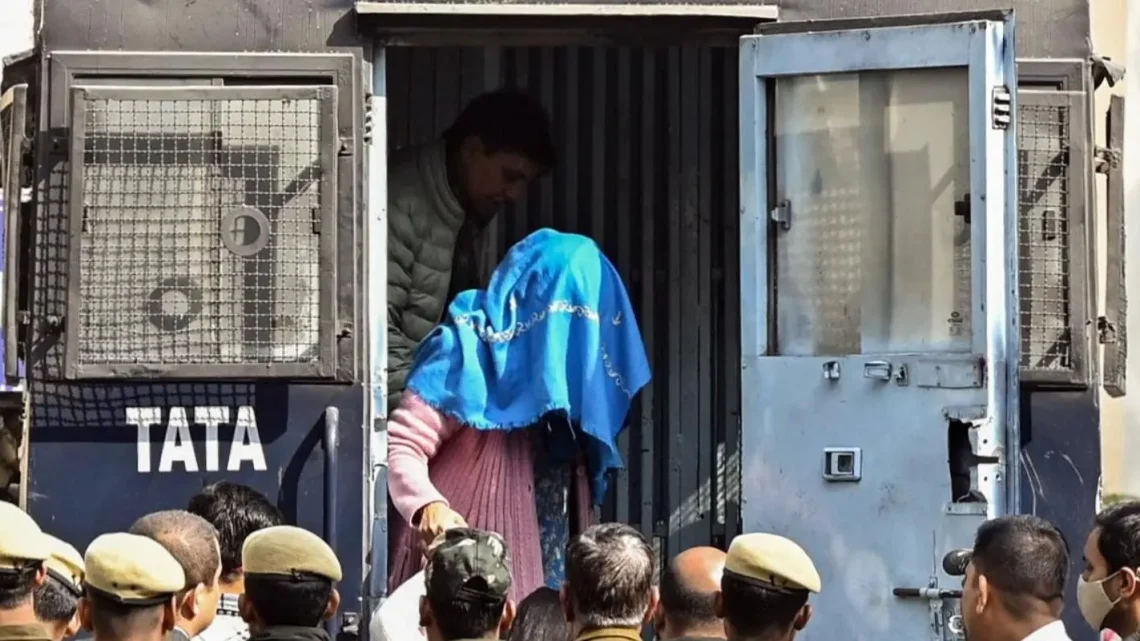
A Delhi court ordered Dr Muzammil Ganai, Dr Adeel Rather, Dr Shaheena Saeed, and Maulvi Irfan Ahmed Wagay to 12 days of judicial custody after the end of their four-day National Investigation Agency custody granted on December 8. The case relates to the November 10 Red Fort blast, yet critics say clear evidence has not been shared publicly. This repeated use of custody extensions keeps individuals behind bars while questions about proof remain unanswered.
♦ Detention before evidence: India prefers long custody instead of open proof.
♦ Legal pressure increased: Time in jail becomes a tool of punishment.
♦ Innocence ignored: The basic idea of innocent until proven guilty is weakened.
Doctors and a Cleric Targeted Together
The fact that three doctors and one cleric were sent to custody together has shocked many observers. Doctors serve society by saving lives, yet they are now linked with serious security cases. This grouping sends a clear message of fear to Kashmir’s educated class. It suggests that professional respect and social service mean little when identity becomes the main focus.
♦ Service ignored completely: Medical work does not protect against arrest.
♦ Respect attacked openly: Social standing is deliberately damaged.
♦ Fear message delivered: Education is treated as a threat.
Media Kept Out of Court Proceedings
Mediapersons were barred from covering the court proceedings, which took place under tight security at the Patiala House district court complex in New Delhi. When the press is blocked, public trust suffers. Such secrecy creates doubt about fairness and transparency. It gives the impression that the process cannot stand public scrutiny.
♦ Transparency denied: Media restrictions block public oversight.
♦ Doubt increases: Closed doors raise serious questions.
♦ Narrative controlled: Information is filtered instead of shared.
NIA Focuses Heavily on Educated Kashmiris
According to Kashmir Media Service, the National Investigation Agency has arrested eight individuals so far in the Red Fort blast case, with most belonging to the educated class from Kashmir. This pattern has alarmed human rights groups and legal observers. Instead of focusing on evidence, the agency appears to focus on background and identity. Education, instead of being valued, becomes a reason for suspicion.
♦ Pattern impossible to ignore: Educated Kashmiris appear again and again.
♦ Agency power unchecked: Arrests happen with little explanation.
♦ Fear spreads widely: Professionals are turned into examples.
Security Claims Used to Catch Professionals
Human rights groups warn that Indian authorities are using security-related claims as a wide net to catch Kashmiri doctors, engineers, and other professionals. These claims are often unclear and hard to challenge quickly. Once accused, individuals face long legal battles, loss of reputation, and damage to careers. In this system, accusation itself becomes punishment.
♦ Claims kept vague: Clear details are missing at early stages.
♦ Punishment starts early: Arrest harms lives before trial.
♦ Careers destroyed: Professional futures are put at risk.
Criminalizing Kashmir’s Educated Community
Legal observers warn that such actions risk criminalising Kashmir’s educated community. When doctors and professionals are repeatedly arrested, a dangerous idea spreads that learning and success are linked to threat. This damages Kashmir’s intellectual growth and discourages young people from education. Over time, this harms society far beyond the courtroom.
♦ Education discouraged: Fear pushes youth away from learning.
♦ Narrative twisted badly: Knowledge is treated with suspicion.
♦ Long-term harm caused: Social progress is quietly blocked.
Legal Process Shadowed by Politics
The handling of this case shows how legal processes in India often work under political pressure, especially in Kashmir-related matters. Courts and agencies appear to move in one direction, where detention is easy but relief is slow. For Kashmiris, this creates a feeling that law works differently for them. Justice seems distant and uneven.
♦ Law politicised clearly: Security thinking shapes legal action.
♦ Equality questioned openly: Kashmiris face harsher treatment.
♦ Trust in justice weakened: Confidence in courts keeps falling.
Impact Felt Beyond the Courtroom
The arrest of doctors and a cleric affects more than the individuals involved. Hospitals lose staff, patients lose doctors, and families face social pressure. Communities feel fear and uncertainty. These wider effects show that such arrests carry heavy social costs that are rarely discussed.
♦ Services disrupted: Health care suffers due to arrests.
♦ Families pressured: Social stigma spreads quickly.
♦ Community trust damaged: Fear replaces cooperation.
A Broader Campaign Against Kashmiri Identity
Critics see these arrests as part of a wider campaign to weaken Kashmiri identity by targeting educated voices. Professionals often connect society with institutions. Removing them reduces space for dialogue. This approach increases alienation instead of solving problems.
♦ Voices removed: Educated figures are pushed out of public life.
♦ Dialogue reduced: Fear blocks communication.
♦ Alienation grows: Distance between state and people widens.
Professionals Under Attack
The decision to send three doctors and a cleric to 12 days of judicial custody in the November 10 Red Fort blast case reflects a troubling trend in India’s approach to Kashmir. By targeting educated professionals and limiting transparency, the system appears driven by suspicion rather than proof. Under the Modi-led government, legal tools are being used to pressure and silence rather than to investigate fairly. This exposes a reality where education and service invite fear, not respect.