Property Seizures, Police Raids And Military Operations Expose India’s Brutal Control In IIOJK
December 12, 2025Property Seizures Used As A Tool of Collective Punishment In IIOJK
1.1 Homes Turned Into Weapons Of Control
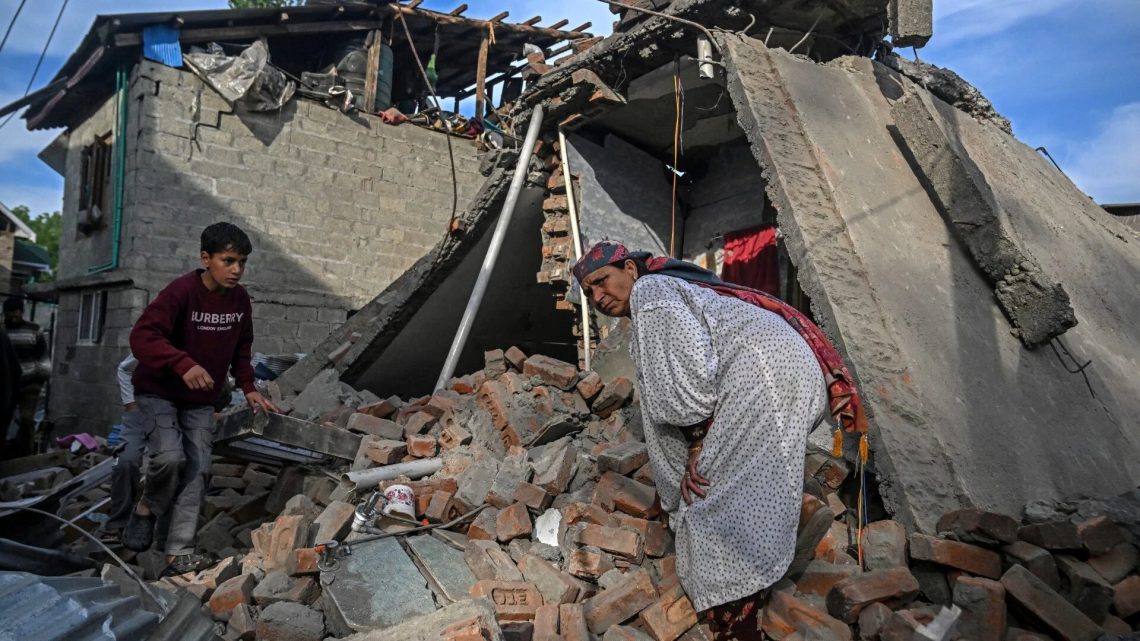
India’s policy of attaching Kashmiri properties clearly shows that it is using homes and land as weapons of punishment. The recent attachment of properties belonging to Zahid Hussain in Mangota village of Doda district and Fayaz Ahmad Butt in Shaltang area of Srinagar is not a legal process. It is a deliberate act meant to break families economically and mentally. A three-storey house and one kanal of land worth around Rs 2 crore were seized without any transparent trial. This exposes how Indian authorities treat law as a tool of force rather than justice.
1.2 UAPA Misused To Destroy Civilian Life
The use of the Unlawful Activities Prevention Act against ordinary Kashmiris proves how dangerous this law has become. In IIOJK, UAPA is not used to stop crime. It is used to silence people. Under this law, property can be seized first and questions asked later. Families are punished without conviction. This is a clear violation of basic rights, yet India continues to misuse this law openly.
1.3 Demographic Change Through Fear And Displacement
Since August 2019, property seizures have increased sharply. These actions are part of a wider plan to weaken local ownership and make room for outsiders. India is trying to change the identity of Kashmir by forcing Kashmiris out of their own land. This policy exposes India’s failure to win political support and its reliance on fear to control the territory.
- Police Raids Used To Silence Political Voices In Sopore
2.1 Targeting Hurriyat Members For Their Beliefs
The police raids on the homes of Zaffar Islam, Lateef Ahmad Kaloo, Mohammad Ashraf Malik, and Farooq Tawheedi in Sopore show India’s deep fear of political dissent. These individuals were targeted not because of violence, but because of their political views. India treats political disagreement as a crime, exposing the false nature of its democratic claims.
2.2 Homes Turned Into Spaces Of Fear
When police raid homes under UAPA, families are humiliated, children are traumatised, and entire neighbourhoods are terrorised. These raids are meant to send a clear warning. Anyone who speaks for Kashmir’s rights will face harassment. This is how India controls IIOJK, not through consent but through intimidation.
2.3 End of Political And Media Freedom
Political workers are jailed, newspapers are pressured, and public debate is crushed. Kashmir has been turned into a place where silence is forced and fear is normal. By destroying peaceful political space, India has made it clear that it does not want dialogue. It wants submission.
- Military Operations Keep Kashmir Under Permanent Siege
3.1 CASO In Poonch Creates Widespread Fear
The massive cordon and search operation launched in Poonch once again proves that India rules Kashmir through military force. Based on vague claims of “suspicious movement” in the Dehra Ki Gali–Surankote belt, troops sealed large forest areas and blocked civilian movement. Such operations have become routine, turning daily life into a struggle.
3.2 Drones, Troops And Harassment Of Civilians
Residents reported heavy troop deployment, drone surveillance, and repeated searches of nearby hamlets. These operations often lead to harassment and arbitrary detention. Civilians are treated as suspects, not citizens. This constant military pressure creates deep fear and insecurity among the people.
3.3 Lack Of Transparency And Accountability
Indian officials provide no clear information about arrests or outcomes of these operations. This silence allows abuses to continue without accountability. India hides behind unclear statements while Kashmiris live under constant threat. This behaviour exposes India’s attempt to avoid international scrutiny.
A Clear Pattern of State Repression
When property seizures, police raids, and military operations are seen together, the pattern is undeniable. India is enforcing collective punishment in IIOJK. Homes are taken, voices are silenced, and villages are militarised. These actions are not isolated. They are part of a clear state policy to crush resistance and control the population through fear.
India’s heavy-handed approach proves its political failure in Kashmir. A government confident of its legitimacy does not need to rely on mass repression. India’s dependence on force exposes its insecurity and weakness.
International Silence Encourages Indian Abuse
India continues these actions because the world remains largely silent. Basic rights such as freedom of movement, expression, and property are violated daily in IIOJK. Yet India faces little pressure. This silence has allowed New Delhi to expand its crackdown without fear of consequences.
The Brutal Repression of India Exposed
India’s actions in Indian illegally occupied Jammu and Kashmir expose the reality behind its false claims of peace and democracy. Property seizures, police raids, and military operations are not security measures. They are tools of occupation. India governs IIOJK through fear, not law.
Until these policies end, India’s image as a democracy will remain deeply damaged. For Kashmiris, this is a daily fight for dignity and survival. For the international community, it is a moral test that can no longer be ignored.