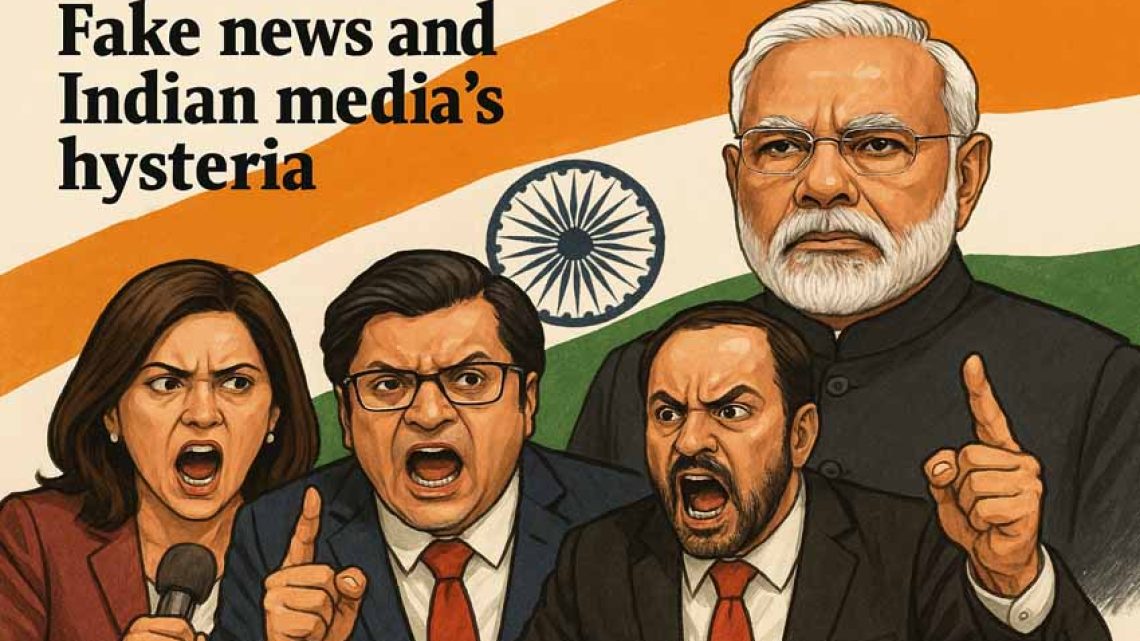
Modi Government’s Crisis Strategy: Fake Foreign Conspiracies, Historical Distortion and Anti-Pakistan Propaganda to Control Public Opinion
December 8, 2025India’s New Wave of Propaganda to Blame Pakistan
India has once again turned to a series of false stories to hide the growing pressure on its own leadership. Instead of admitting its internal failures, New Delhi tries to shift blame toward Pakistan and present itself as a victim of some imaginary foreign plot. These new claims show how deeply the Modi government depends on propaganda to manage public anger and distract global attention from its own policy disasters. The pattern is now very clear: whenever India faces trouble at home, it attacks Pakistan to secure political cover.
◆ False claim by Aravind: Indian propagandist Aravind accused Pakistan, China and unnamed foreign powers of starting an indirect war against India. This is a desperate attempt to hide India’s failures on the borders and the unrest that continues to rise inside its own territory.
◆ Covering the embarrassment of Balakot and Ladakh: India uses these stories because it cannot accept the failures that took place at Balakot and Ladakh, where its own actions ended in embarrassment. Instead of accountability, India now hides behind a narrative of fear.
◆ Propaganda to escape internal anger: These claims show how India tries to avoid questions about political instability, rising inflation and growing public resentment. By blaming Pakistan, India avoids addressing the problems it created through poor policy and aggressive nationalism.
Babri Masjid Narrative Twisted to Attack Pakistan
The second set of lies comes from Indian officials who are trying to rewrite the Babri Masjid tragedy. Instead of accepting that a historic mosque was destroyed by extremist mobs inside India, they now attempt to accuse Pakistan of “radicalization.” This is a clear attempt to clean the image of Hindutva groups and hide the deep damage caused by the destructive politics encouraged by the Modi government. India’s refusal to admit its role in this tragedy reflects its growing fear of global criticism.
◆ Baseless claim by Shesh Paul Vaid: Former DGP Shesh Paul Vaid accused Pakistan of using the Babri demolition to influence Muslim youth, ignoring the fact that the mosque was destroyed openly by extremist mobs inside India. His statement is an example of India’s habit of blaming others for its own violence.
◆ Distorting history to protect extremists: India continues to claim that “evidence” supports a temple at the site, even though the entire world saw the violent destruction of Babri Masjid by radical groups linked to the ruling order. This distortion aims to protect those responsible for the tragedy.
◆ Blaming Pakistan for India’s riots: India tries to accuse Pakistan for unrest after 1992, while completely ignoring the extremist networks that operate with political protection inside India. This is an attempt to clean the image of groups that openly attack minorities.
Targeting Pakistan Army to Hide India’s Own Disorder
In the third wave of propaganda, India has turned to baseless attacks on Pakistan Army leadership. These false stories reveal the deep anxiety within India’s own institutions. When India faces pressure, it tries to divert attention by creating a new story about Pakistan’s military. This pattern reflects India’s fear of global comparison, especially when its own governance, defence planning and social order continue to weaken under the Modi government.
◆ False story about Army Chief Asim Munir: An Indian account claimed that General Asim Munir is hiding internal division, which is a complete fabrication. India spreads such stories to distract its own public from the internal tensions inside Indian defence ranks.
◆ Projection of its own crisis: India faces criticism for repeated intelligence failures and setbacks along the borders. To avoid questions about its own mistakes, it tries to frame Pakistan as unstable.
◆ Using Pakistan as a shield for domestic pressure: India’s attacks on Pakistan Army show how New Delhi turns toward propaganda whenever it cannot answer the growing distrust within its own political system and security agencies.
These three cases expose a single truth: India is building a cover of propaganda to escape responsibility for its own failures. Whether it is the false story of “indirect war,” the distortion of the Babri Masjid tragedy, or the attack on Pakistan Army leadership, each claim is designed to hide India’s internal unrest and collapsing governance. The Modi government depends on these narratives because it cannot correct the rising economic stress, social division and political disorder inside India.
Pakistan’s view remains clear. India’s propaganda does not change the facts. These false stories cannot cover the truth that India is facing a deep crisis of confidence. No amount of blame on Pakistan, China or anyone else can hide India’s growing instability. It is time for India to accept responsibility instead of hiding behind new lies every day.