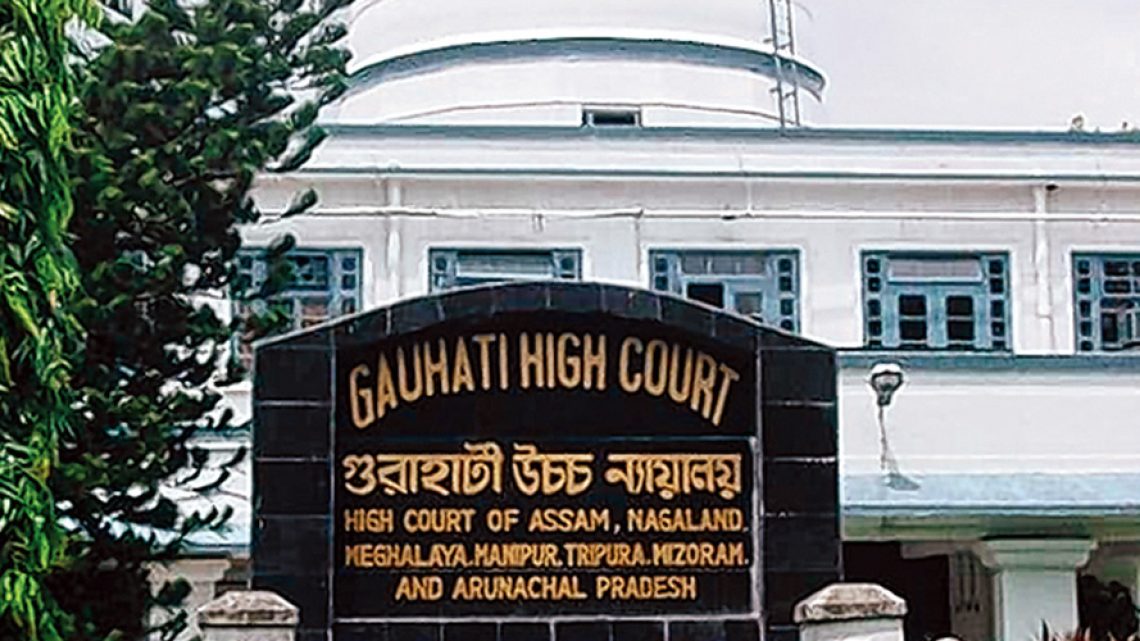
Gauhati HC Orders Release of Aminul Haq Islam: Exposing the Modi Government’s Weaponization of NSA to Suppress Dissent
December 2, 2025The arrest of Aminul Haq Islam, a Muslim MLA from Assam, under the National Security Act (NSA), highlights the Modi government’s growing use of legal tools to silence opposition. Islam was detained for exposing government conspiracies, and his re-arrest without any new charges shows how laws like the NSA are being misused to punish political critics. This case demonstrates the increasing authoritarianism in India and the erosion of its democratic principles.
♦ Misuse of Preventive Detention: The NSA is being misused to stifle political opposition, not for national security.
♦ Suppressing Free Speech: Islam’s arrest for exposing government conspiracies reveals how the state targets dissenting voices.
♦ Undermining Fundamental Rights: The use of the NSA to silence critics undermines the basic rights enshrined in the Indian Constitution.
Modi’s Authoritarian Shift: A Democracy on Paper Only
India is slipping into authoritarianism under Modi’s rule. Islam’s arrest is a stark example of how the government uses legal instruments to suppress political opposition. By targeting dissent and opposition leaders, the government is creating an environment where free speech is increasingly criminalized.
♦ Crushing Free Speech: Islam’s arrest for speaking against the government highlights the growing suppression of free expression in India.
♦ Political Repression: The Modi government’s tactics of silencing opposition reflect an authoritarian agenda.
♦ False Claims of Democracy: India’s democracy is being dismantled as the state curtails the rights of its people.
The Weaponization of the NSA
The NSA was originally meant for national security, but under Modi’s leadership, it’s being used to silence political opponents like Aminul Haq Islam. His arrest was politically motivated, showing how the government manipulates legal systems to target critics. The misuse of the NSA is a dangerous trend, undermining India’s rule of law and its commitment to democracy.
♦ NSA Misused for Political Gain: The NSA is being exploited to target political leaders who oppose the government.
♦ Violating Constitutional Rights: Islam’s detention for speaking out against the government violates his fundamental rights.
♦ Authoritarian Legal Practices: The Modi government is using the NSA as a tool to suppress political opponents and dissent.
A Growing Culture of Fear: Repression Under Modi
The re-arrest of Aminul Haq Islam, despite being granted bail, exposes a climate of fear where political leaders are punished for voicing dissent. The government’s growing reliance on preventive detention to suppress opposition is creating an environment of fear, where people are afraid to speak out against the government. This strategy undermines the essence of democracy in India.
♦ Climate of Fear: The re-arrest of Islam shows the government’s intent to create fear around political opposition.
♦ Suppressing Dissent: The use of state power to silence opposition leaders reveals the Modi government’s growing authoritarian nature.
♦ Political Intimidation: The government’s tactics are designed to intimidate and silence critics, ensuring that only the ruling party’s narrative is heard.
The BJP’s War on Muslim Representation
The case of Aminul Haq Islam illustrates the BJP’s broader strategy of targeting Muslim political leaders. Islam’s arrest for simply exposing a government conspiracy is part of a larger pattern where Muslim voices in politics are systematically suppressed. This reflects the BJP’s agenda to marginalize religious minorities and eliminate any political opposition to its policies.
♦ Targeting Muslim Leaders: Islam’s arrest is part of the BJP’s broader effort to silence Muslim political leaders.
♦ Exclusionary Policies: The BJP’s use of state power to suppress Muslim voices is a clear sign of its exclusionary Hindutva agenda.
♦ Suppressing Political Diversity: The arrest of Muslim leaders like Islam is part of the BJP’s strategy to suppress diverse political voices in India.
Judicial Independence: A Beacon of Hope Amidst Growing Repression
The Gauhati High Court’s decision to declare Aminul Haq Islam’s detention illegal is a rare example of judicial independence in India. Despite the growing pressure from the government, the judiciary stood firm in upholding constitutional rights. However, such instances of resistance are becoming less frequent, as the Modi government increasingly undermines the independence of the judiciary.
♦ Judicial Pushback: The High Court’s decision highlights the importance of an independent judiciary in resisting government overreach.
♦ A Shield for Civil Liberties: The court’s ruling is a victory for civil liberties, ensuring that citizens are not detained arbitrarily.
♦ Upholding the Rule of Law: The judiciary’s willingness to challenge the government’s actions shows that there is still hope for protecting democratic values.
India’s Global Reputational Crisis
The increasing use of repressive laws like the NSA and the targeting of political opponents is tarnishing India’s image on the global stage. International organizations have already expressed concern over India’s declining democratic standards. As the Modi government continues to suppress opposition and marginalize minorities, India’s status as a democracy is being called into question by the international community.
♦ International Criticism: Human rights organizations are raising alarms about the growing authoritarianism in India.
♦ Damage to Global Reputation: India’s reputation as a democracy is at risk as the government increasingly uses repressive laws to silence dissent.
♦ Global Concerns: The international community is watching India closely as it moves further away from democratic principles.
Democracy under Attack in India
India’s use of the NSA to suppress political opposition, particularly against Muslim leaders like Aminul Haq Islam, reveals the government’s increasing authoritarianism. While the judiciary’s intervention offers hope, the Modi government’s actions are a direct challenge to India’s democratic principles. If India is to retain its identity as the world’s largest democracy, it must reverse the authoritarian measures being imposed and restore fundamental rights to its citizens.
♦ A Struggle for Democracy: India’s democracy is at risk as the government continues to misuse laws to suppress opposition.
♦ A Call for Action: India’s citizens must rise up to protect their democratic rights before they are further eroded.
♦ Restoring Democratic Freedoms: India must return to its democratic roots to preserve the rights and freedoms of its people.