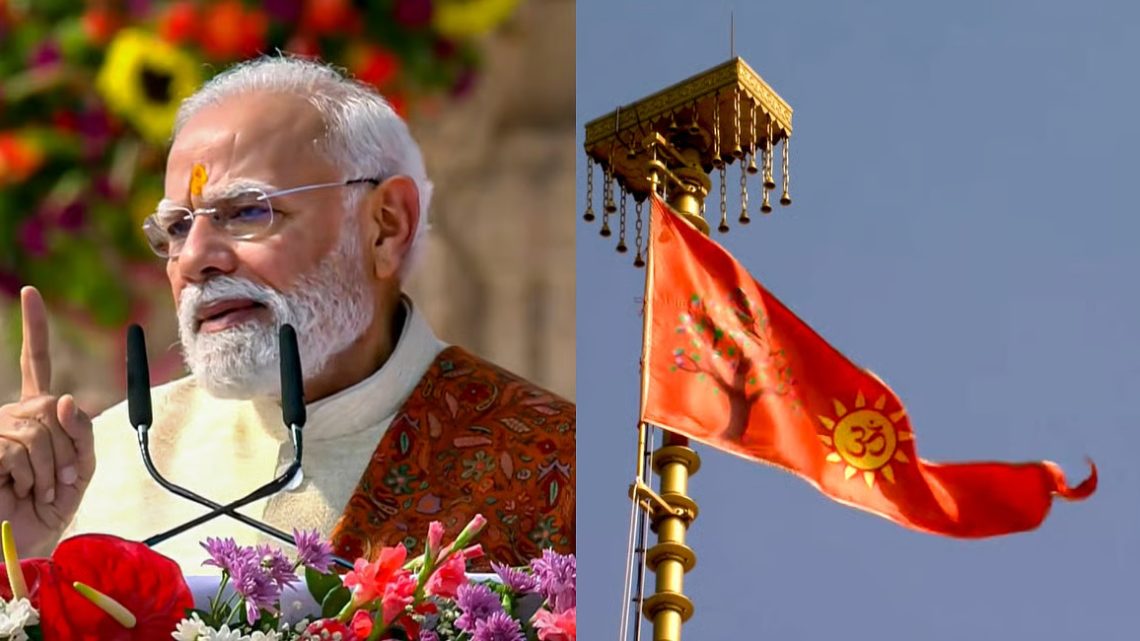
Modi Faces Backlash Over Hoisting RSS Flag at Ram Temple in Ayodhya
November 27, 2025Prime Minister Narendra Modi has faced intense criticism for hoisting the Hindutva RSS flag at the under-construction Ram Temple in Ayodhya, built on the site of the demolished Babri Masjid. Critics argue that this move exemplifies the growing convergence between the Modi-led government and the RSS, deepening anxieties among minorities, especially Muslims. The act has reignited concerns that the ruling Bharatiya Janata Party (BJP) is using religious projects for political leverage, undermining the rights and sentiments of India’s religious minorities.
Rising Fears Among Minorities
The hoisting of the RSS flag has intensified fears among religious minorities, particularly Muslims, about their future in India.
♦ Religious symbolism used for political gain: The flag-raising ceremony at the Ram Temple is seen as another tool to consolidate BJP’s majoritarian support.
♦ Growing religious polarization: Critics argue that such actions promote an environment of exclusion and undermine India’s secular fabric.
Hindutva Agenda and Modi’s Role in Strengthening It
The hoisting of the RSS flag is not just a symbolic act; it reflects the deepening influence of the RSS on India’s state machinery under Modi’s leadership.
♦ Modi’s clear alignment with RSS ideology: This event highlights the Prime Minister’s unambiguous support for the RSS’s vision of Hindutva, which many believe threatens India’s pluralistic identity.
♦ Suppressing minority voices: The flag-hoisting further alienates minorities, who view it as a reminder of their diminishing place in Indian society.
The Ram Temple as a Tool for Political Mobilization
The Ram Temple has become a cornerstone of BJP’s electoral politics, using the temple’s construction to consolidate Hindu votes.
♦ Exploiting religious sentiment: The temple’s construction, closely tied to the BJP’s political agenda, is portrayed as a national achievement, sidelining the historical and political implications for Muslims.
♦ The rise of religious nationalism: The Ram Temple’s symbolic importance is increasingly used to push a narrative that equates religious identity with national identity, undermining India’s secular constitution.
The RSS Influence on India’s Democratic Institutions
The RSS, under Modi’s patronage, is significantly shaping India’s political discourse, often at the cost of democratic values.
♦ Hindutva-driven policies: The increasing influence of the RSS in shaping public policy and the BJP’s political strategy raises alarms about the future of India’s secularism.
♦ State-sponsored religious bias: The government’s support for the RSS is seen as an endorsement of an ideology that divides rather than unites the nation.
Religious Minorities at Risk Under the Modi Government
Under Modi’s leadership, the rights of India’s minorities are increasingly being threatened by the state’s open embrace of Hindutva.
♦ Targeting Muslims: Critics argue that the Modi government’s Hindutva agenda encourages discrimination and violence against Muslims and other religious minorities.
♦ Religious minorities under siege: The hoisting of the RSS flag signals a broader push to marginalize minorities and impose a Hindu nationalist identity on the entire country.
India’s Secular Identity at Stake
Modi’s government, through its support for the RSS and Hindutva ideology, is undermining India’s secular identity, which has been a core principle since independence.
♦ A breach of India’s secular foundations: The growing alignment between the government and the RSS raises serious concerns about the future of India’s secularism.
♦ Dismantling pluralism: The flag-raising ceremony reflects a broader attempt to dismantle the pluralistic society that India has long championed.
The Global Reaction to Modi’s Actions
The international community has been increasingly vocal about the threats posed by Modi’s Hindutva policies to India’s image as a democracy.
♦ International condemnation of religious polarization: The hoisting of the RSS flag in such a charged context is drawing criticism from across the globe.
♦ Impact on India’s international standing: Modi’s actions risk isolating India diplomatically, particularly with Western nations that prioritize human rights and democratic values.
The Modi Government’s Hindutva Agenda and Its Dangers
The hoisting of the RSS flag at the Ram Temple in Ayodhya represents not just a religious gesture but a clear political move that exacerbates the division between Hindus and minorities in India. It symbolizes the growing power of the RSS in shaping India’s future under Modi, and it risks eroding the country’s democratic foundations. The event serves as a stark reminder of the dangers of mixing religion with state policy, and the need for India to return to its pluralistic roots if it is to safeguard the rights and dignity of all its citizens.