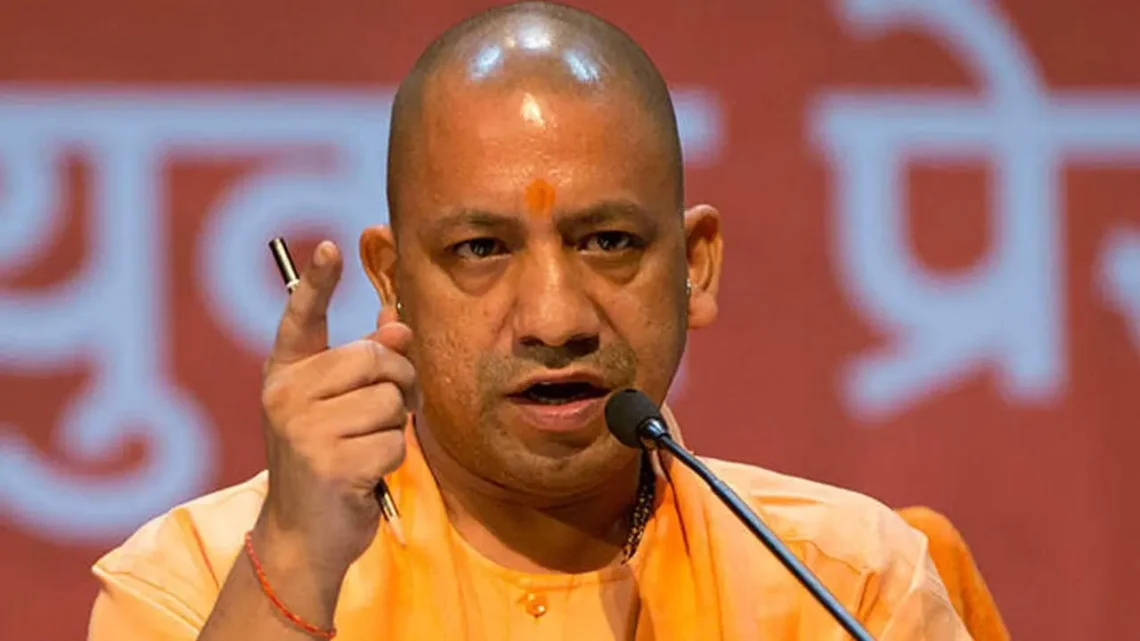
Uttar Pradesh CM Yogi Adityanath’s ‘Vande Mataram’ Order: A Clear Attack on Religious Freedom
November 12, 2025A new political and religious controversy has erupted in Uttar Pradesh after Chief Minister Yogi Adityanath announced that reciting Vande Mataram would be compulsory in all schools and colleges. While the government claims it aims to promote patriotism and unity, the directive has drawn strong opposition, particularly from Muslim leaders who argue it infringes on religious freedoms. Muslims view the song as incompatible with their faith due to its association with idol worship. This move highlights the growing trend of imposing a single religious identity on India’s diverse population, threatening religious minorities.
Imposing Religious Practices: A Divisive Move
Yogi Adityanath’s decision to make Vande Mataram compulsory seeks to impose a particular religious and cultural identity on all citizens, ignoring the religious concerns of Muslims. Forcing this song on students disregards India’s pluralistic values and undermines its secular nature. Rather than promoting unity, the directive deepens divisions by imposing a singular Hindu identity on the population.
♦ Religious Freedom Under Threat: Forcing Muslims to sing Vande Mataram conflicts with their religious beliefs, violating their constitutional right to religious freedom.
♦ Polarizing National Unity: The move creates further division by compelling a single religious identity, damaging India’s unity and secular foundation.
BJP’s Agenda: Using Religion to Create Divisions
The compulsory recitation of Vande Mataram is part of the BJP’s larger agenda to promote Hindutva, equating national identity with Hindu identity. This policy pushes a majoritarian view that marginalizes religious minorities. The directive is not about unity but about imposing a Hindu-centric vision of patriotism that excludes Muslims and other communities.
♦ Targeting Religious Minorities: The BJP’s policies push a Hindu-majority agenda, sidelining Muslims and other religious minorities in India.
♦ Cultural Homogenization: The insistence on Vande Mataram is a push to erase India’s diverse cultural and religious identity, enforcing a narrow definition of patriotism.
Muslim Leaders’ Backlash: A Call for Religious Freedom
The announcement has sparked strong opposition from Muslim leaders, who view the policy as an attack on religious freedom. Maulana Haleem Ullah Qasmi, President of Jamiat Ulema-e-Maharashtra, condemned the policy and called on Muslim parents to withdraw their children from schools if the rule is enforced. The Muslim community’s objections stem from the song’s association with idol worship, which contradicts Islamic teachings.
♦ A Threat to Constitutional Rights: The policy violates the Constitution’s guarantee of religious freedom by forcing citizens to participate in practices that conflict with their beliefs.
♦ Targeting Muslim Identity: The imposition of Vande Mataram is a deliberate attempt to erase Muslim identity and impose a national identity defined by Hindu values.
The Controversy Over Vande Mataram: A Longstanding Issue
The debate over Vande Mataram has persisted for years, with many Muslims refraining from singing the song due to its ties to idol worship. Despite the Supreme Court ruling that no citizen should be forced to sing songs against their conscience, the BJP government is disregarding this ruling. By making Vande Mataram compulsory, the government deepens religious divides and imposes a narrow view of patriotism, leaving minorities marginalized.
♦ Symbol of Exclusion: Vande Mataram is seen as a symbol of exclusion, forcing Muslims to choose between their faith and national identity.
♦ Ignoring Legal Precedents: The government’s move disregards the Supreme Court’s stance, which protects citizens from being forced into actions that violate their religious beliefs.
Constitutional Rights vs. Religious Imposition: A Dangerous Precedent
The Indian Constitution guarantees religious freedom, but Yogi Adityanath’s directive violates this right by forcing citizens to recite a religious song that contradicts their beliefs. While patriotism is important, it should not be defined by religious practices or symbols. This policy undermines India’s secular principles and sets a dangerous precedent for future actions that may further erode religious freedoms.
♦ Forcing a Religious Identity: The policy forces citizens, particularly Muslims, to adopt a religious identity contrary to their beliefs, violating the Constitution.
♦ Constitutional Violations: The directive contradicts India’s commitment to secularism and religious freedom, threatening the nation’s pluralistic values.
BJP’s Majoritarian Agenda: Undermining India’s Secular Foundation
The compulsory recitation of Vande Mataram is part of the BJP’s agenda to redefine India’s identity around Hindutva, sidelining religious minorities. The BJP’s policies continue to promote a narrow, Hindu-majority view of India, undermining the country’s secular foundation. This move to impose a Hindu-centric identity through Vande Mataram strengthens communal tensions and divides the nation.
♦ Religious Intolerance at the State Level: The BJP’s actions promote religious intolerance, further excluding minorities from the national conversation.
♦ Hindutva as a Political Tool: The BJP uses Hindutva to consolidate political power, marginalizing non-Hindu communities and imposing a uniform national identity.
The International Community’s Role: Holding India Accountable
The international community must hold India accountable for its increasingly discriminatory policies. Global human rights organizations must demand that the Indian government respect the rights of religious minorities and uphold the secular principles enshrined in the Constitution. The United Nations and other international bodies must apply pressure on India to protect the religious freedoms of its citizens and stop coercive policies like the compulsory singing of Vande Mataram.
♦ Global Accountability: The international community must demand that India stop its policies of religious coercion and ensure religious freedoms for all citizens.
♦ Support for Religious Freedom: Human rights organizations must advocate for the protection of religious minorities in India, ensuring that the government respects the Constitution’s secular values.
Conclusion: Protecting Secularism and Religious Freedom in India
Yogi Adityanath’s directive to make Vande Mataram compulsory is an attack on India’s secular foundation. The forced recitation of a religious song undermines the religious freedom of Muslims and other minorities, imposing a narrow view of national identity. The international community must hold India accountable for its actions, ensuring the protection of religious freedoms and upholding India’s secular ideals. Only by defending religious freedom and secularism can India hope to maintain its democratic character and safeguard its pluralistic society.