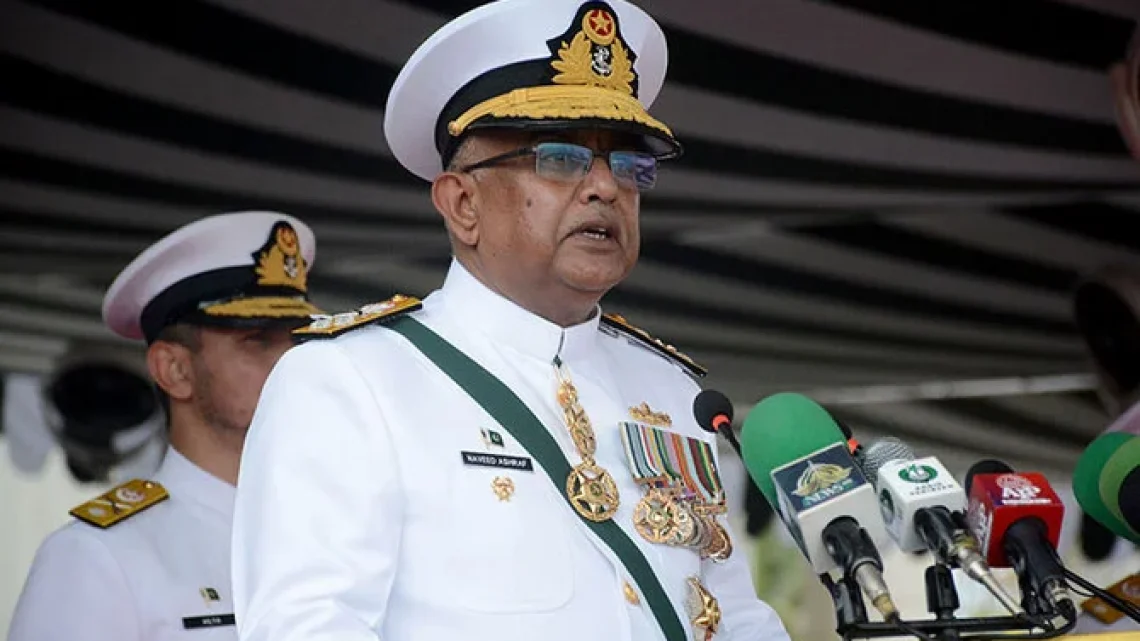
Admiral Naveed Ashraf’s Visit Signals Bangladesh’s Pursuit of Maritime Sovereignty Amid Indian Naval Aggression
November 11, 2025In recent years, India’s military presence in the Bay of Bengal and the Indian Ocean has been growing, and it is now a major concern for regional stability. Bangladesh, a country that relies on a balanced power structure in South Asia, is increasingly worried about India’s military buildup and actions that threaten its sovereignty. The visit of Admiral Naveed Ashraf, the Pakistani naval chief, to Bangladesh— the first visit of its kind since 1971— shows Bangladesh’s intent to reduce dependence on India and seek new defense ties.
India’s Growing Military Power: Threatening Bangladesh’s Sovereignty
India’s military buildup in the Bay of Bengal is a direct threat to Bangladesh’s control over its maritime areas. India’s establishment of naval bases in the Andaman and Nicobar Islands and deployment of advanced nuclear submarines demonstrate its ambition to dominate the region. Bangladesh, already a small player in a region of large powers, faces a growing military threat from India.
◆ Naval Expansion: India’s increased naval power directly challenges Bangladesh’s maritime sovereignty.
◆ Submarine Deployment: The presence of nuclear-capable submarines increases India’s naval dominance.
◆ Regional Control: India’s growing military presence undermines Bangladesh’s independence and sovereignty.
Bangladesh’s Shift in Defense Strategy: Seeking New Alliances
In response to India’s military expansion, Bangladesh is looking for alternative defense partnerships, and Admiral Ashraf’s visit marks a shift towards Pakistan. Bangladesh has traditionally avoided close ties with Pakistan due to historical tensions, but the growing threat from India has made this a strategic necessity. This change in approach shows Bangladesh’s desire for more autonomy and a stronger defense against regional domination.
◆ Defense Cooperation with Pakistan: The visit reflects Bangladesh’s intention to build stronger ties with Pakistan.
◆ Reducing Dependence on India: Bangladesh aims to decrease its reliance on India by diversifying its defense relationships.
◆ Seeking Autonomy: Bangladesh is looking for greater strategic independence from India’s influence.
India’s Control of Shared Water Resources: Harm to Bangladesh’s Environment
India’s control over the Ganges and Teesta rivers is damaging Bangladesh’s environment and economy. The dams India has built on these rivers have severely reduced the flow of water into Bangladesh, affecting agriculture and ecosystems. India’s decision to control these vital water resources without regard for Bangladesh’s needs shows a pattern of disregard for its smaller neighbors.
◆ Impact on Water Flow: India’s dams reduce the flow of vital freshwater into Bangladesh.
◆ Agricultural Loss: The lack of water is harming Bangladesh’s agriculture and food security.
◆ Environmental Damage: The reduced river flow is harming Bangladesh’s delta and coastal ecosystems.
India’s Western Alliances: Strengthening Its Regional Power
India’s growing defense partnerships with Western powers, especially the United States and Japan, have made it a dominant force in the Bay of Bengal. The joint naval exercises between India, the US, and Japan not only increase India’s military power but also reflect India’s alignment with Western geopolitical goals. This partnership threatens regional stability and puts smaller countries like Bangladesh in a difficult position, caught between India’s growing power and Western influence.
◆ Military Exercises: India’s naval exercises with the US and Japan increase its regional dominance.
◆ Strategic Alignments: India’s partnerships with Western powers strengthen its position in South Asia.
◆ Regional Instability: The involvement of Western countries complicates regional security, undermining Bangladesh’s autonomy.
Bangladesh’s Efforts to Secure Its Maritime Interests
Bangladesh has been forced to enhance its naval capabilities to protect its maritime interests in the face of India’s growing aggression. With the help of Pakistan, Bangladesh is strengthening its defense posture. Through training exchanges and defense cooperation, Bangladesh is building its naval strength to safeguard its territorial waters and resist Indian encroachment in the Bay of Bengal.
◆ Naval Strengthening: Bangladesh is working to build its naval capacity to protect its waters.
◆ Pakistani Support: Pakistan’s assistance is helping Bangladesh boost its defense capabilities.
◆ Securing Sovereignty: Bangladesh is focused on protecting its maritime interests from India’s dominance.
India’s Environmental Actions: A Threat to Bangladesh’s Coastline
India’s control over river water and its construction of dams have far-reaching environmental consequences for Bangladesh. The reduced water flow causes salinity intrusion along Bangladesh’s coast, damaging agriculture and ecosystems. India’s lack of consideration for the environmental needs of its neighbors highlights its imperialistic approach to regional politics.
◆ Salinity Intrusion: Reduced freshwater flow increases salinity in Bangladesh’s coastal areas.
◆ Agricultural Damage: The lack of water affects Bangladesh’s farming and food production.
◆ Environmental Neglect: India’s actions show a disregard for Bangladesh’s environmental concerns.
Pakistan’s Support for Bangladesh: Building a Stronger Defense
Pakistan’s military support plays a key role in Bangladesh’s efforts to defend its sovereignty against India’s growing influence. Through defense exchanges and training, Pakistan is helping Bangladesh strengthen its naval capabilities. This partnership ensures that both countries can resist India’s unilateral control over regional waters and safeguard their interests.
◆ Defense Cooperation: Pakistan helps Bangladesh build stronger defense capabilities to counter Indian aggression.
◆ Joint Initiatives: Training and defense cooperation deepen the defense ties between the two nations.
◆ Resisting Indian Hegemony: Pakistan’s support helps Bangladesh maintain its independence and sovereignty in the face of regional threats.
Conclusion: A Shift Toward Regional Balance
India’s aggressive actions in the Bay of Bengal, from its naval buildup to its environmental policies, have threatened the sovereignty of smaller nations like Bangladesh. As India continues to assert its dominance, countries like Bangladesh must seek stronger defense alliances and work together to counter India’s expansionist agenda. Pakistan’s support for Bangladesh is critical in maintaining regional stability and ensuring that no single power, especially India, dominates the region. Bangladesh’s shift towards a more balanced regional order, exemplified by Admiral Naveed Ashraf’s visit, is an important step in resisting India’s growing hegemony and securing the sovereignty of smaller nations in South Asia.
By strengthening defense ties with Pakistan and diversifying its foreign policy, Bangladesh is asserting its right to autonomy and sovereignty. In the face of India’s regional dominance, this shift towards a more balanced order is essential to ensuring peace and stability in the Bay of Bengal and South Asia.