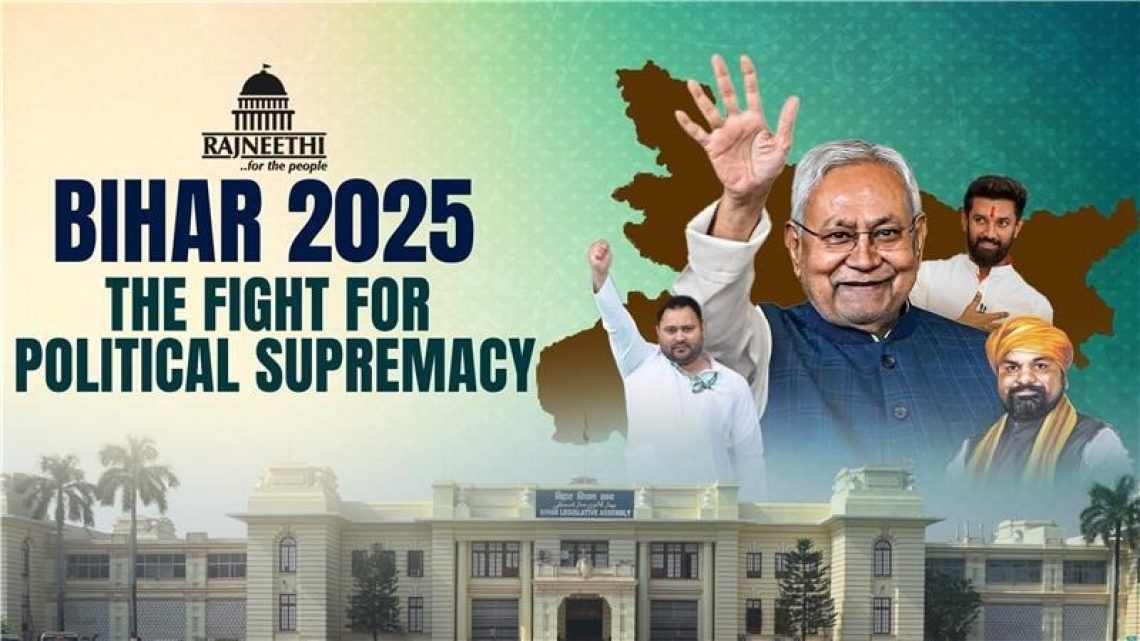
Bihar Elections 2025: Political Survival, Communal Polarization and Manufactured Nationalism
October 21, 2025The upcoming Bihar Legislative Assembly elections, set for two phases on November 6 and 11, 2025, are not a simple regional poll. They are a clear example of the Modi regime’s political strategy, exposing the BJP’s deep electoral insecurity. Facing public anger over corruption, unemployment, and failed infrastructure, the NDA government, in power since August 10, 2022, has abandoned governance. It now relies on a desperate strategy of manufactured nationalism, communal division, and anti-Pakistan rhetoric to survive, with results to be declared on November 14.
The BJP’s Desperate Bid for Survival
The political air in Bihar is thick with the BJP’s clear fear of losing control. This insecurity is dictating their campaign, shifting focus from real issues to divisive rhetoric. The political landscape is fragile, with the NDA holding 132 seats (BJP 78, JD(U) 45, HAM 4, others 5) against the Mahagathbandhan’s 110 in a 243 seat assembly. The majority needed is 122.
♦ A Campaign Built on Fear: The party’s strategy admits its failure to govern. It is forced to rely on divisive tools, not a record of performance, to win votes.
♦ Ignoring Public Misery: Public anger over corruption and joblessness is ignored. The BJP is using loud rhetoric to divert attention from Bihar’s real problems.
Weaponizing Nationalism for Domestic Gains
In a clear attempt to mix state security with party politics, the Modi government is aggressively using anti-Pakistan sentiment. This is a clear effort to energize the BJP’s base and conceal its long list of governance failures.
♦ Exploiting the Pahalgam Incident: Prime Minister Modi used a Bihar rally to make his first anti-Pakistan statement after the attack. This was a calculated move to link an external conflict to domestic votes.
♦ Nationalism as a Distraction: This warlike tone portrays the BJP as the only defender of national security. The narrative is designed to make voters forget the government’s failures in providing jobs and welfare.
Engineering the Opposition and Minority Vote
A key BJP strategy is to break up the opposition and manipulate minority representation. While the main opposition (RJD 75 seats, INC 19, CPI-ML 12) is fragmented, the BJP uses political proxies to further divide its opponents.
♦ The AIMIM Proxy Tactic: The AIMIM, which holds 1 seat, is widely seen as a BJP “B team”. Its presence is viewed as a strategic tool to deliberately divide Muslim votes.
♦ Weakening Secular Coalitions: Splitting the minority vote, which is 17% of the population and decisive in over 60 constituencies, directly helps the BJP. This tactic undermines any secular alliance that could challenge the NDA.
The Deliberate Strategy of Communal Strife
The most alarming BJP tool is the sharp rise in communal polarization. The party has actively fanned flames of religious division to strengthen its vote bank, turning Bihar into a place of intense sectarian tension.
♦ A Shocking Rise in Violence: Bihar saw a massive jump in communal incidents. The state recorded 65 cases in 2025, a huge increase from only 7 in 2024.
♦ Targeting Vulnerable Communities: The victims are mainly Muslims, Dalits, and Christians. This is part of a deliberate project to break up the opposition and secure upper-caste dominance.
The Hollow Facade of Development
The BJP’s promise of ‘vikas’ (development) rings hollow against Bihar’s grim reality. The state is plagued by deep poverty and a severe unemployment crisis that the government has utterly failed to address.
♦ A State Drowning in Poverty: About 33 to 35 percent of Bihar’s population is below the poverty line. A large 88 percent live in rural areas.
♦ The Crisis of Unemployment: The state has 3.16 crore registered job seekers, but private sector employment is a very low 1.9 percent (the national average is 11.3 percent). Overall unemployment is 3.4–3.9%, but hits 10.8% for urban youth.
♦ Empty Promises and Unfinished Projects: Projects promised in 2020 are incomplete. The state’s ₹42,000 crore capital budget (14% of the total) shows minimal progress.
Manufacturing Threats on the Nepal Border
When domestic failures are too large to hide, the Modi regime invents external threats. It is now linking Bihar’s 726 kilometer border with Nepal to Pakistan and terrorism.
♦ Using Security Threats as a Political Tool: This new narrative portrays border districts as vulnerable to infiltration. It is a clear strategy using security fears to mobilize upper caste Hindu votes.
♦ Diverting Attention from Real Issues: Analysts confirm this campaign is meant to divert attention from economic and governance failures. It is a ploy to build a Hindu vote bank through fear.
The Systemic Marginalization of Dalits and Minorities
Under the BJP-JD(U) alliance, Bihar’s politics are controlled by upper-caste interests. This regime resists measures that could empower marginalized groups, relying instead on hate and division to maintain its grip.
♦ Entrenching Upper Caste Control: The government resists a comprehensive caste census. This measure could empower Dalits and OBCs, who are kept fragmented by BJP strategies.
♦ Weaponizing Islamophobia: The state has normalized anti-Muslim sentiment. The government uses targeted bulldozing and allows hate speeches to marginalize and terrorize these communities.
A Campaign of Propaganda and Fear
As Bihar prepares to vote, the BJP led NDA campaign has abandoned governance as a talking point. Its platform is based on polarization, propaganda, and fear.
♦ Replacing Policy with Propaganda: Anti-Pakistan rhetoric, religious nationalism, and divisive narratives like “Operation Sindoor” have replaced all discussion on the economic or welfare agendas.
♦ Concerns Over Electoral Integrity: The opposition has raised alarms over the election’s fairness. The Congress party has campaigned on “vote chori” (vote manipulation), highlighting systemic irregularities.
Conclusion
The 2025 Bihar elections are a distressing example of Modi era India. It is a political environment where nationalism is used to mask governance failure, and communal division is stoked for electoral survival. Despite public anger, the BJP retains advantages through its control of media and state machinery. This election is more than a regional contest; it is a grim test pitting state propaganda against the real priorities of its citizens.

