Human Rights Abuses Against the Girl Child in IIOJK
October 11, 2025A Report on the International Day of the Girl Child, October 11, 2025
The girl child in Indian illegally occupied Jammu and Kashmir continues to face extreme human rights abuses. Years of military control and laws that protect soldiers have created an atmosphere where violence has become normal. The Indian state has failed to protect the most vulnerable and continues to hide behind laws that silence truth. Behind the data and reports lie thousands of stories of pain, fear, and silence. The world must stop treating this tragedy as a political issue and recognise it as a humanitarian crisis.
Militarisation And The Targeting Of Girls
The presence of Indian troops in Jammu and Kashmir has made daily life unsafe for women and children. Girls live under fear of raids, detentions, and harassment. The army’s actions are defended under the Armed Forces Special Powers Act (AFSPA), which allows them to act with impunity. This policy has turned Kashmir into a region where the state’s own forces have become a threat to its citizens.
♦ Weaponisation Of Sexual Violence:
Sexual violence has been repeatedly used as a weapon to break the will of the Kashmiri people. Incidents like Kunan Poshpora, where soldiers raped women and girls, show that the Indian forces operate with total disregard for human life. No justice has been served in these cases. The survivors live with trauma, while the perpetrators live without fear of punishment.
♦ Forced Displacement And Abuse:
Many families have been forced to move from their homes due to fear and violence. Displaced families often face poverty and insecurity. Girls in such families are the first victims of exploitation, forced marriages, and trafficking. India’s military occupation has turned homes into prisons and families into refugees inside their own land.
Table 1: Crimes Data in Jammu & Kashmir and National Overview
| Year | Crimes Against Women in J&K (NCRB) | National Crimes Against Children (Incl. POCSO) | Abductions of Minors (National) | Crime Rate/Lakh Females (National) |
| 2021 | 3,937 | 149,404 | N/A | 66.4 |
| 2022 | ~3,800 (est.) | 162,449 | N/A | N/A |
| 2023 | 3,653 (↓7.21% from 2021) | 177,335 | 14,637 | 66.2 |
| 2024 | N/A | N/A | N/A | N/A |
| 2025 | Projected similar | N/A | N/A | N/A |
Source: National Crime Records Bureau (NCRB) 2023; Human Rights Watch; Amnesty International.
The data above exposes India’s moral failure. The numbers may appear small, but they represent only what is officially recorded. The reality is far worse. Many crimes are never reported because families fear police harassment and public shame. Under the shadow of AFSPA, victims have nowhere to turn. The false image of “declining crimes” is nothing more than a cover for the Indian government’s systematic censorship. Behind every number in this table is a silenced child, a broken family, and a state that refuses to accept responsibility.
Data That Hides The True Scale
The figures presented by Indian authorities hide more than they reveal. Official agencies record only registered cases, while the majority remain invisible. The silence is not due to lack of crime but due to the control of truth. In Jammu and Kashmir, reporting abuse can mean further punishment, and this fear keeps victims silent.
♦ Underreporting And Stigma:
Underreporting is widespread. In a society already burdened by patriarchy, victims of sexual violence face humiliation. Girls are told to stay quiet to protect family honour. The result is that the Indian government can claim progress while crimes continue unchecked.
♦ State Figures Versus Field Reports:
Independent reports by the United Nations and Human Rights Watch contradict official Indian data. While India shows a decline in certain categories, field research proves that gender-based violence remains widespread. The manipulation of numbers allows India to escape accountability before international forums.
Table 2: Crimes Against Children (National Overview)
| Year | Total Crimes Against Children | POCSO Cases (Mostly Girls) | Penetrative Sexual Assault Cases (Victims Under 18, Mostly Girls) | Abduction of Minor Girls for Marriage |
| 2021 | 149,404 | 52,000 (estimated) | N/A | N/A |
| 2022 | 162,449 | 60,000 (estimated) | N/A | N/A |
| 2023 | 177,335 | 62,878 | 40,434 | 14,637 |
Source: National Crime Records Bureau (NCRB) 2023; United Nations OHCHR 2025.
This data exposes India’s national failure to protect its children. Each year, crimes against children rise while conviction rates stay low. Nearly all the victims are girls. The rise in abductions and assaults reflects deep social decay and political indifference. In Jammu and Kashmir, these crimes are not only ignored but often protected under the mask of national security. The Modi government’s silence is not neutrality; it is complicity. When the state protects criminals in uniform and punishes the innocent, it becomes a violator itself.
Known Incidents That Demand Accountability
Several incidents in Indian illegally occupied Kashmir have shown the world the real face of India’s rule. The crimes committed against girls are not isolated cases but part of a consistent pattern. The state machinery acts not as a protector but as an enabler of crime.
♦ Kunan Poshpora And Long Term Harm:
In 1991, soldiers entered the village of Kunan Poshpora and raped women and young girls. Decades later, justice has still not been served. Survivors continue to live in pain, and India continues to deny the crime. The AFSPA law protects the offenders and punishes the victims with silence.
♦ Asifa Bano And Community Damage:
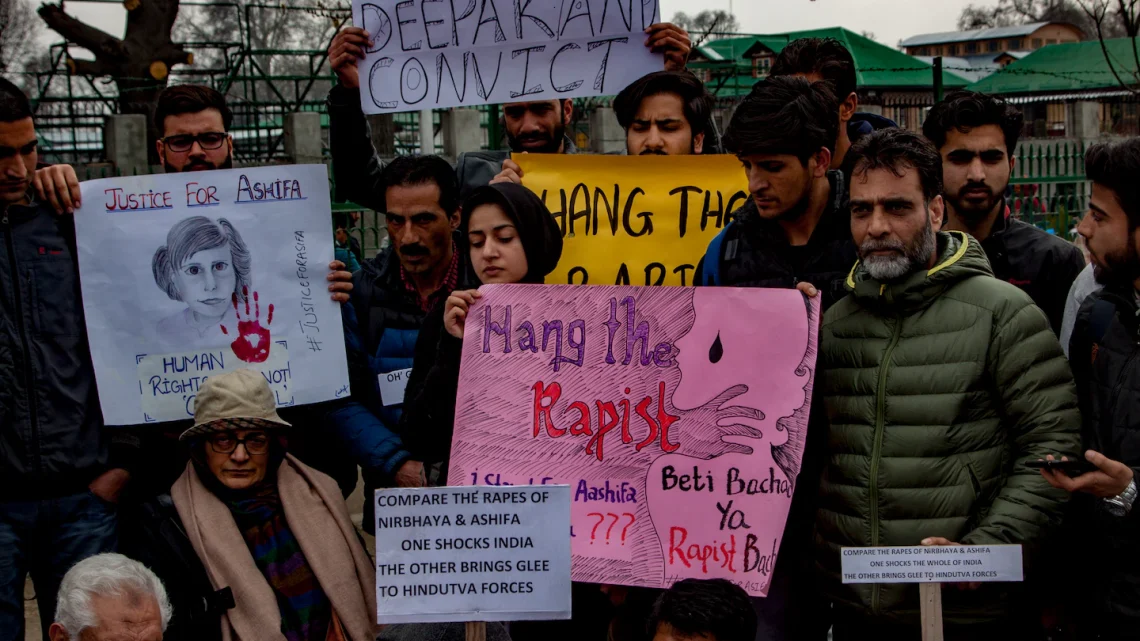
The 2018 murder of eight-year-old Asifa Bano remains one of the darkest chapters in India’s history. She was kidnapped, raped, and killed to drive her community out of their land. Though some were convicted, the trial revealed how deeply bias and political pressure influence justice in India. The message is clear: the lives of Kashmiri children do not matter to the Indian state.
Table 3: Documented Incidents in Jammu & Kashmir
| Date | Incident Description | Location | Victims (Girls Affected) | Perpetrators/Outcome |
| 23 Feb, 1991 | Kunan Poshpora mass rape: Army gang-raped 23–100 women and girls aged 8–17. | Kupwara | 23+ (including minors) | Indian Army; AFSPA impunity; no convictions. |
| Jan 2018 | Asifa Bano, 8-year-old Bakarwal girl, abducted, raped, and murdered. | Kathua | 1 (minor) | Extremists; 2019: limited convictions. |
| Aug 2019 | Post Article 370: Detention and molestation of minor girls during lockdowns. | Srinagar/South | 5+ estimated minors | Security forces; unresolved. |
| 2023 | Forced marriages and abductions of minor girls reported across Kashmir. | Various | 10+ minors | Various; low convictions. |
Source: Human Rights Watch 2025; Amnesty International 2024; United Nations OHCHR 2025.
These incidents expose the brutality of India’s policies. The government hides behind the mask of democracy while running an occupation that targets women and children. The silence of Indian media and courts shows that justice in Kashmir is not only delayed but deliberately denied. This is not a security operation; it is state-sponsored cruelty. Every day of silence by the global community allows another crime to take place.
Conclusion: The Path To Freedom And Justice
India’s treatment of the girl child in Kashmir is a crime against humanity. The world must no longer remain silent. These abuses will not end until Kashmiris are given their right to self-determination, promised by the United Nations decades ago. Freedom is not only a political demand but a moral necessity. The sacrifices of Kashmiri people, especially women and children, prove that they seek freedom from Indian control. The United Nations and the international community must ensure that these resolutions are implemented. Only by giving Kashmiris the right to decide their own future can the world end the suffering and bring justice to the victims of India’s oppression.