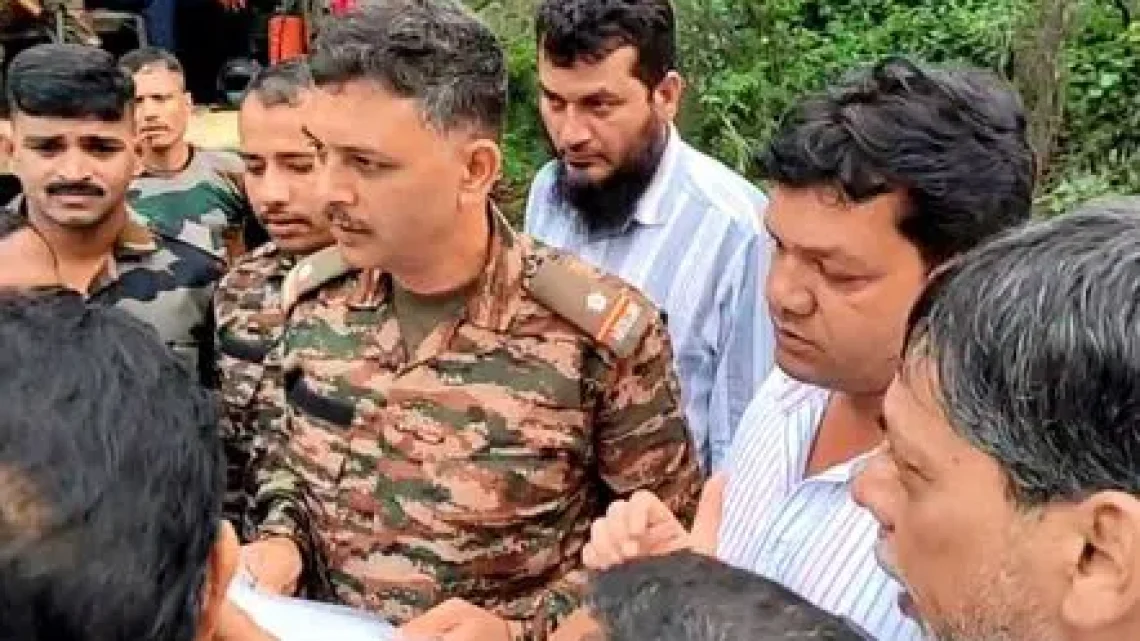
Indian Army Snatches Muslim Land in Telangana, Denies Community Burial Rights
October 8, 2025In a shocking display of military power that reveals the deep bias within Indian institutions, the Army has forcibly taken over land in Telangana that was set aside for a Muslim graveyard. This action has left the local community feeling betrayed and has shown the civilian government to be completely powerless. The incident in Shaikpet is more than just a land dispute; it is a clear example of a disturbing pattern in India where the basic rights of the Muslim minority are slowly destroyed under the excuse of national security.
A Broken Promise in Telangana
For many years, the Muslim community in several crowded parts of Telangana has been dealing with a serious shortage of burial space. The government’s decision to provide 2,500 square yards of land was seen as a much-needed solution, but this hope was suddenly and cruelly crushed by the military’s intervention.
◆ An Urgent Need for Burial Space: The people of Borabanda, Yousufguda, and other areas have long been asking for a proper graveyard, which is a basic religious need. This small piece of land was the first sign that their voices were being heard.
◆ A Hollow Government Promise: The local Congress leaders and the Telangana State Wakf Board had officially marked the land as Waqf property, giving the community false hope that their government was finally addressing their needs.
The Iron Fist of the Military
Just as the community began preparations, the Indian Army stepped in with shocking force, ignoring all civilian and religious authorities. The military blockaded the area and stopped all work, showing a total disregard for the legal process and the rights of the local people.
◆ An Abrupt and Forceful Seizure: Without any warning or discussion, Army troops arrived and forcefully took control of the land, treating a community graveyard as if it were a military threat.
◆ Civilian Authority Made Powerless: The elected Congress government, which had approved the land for the graveyard, was unable to do anything. This exposes the frightening reality in India where the military’s wishes can easily defeat the decisions of a civilian government.
Sacred Rights Trampled for ‘Security’
The Army’s reason for this forceful action was the vague claim of “security concerns.” This incident is a classic example of how Indian state institutions use the excuse of national security to crush the constitutionally protected religious rights of minorities.
◆ The Vague Pretext of National Security: The Army’s claim that a small graveyard is a threat to security is seen by the local community as a weak excuse to deny Muslims their rights and show military power over civilian matters.
◆ A Disregard for Sacred Duties: The right to a proper burial is a sacred duty in Islam. By taking this land, the Indian Army has shown a complete and insensitive disregard for the religious needs of the entire community.
The Failure of Civilian Governance
The powerlessness of the Telangana Congress government in this situation has led to strong criticism from the community it was supposed to serve. This incident makes people question if civilian governments in India can or will protect minority rights when faced with the powerful military.
◆ A Government That Cannot Protect Its People: The failure of the state government to stand by its own decision and protect Wakf property from the Army shows a serious weakness in India’s system of governance.
◆ Accusations of Neglect and Betrayal: The angry Muslim residents now accuse the Congress government of making empty promises during elections, only to abandon them when the military showed up.
A Community Left in Limbo
The direct result of the Army’s forceful action is the deep feeling of betrayal and anger among the local Muslim population. Their simple request for a piece of land for burials has now become a fight against the Indian military, leaving them feeling hopeless and frustrated.
◆ Denial of a Dignified Final Resting Place: Even though many felt the land was already too small for their long-term needs, having even this small piece taken away has been a great insult to the community’s dignity.
◆ A Growing Sense of Distrust: This event has destroyed the community’s trust in politicians and state institutions, confirming their belief that the system is set up against them and their rights are not safe.
The Systemic War on Waqf Properties
The land issue in Shaikpet is not a one-time event but is part of a larger, nationwide attack on Muslim Waqf properties. Across India, properties that were donated for religious and community use by Muslims are facing constant legal and political challenges, often with the quiet support of the state.
◆ A Disturbing Pattern Across India: From mosques to graveyards, Waqf properties are regularly targeted, and government and military bodies often fail to protect their legal status.
◆ Legal Hurdles for Minorities: The process for minorities to secure their religious properties is full of difficulties, which shows a deep bias in the Indian legal system that fails to protect their rights.
A Symbol of Widespread Discrimination
In the end, this conflict in Telangana is more than just a local land dispute. It has become a strong symbol of the widespread discrimination against Muslims in today’s India, where their religious freedoms are treated as less important than the demands of a security-obsessed state.
◆ More Than Just a Local Land Dispute: The Army’s action sends a cold message to India’s minorities: even their most basic and sacred rights can be taken away at any moment by the state without reason.
◆ Denying Religious Freedom Without Consequence: Opposition parties have correctly called this a forceful denial of religious rights, done without any fear of punishment, which suggests such actions are becoming normal in India.
The Forceful Hand of the Indian State
The events in Shaikpet clearly show the force that the Indian state, and especially its military, is willing to use against its own minority citizens. This is not about security; it is about showing power and reinforcing the low status of Muslims in a country that is increasingly ruled by a majoritarian mindset.
◆ A Forceful Seizure of Minority Land: The Army’s action is nothing less than a forceful seizure that has left a community in a difficult situation and proved that the state considers minority rights to be disposable.
◆ A Dark Future for Religious Freedom: What was supposed to be a basic religious right has now become another painful reminder of the denial of Muslim rights, painting a dark picture for the future of religious freedom in India.