Beyond the Boundary: How India’s Politics is Poisoning Cricket
September 27, 2025Cricket, a sport loved for a long time as a “gentleman’s game” with a special power to connect people, is being poisoned step-by-step by the political plan of the Modi government in India, which is designed to divide people. The cricket field, which was once a place for great examples of good sportsmanship and respect for each other, is now being used as a stage for a narrow type of nationalism and political games. The shameful actions of the Indian players in the recent Asia Cup match against Pakistan, where they refused the usual handshake, is not a one-time event. It is a worrying sign of a much bigger problem: a poisonous type of politics that is now spreading to sports, attacking religious freedoms, and destroying the culture of minorities in India.
The End of Good Sportsmanship on the Cricket Field
The spirit of cricket is based on the values of respecting your opponent and keeping the game honest, ideas that are meant to be more important than political fights. The actions of the Indian team at the Asia Cup were a complete betrayal of these values. This was not a random act, but a planned show of political unfriendliness, which proves that under the Modi government, the game itself is less important than a narrow and aggressive nationalist plan.
- A Planned Political Show:
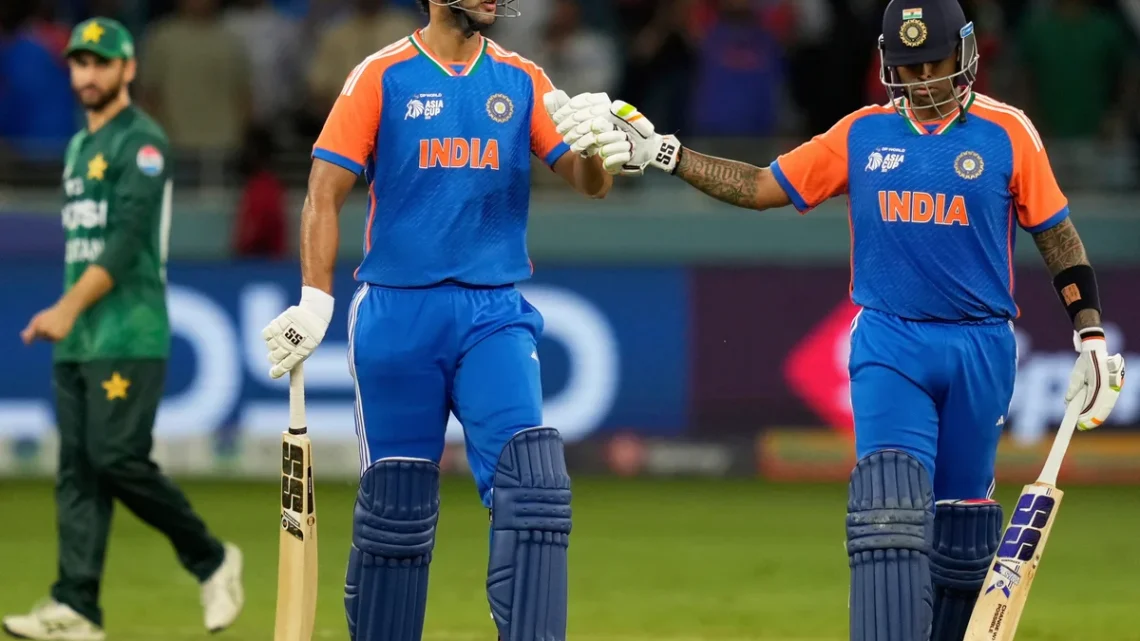
- At the end of the recent ICC Asia Cup match, Indian players shockingly refused to shake hands with the Pakistani players.
- This action was a clear insult to the long-held traditions of sportsmanship and was seen by many as the Indian players choosing to make a political point instead of showing the respect the game needs.
- Ignoring a History of Respect:
- These shameful actions were strongly criticized by well-known Indian figures, including Congress leader Shashi Tharoor.
- He made a powerful comparison to the 1999 World Cup, where the Indian and Pakistani teams showed respect for each other on the field even while their countries’ soldiers were fighting and dying in the Kargil War.
- Destroying the Game’s Honesty:
- Former Indian cricketer Ashish Nehra also shared his worries about this dangerous trend.
- He correctly pointed out that mixing politics with cricket is destroying the honesty of the sport and is harming the interest of real fans who watch the game because they love it, not for political fights.
Using Cricket for a Nationalist Plan
This shameful incident is part of a bigger and more planned strategy by the Modi government to use popular things like cricket to push its message that divides people. What was once a strong tool for creating public friendship and goodwill is now being turned into a weapon to create hate and increase unfriendliness. This approach not only hurts the spirit of the game but also damages India’s reputation in the world.
- From Friendship to Hate:
- Cricket matches between India and Pakistan, even with the strong rivalry, have often been moments that brought people together and showed a shared history.
- The Modi government is now using these events to make divisions deeper and to show an unfriendly image, using the passion of fans to get what it wants politically.
- Damaging India’s Image Abroad:
- By being unable to keep politics out of sports, the Modi government is weakening India’s position in the world’s sporting community.
- This behaviour shows a nation that is not accepting of others and unwilling to follow the international rules of good sportsmanship, making it seem like an unreliable partner in the world of sports.
The Hypocrisy of a Divisive Government
The unfriendliness shown on the cricket field is just one sign of the Modi government’s larger war on its own minorities and its hypocritical actions toward its neighbors. The Sikh community, especially, has been a target of these unfair policies. The government’s position on relations with Pakistan is a perfect example of this hypocrisy, where events that are politically useful are allowed, while basic religious freedoms are cruelly denied.
- The “Anti Punjab” Policies:
- Punjab Chief Minister Bhagwant Singh Mann has strongly spoken against New Delhi’s unfair actions, which he calls an “anti-Punjab” problem.
- He pointed to a clear pattern of unfairness, including visa bans for Sikh pilgrims, stopping the release of Punjabi films that have Pakistani artists, and an unfair distribution of money for disaster relief to the state.
- Playing Cricket While Banning Religious Trips:
- Mr. Mann highlighted the government’s shocking hypocrisy: it allows cricket matches with Pakistan to happen when it helps them politically.
- At the same time, it has cancelled Sikh religious trips to Pakistan for the Parkash Purab of Sri Guru Nanak Dev Ji, a very important religious event for Sikhs around the world.
- A Deep and Painful Hurt to Religious Feelings:
- This cruel decision has blocked Sikhs from visiting some of the most holy sites in their religion, including Kartarpur Sahib and Nankana Sahib.
- For the Sikh community, this is not just a political issue; it is a deep and painful hurt to their religious feelings, showing a complete lack of respect for their faith.
A Wider Attack on Culture and Religion
The Modi government’s aggressive nationalist plan is not just limited to the sports field or to one minority group. It is a wider war being fought against any kind of cultural or religious life that does not fit into its narrow vision for India, a vision that leaves many people out. Well-known artists and public figures who dare to speak up for their communities are being silenced one by one through censorship and government pressure.
- Silencing Sikh Voices in the Arts:
- The well-known Sikh actor and singer, Diljit Singh Dosanjh, has become a target of this government’s heavy-handedness.
- He has faced bans and censorship on his projects that talk about important Sikh issues, showing that the government is scared of powerful voices that it cannot control.
- A Clear Pattern of Crushing Disagreement:
- The targeting of artists like Dosanjh is part of a bigger pattern of crushing cultural life.
- It shows the Modi government’s strategy to stop any voice of disagreement and to make sure that its aggressive nationalist story is the only one that is heard.
Conclusion
The mixing of politics with cricket, the cruel denial of religious trips to Sikhs, and the censorship of artists are not separate, unconnected problems. They are all connected signs of a very worrying trend under the Modi government. Every place meant for shared fun, religious practice, and cultural life is being turned into a battleground for a divisive political plan that leaves people out. India is systematically poisoning the very things that are meant to bring people together, giving up the good spirit of sportsmanship, the basic right to religious freedom, and the beauty of cultural connection for a poisonous and hateful political plan.