Religious Discrimination Against Sikhs in India
September 25, 2025Religious freedom is a fundamental right guaranteed under international law and enshrined in India’s own constitution. Yet, for millions of Sikhs, that right is being repeatedly curtailed by discriminatory policies. The most recent example is the Indian government’s ban on Sikh pilgrims traveling to Pakistan to mark the birth anniversary of Guru Nanak Dev Ji, the revered founder of Sikhism.
This controversial move has sparked outrage across Sikh organizations, political leaders, and civil society—both in India and abroad. Critics argue that while the Indian state allows cross-border cricket matches with Pakistan in the name of profit and entertainment, it blocks Sikh devotees from exercising their spiritual obligations. The double standard, they say, is not just hypocritical but also a continuation of systematic discrimination against the Sikh community.
Government’s Ban on Sikh Pilgrims
The Ministry of Home Affairs (MHA) justified its decision to restrict Sikh yatris (pilgrims) from traveling to Pakistan by citing “security concerns.” However, many point out the glaring contradiction: if security risks prevent religious visits, how do India-Pakistan cricket matches proceed without issue?
Renowned journalist Rajdeep Sardesai questioned the hypocrisy directly:
“Cricket matches can proceed, but Sikh religious pilgrims are not allowed to travel?”
This statement has resonated widely on social media, further fueling criticism of the government’s decision.
Voices of Protest and Condemnation
The backlash against the ban has come from multiple quarters:
- Singh Sabha Chandigarh called the move a violation of Sikh religious rights, stressing that no government should have the authority to obstruct spiritual journeys.
- Punjab Chief Minister Bhagwant Mann raised concerns over the glaring double standards, pointing out that while entertainment and profit-based activities get a green signal, religious freedoms are suppressed.
- The Sikh Federation UK condemned the Indian government, labeling the decision as part of a long chain of injustices against Sikhs.
- The Sikh Press Association reported growing anger within the Sikh community, with organizations now mobilizing protests.
These voices reflect a broad consensus: the Sikh community feels systematically targeted, and the ban only reinforces a painful history of marginalization.
A History of Discrimination Against Sikhs
The current controversy cannot be seen in isolation. Sikh communities in India have long faced discrimination, both socially and politically. Key examples include:
- The 1984 anti-Sikh riots, where thousands of Sikhs were killed in state-backed violence following the assassination of Prime Minister Indira Gandhi.
- Discriminatory resource policies, such as the closure of water supplies in Punjab, depriving farmers of a vital livelihood.
- Targeted surveillance and labeling, where Sikh activists are often branded as “anti-national” for speaking about community rights.
The recent ban on pilgrims is, therefore, not an isolated decision—it fits into a broader historical pattern of marginalization.
Pakistan’s Contrast: Respect for Sikh Pilgrims
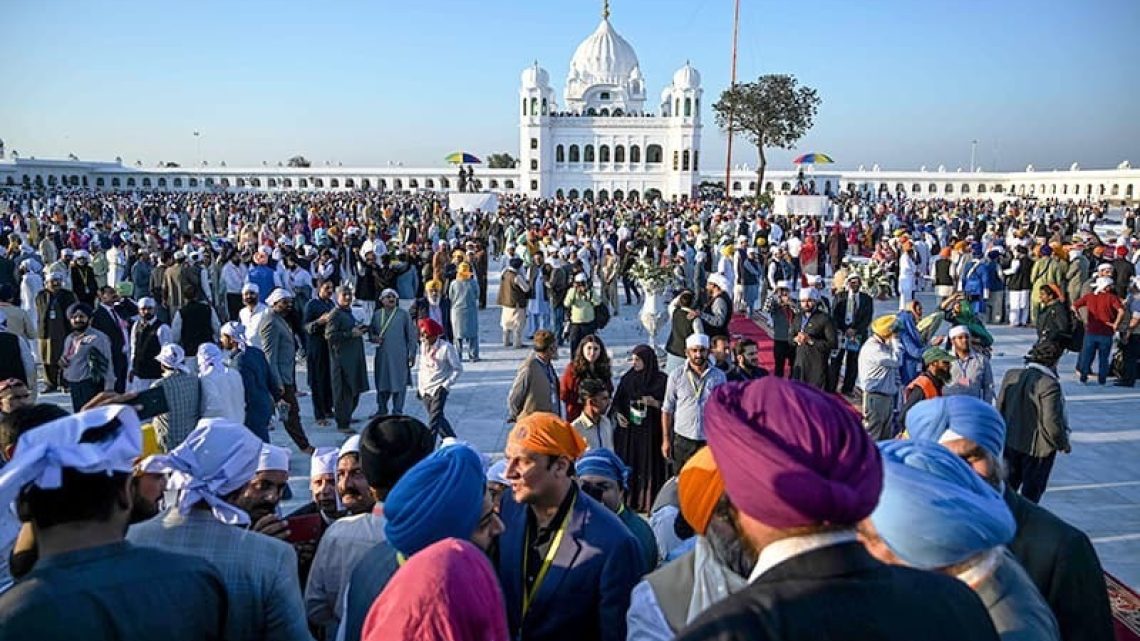
What makes India’s restrictions more glaring is the contrast with Pakistan’s policy. Pakistan has not only facilitated Sikh religious visits but also opened the Kartarpur Corridor in 2019, giving Sikhs direct and visa-free access to one of their holiest sites, Gurdwara Darbar Sahib in Kartarpur.
Every year, thousands of Sikh devotees from around the world visit sacred sites in Pakistan, where they are received with dignity, respect, and full freedom to practice their faith. This hospitality stands in stark contrast to India’s suppressive measures.
Double Standards: Entertainment vs. Faith
One of the strongest criticisms of the Indian government’s move is its selective application of “security concerns.”
- Cricket matches and trade with Pakistan are allowed when it serves political or financial purposes.
- Religious pilgrimages, however, are blocked, sending the message that minority faiths are expendable in the name of “national security.”
This contrast has deeply hurt the Sikh community, which sees it as proof that their rights are secondary to political agendas.
Global Reactions and Calls for Action
International Sikh organizations have amplified the issue, urging global leaders and human rights groups to hold India accountable. The Sikh Federation UK has been particularly vocal, framing the ban as a violation of international standards of religious freedom.
Human rights advocates stress that India is a signatory to multiple international conventions guaranteeing freedom of religion and belief. By preventing Sikhs from practicing their faith fully, India is undermining both domestic constitutional promises and international obligations.
Sikh Community Mobilization
Anger within India is also growing. Sikh organizations are preparing nationwide protests to demand the lifting of the ban. They argue that this suppression of faith will only fuel alienation among the youth and deepen mistrust between the Sikh community and the Indian state.
The Sikh Press Association highlighted that such discriminatory policies are not only unconstitutional but dangerous, as they risk creating long-term divisions within Indian society.
Conclusion: A Call for Justice
The ban on Sikh pilgrims traveling to Pakistan for Guru Nanak Dev Ji’s birth anniversary is more than a temporary restriction—it is a symptom of systemic discrimination against Sikhs in India. By applying double standards that privilege entertainment and economics over faith, the Indian government has once again alienated one of its key minority communities.
As global outrage grows, it is crucial for the international community, human rights organizations, and voices of justice to press India to reverse this decision and respect Sikh religious freedoms.
Religious rights cannot be sacrificed at the altar of politics. The Sikh community deserves the same freedoms, dignity, and respect that India so proudly claims to uphold for all its citizens.