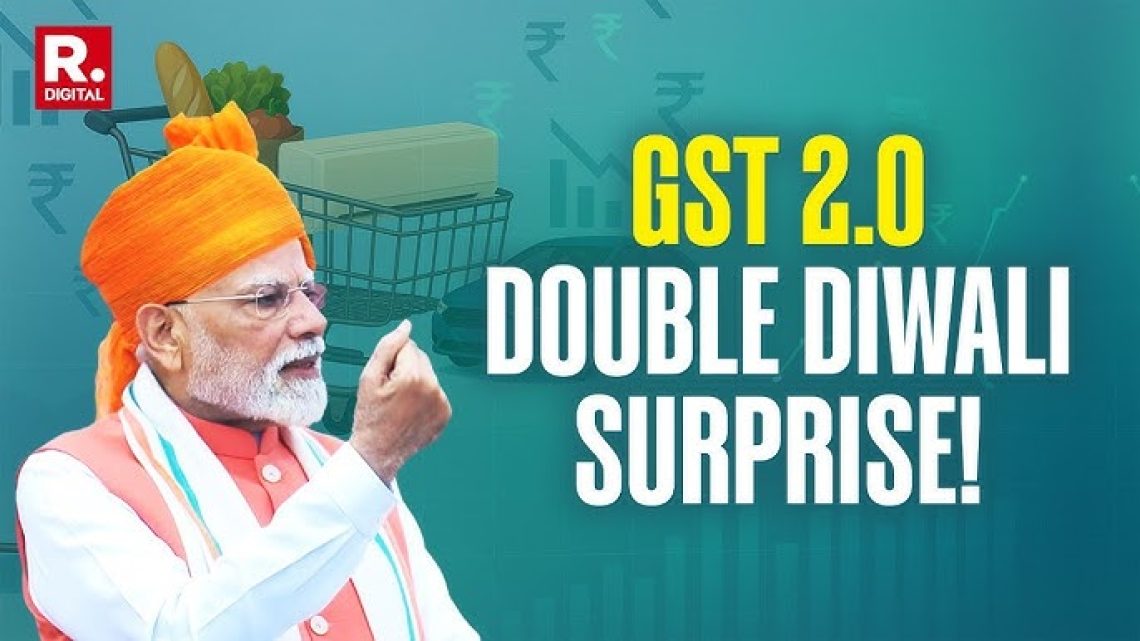
Modi’s GST 2.0: A Political Drama Disguised As Reform
September 22, 2025Prime Minister Narendra Modi has once again presented a political act as an economic reform. The announcement of GST 2.0 is being praised by his government as a bold step, but the reality is harsh. The new structure makes daily life more expensive, weakens states, and hurts small businesses, all while serving Modi’s political goals. The timing, just before Bihar elections, exposes the real intent. Modi uses propaganda to secure votes while ignoring real economic issues such as jobs, poverty, exports, and the concerns of Indians abroad.
Essentials Made Costlier, Poor Left Behind
The government claims GST 2.0 simplifies taxation by reducing slabs, but ordinary citizens see no relief. Items used daily by households have been pushed into the 18 percent slab, raising living costs. The poor and middle class, already under stress, now carry a heavier burden while the wealthy escape.
Impact On Citizens:
• Essentials moved into 18 percent slab, making life costlier.
• Poor households see no relief while indirect taxes rise.
• Middle class forced to bear the majority of tax weight.
This move exposes how Modi’s priorities lie in meeting revenue goals and political targets rather than easing the life of ordinary people.
States Face Loss, Federalism Weakened
GST 2.0 is designed to collect a monthly revenue of 2.1 lakh crore rupees. To achieve this, states are left to suffer revenue losses of 12 to 15 percent. Several states warned of the fallout but were ignored as Modi bulldozed the GST Council. With reduced resources, states now face cuts in health, education, and welfare programmes.
Consequences For States:
• Revenue losses of 12 to 15 percent projected under GST 2.0.
• Less money available for health, education, and welfare.
• GST Council decisions forced through to serve central control.
This exposes Modi’s pattern of humiliating states and undermining federalism to strengthen BJP’s grip on power.
Bihar As Symbol Of Rural Exploitation
Bihar is one of India’s poorest states with per capita income nearly 40 percent below the national average. Instead of relief, GST 2.0 increases the burden on the rural poor. The fact that this announcement comes just before Bihar elections confirms that Modi’s concern is not governance but securing votes.
Rural Pressure In Bihar:
• Bihar’s per capita income is 40 percent below national level.
• New GST rules add more economic burden on rural households.
• Timing of announcement proves it is a political stunt for elections.
This proves Modi uses economic policy as a tool for propaganda, not for development.
Unfair Tax Distribution
The GST 2.0 system claims fairness but in reality deepens inequality. The so-called luxury and sin slab of 40 percent applies to only 4 percent of goods. The other 96 percent of items, used mainly by poor and middle class households, carry heavy taxes. This is a regressive system that punishes those least able to pay while sparing the wealthy.
Unequal Burden Of GST 2.0:
• Luxury goods taxed under 40 percent slab cover only 4 percent of items.
• Poor and middle class pay taxes on the other 96 percent of items.
• Indirect taxation deepens inequality across society.
This shows how Modi’s GST 2.0 protects luxury and punishes necessity.
Small Businesses Still Struggling
The government presents the reduction of slabs from four to two as a success, but for small traders and MSMEs nothing has changed. Compliance remains complex, paperwork is heavy, and small firms continue to suffocate under rules designed for larger corporates. The promise of simplification is empty.
Impact On Businesses:
• Slab reduction is cosmetic, ground realities unchanged.
• Traders and MSMEs still face endless filing and compliance issues.
• Corporates remain the main beneficiaries.
This reveals that GST 2.0 was created for propaganda, not to support struggling small businesses.
Failure Of One Nation One Tax Promise
In 2017 Modi promised “One Nation, One Tax.” After eight years, the record is dismal. GDP growth has dropped from 8.3 percent to 5.9 percent, inequality has grown, and small businesses have been destroyed. Instead of integration and growth, GST has centralised power and weakened economic stability.
Reality After Eight Years Of GST:
• GDP growth fell from 8.3 percent in 2017 to 5.9 percent in 2024.
• Inequality widened, hitting workers, farmers, and small traders.
• Central government expanded control at the cost of states and citizens.
The slogan of “One Nation, One Tax” now stands exposed as another empty promise.
Global Comparisons That Expose Modi
Global examples prove how unfair India’s GST system has become. China runs a single VAT rate of 13 percent, which is simple and balanced. The European Union links tax slabs to income levels to protect low earners. India’s GST regime does the opposite. It punishes the poor with higher rates on essentials while protecting luxury.
Global Models Versus India:
• China has a single 13 percent VAT rate.
• EU tax slabs linked to income levels protect citizens.
• India’s GST punishes the poor and protects the rich.
These comparisons highlight how Modi’s GST 2.0 fails both in fairness and in design.
Swadeshi 2.0 As Political Cover
Along with GST 2.0, Modi has promoted his Swadeshi 2.0 campaign. This is nothing but a political cover for economic and diplomatic failures. After facing US tariffs and weak export growth, Modi hides behind nationalist slogans. Congress has called the campaign symbolic and hollow.
Problems With Swadeshi 2.0:
• Nationalist slogans misused to mask trade and diplomatic failures.
• No real solution for exports and imports in global markets.
• Designed more for votes than for addressing economic challenges.
This again proves Modi prefers slogans over substance.
Diaspora Concerns Ignored
Modi often talks of global Indians in his speeches, yet real concerns are ignored. Skilled workers and NRIs face growing uncertainty over H-1B visas in the United States. Modi has not spoken about this issue, leaving the diaspora without support while he focuses on domestic slogans.
Diaspora Left Behind:
• H-1B visa concerns create serious insecurity among skilled professionals.
• NRIs remain ignored by the government despite repeated appeals.
• Modi prioritises propaganda at home while ignoring Indians abroad.
This shows Modi has no interest in solving real problems of citizens.
Conclusion: Modi’s Politics Over People
GST 2.0 has been advertised as reform but stands exposed as political drama. Essentials have become costlier, states have been pushed into losses, small businesses remain crushed, and inequality has widened. Modi uses economic policy not for development but for elections. He has centralised power, silenced states, and manipulated tax systems to serve his party’s political needs.
What India required was genuine reform to support states, small businesses, and citizens. What it received was another propaganda stunt dressed as reform. Modi has mastered the use of slogans such as “One Nation, One Tax” and “Swadeshi 2.0” to distract from failures. Behind the slogans, the reality is one of declining growth, rising inequality, and weakening federalism.
The truth is clear. Modi’s GST 2.0 is not reform. It is an election tool. It is not for the people. It is for politics. Modi has once again shown that his government is more interested in power and propaganda than in governance and reform.