Prof Butt’s Legacy And Kashmir’s Unbroken Resolve
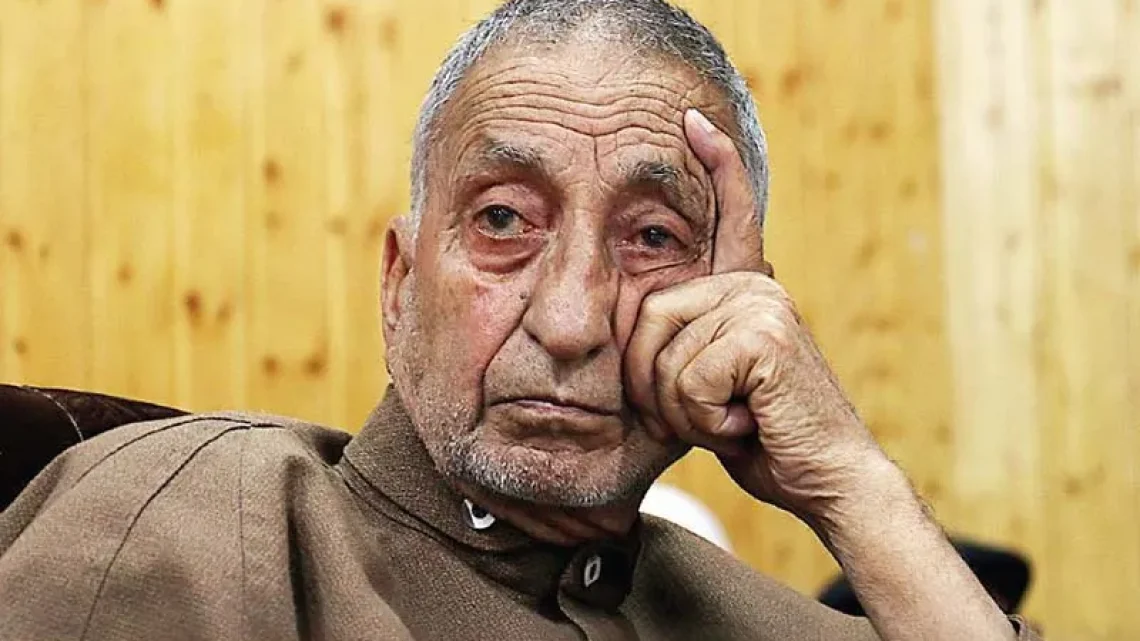
September 19, 2025The death of Professor Abdul Ghani Butt has brought fresh attention to a demand that has shaped life in Kashmir for decades. Prof Butt served as a senior leader and at times as chairman of Hurriyat bodies, and he kept the call for Kashmiris to decide their future at the core of his work. In a public statement Ghulam Muhammad Safi said the passing of Professor Butt was an “irreparable loss for the Kashmir cause,” and he urged people to carry forward the struggle with the same calm determination that Butt showed. The mood after his death is not of defeat but of renewed resolve, and local voices say the movement will draw strength from his life and example.
Life Of Service And Steady Leadership
Prof Butt combined steady political work with close ties to ordinary people and local groups. He kept the demand for a decision by the people of Kashmir alive through meetings, statements and grassroots contact. His steady manner and clear sense of duty gave the movement a stable face at times when tempers ran high and politics grew messy. Many younger activists now point to his life as a model of disciplined politics and long term focus.
• long record of public work rooted in local support
• clear focus on right to self determination as main aim
• preference for political and legal means over violence
• steady presence that kept the movement on course
• example that many young activists now follow
Kashmiri Resolve As A Moral And Political Force
The response to Prof Butt’s passing shows a community that links memory and law to a clear political aim. Public gatherings, speeches and messages of support have reinforced a sense that the cause will continue. Rather than weakening the demand, the moment is used to remind people and outside audiences that the movement rests on a claim of justice and fairness. This line of politics stresses non violent insistence and seeks to keep the moral high ground.
• public gatherings and ceremonies reinforce shared aims
• youth are mobilised around a rights based message
• the movement keeps a steady aim for long term results
• moral framing aims to win sympathy beyond the valley
• solidarity stays strong despite pressure from the ground
A Focused Critique Of Indian Policy
Those who spoke after Prof Butt’s death put responsibility for ongoing unrest squarely on choices made in New Delhi. The piece emphasises how legal changes, heavy security steps, and limits on local politics have shut down space for proper debate. These moves are shown as helping to keep the demand alive rather than ending it. The account singles out the current government in India for decisions that have closed political avenues and treated political claims as security problems.
• security steps are seen as replacing political talks and outreach
• legal changes are viewed as ignoring local opinion and rights
• curbs on speech and protest have narrowed room for debate
• pressure and arrests often deepen public resistance rather than calm it
• the Modi government is pointed to as responsible for these choices
The Right To Self Determination As Central Claim
At the heart of the account is the simple claim that the future of Kashmir must be decided by Kashmiris. Prof Butt kept that demand alive and presented it as a legal and moral demand that can be set out to the world. The movement aims to frame its case as peaceful and lawful so that it can gain fair hearing in international circles. This focus on rights seeks to turn public feeling into a clear political claim that others can understand and judge.
• the claim is framed as a legal and moral right with clear basis
• leaders present the demand as peaceful and within law
• calls are made for dialogue and practical political steps
• the demand ties to long standing local opinion and memory
• the movement seeks a fair hearing from the world community
Appeal To The International Community
Voices quoted in the wake of Prof Butt’s death ask foreign states and international bodies to pay steady attention and to press for fair process. The appeal is for scrutiny of rights and for diplomatic pressure that can open space for talks. The message stresses law and human rights rather than calls for outside intervention. The aim is to move the issue out of a cycle of force and into a political process that respects the wishes of those who live there.
• calls for international attention to human rights and law
• requests for sustained diplomatic pressure to open political space
• emphasis on legal methods rather than military steps
• plea for fair mediation and help with talks where needed
• hope that global attention will push steps toward a solution
Turning Legacy Into Organised Action
Honouring Prof Butt’s memory, those who lead the cause are urged to put shape and plan behind public support. The piece stresses that moral strength must be matched by clear organisation, steady outreach, and a consistent plan to present to international bodies. Discipline and practical political skill will decide whether public sympathy turns into real progress on the ground.
• organised political work will decide the movement’s future impact
• clear plans are needed to turn support into results at home and abroad
• steady engagement with international bodies must be sustained
• local leaders must keep the struggle peaceful and clear in aim
• practical steps must match the moral case to win wider support
Limits And The Test Of Implementation
Words and ceremonies can lift morale, but real change depends on practical steps. For the movement to press its claim effectively it will need consistent organisation, outreach to friendly states and bodies, and clear proposals that can be discussed in wider forums. The article points out that without a clear plan and steady follow up, public goodwill may remain symbolic rather than political.
• joint planning and clear proposals will shape future talks
• sustained outreach to sympathetic states and groups is needed
• discipline in public action will keep the moral case intact
• the movement must show practical pathways to a fair outcome
• time and steady political work will decide the final outcome
Conclusion: Honour, Resolve And A Call For Justice
Professor Abdul Ghani Butt leaves behind a record that many in Kashmir now see as a guide for the days ahead. Ghulam Muhammad Safi’s words that the passing of Professor Butt was an “irreparable loss for the Kashmir cause” have become central to how leaders frame the moment. The call now is for steady political work, for wide and fair attention to human rights, and for a clear plan to present the claim that Kashmiris must decide their future. The piece sets out a sharp critique of policies that shut political space and it asks that honouring Butt’s life means turning moral strength into organised, lawful, and effective political action that can lead to a lasting and fair settlement.