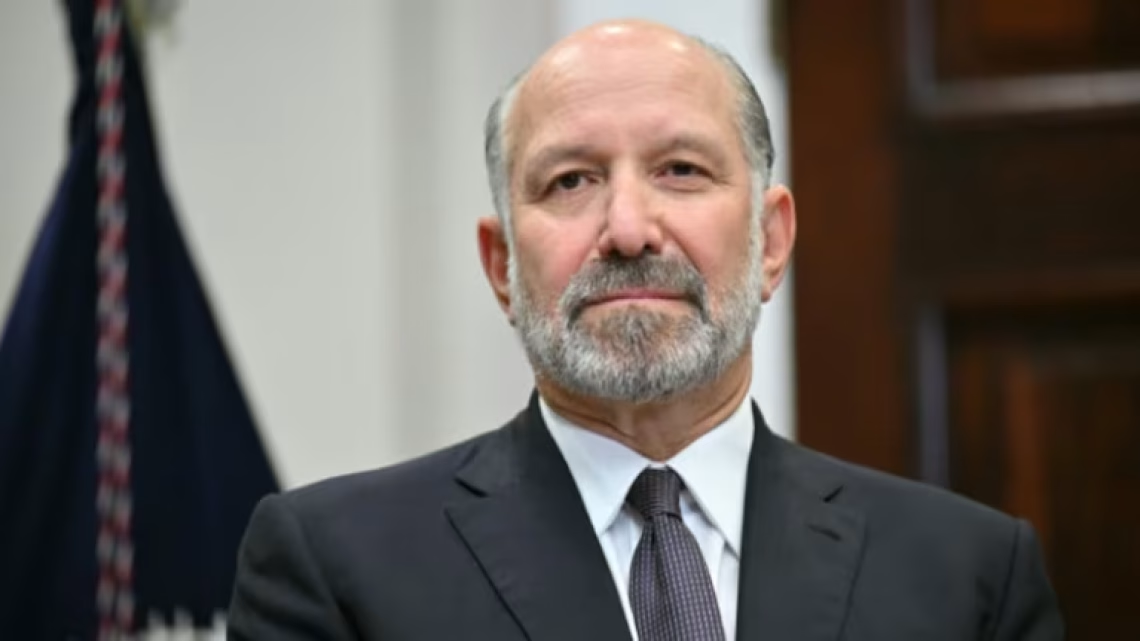
US Commerce Secretary Slams India for Trade Imbalance, Corn Imports Refusal
September 16, 2025The US Commerce Secretary’s public criticism of India for refusing to import American corn has brought into focus a growing problem in India’s trade policy. What began as a dispute over one farm product is in reality a clear sign of how New Delhi opens its doors to sell but keeps its doors closed to buy. The Modi government’s choice to protect some local groups while letting exports flow freely now looks less like careful planning and more like short term politics. This approach risks higher costs for people, less trust with trade partners and a weakening of India’s claim to act as a fair and steady global partner.
A One Way Trade Pattern And The US Complaint
The case is simple to describe. Indian firms and exporters sell large volumes to the United States and to other markets while US farmers face steep barriers to sell to India. Corn is a clear example. Washington has warned that unless India eases its rules and cuts some duties the United States may take action that will hurt Indian exporters. The charge from the US is that India is asking others to open up while it keeps its own doors shut. That claim is hard to brush off.
• US Claim Of Unbalanced Trade:
• The United States says India exports freely but blocks key American farm products with high duties and strict rules.
• Corn has become a symbol of how hard it is for US farmers to sell in India.
• Washington says continued limits could force harder trade steps that would hurt both sides.
• Indian Defense And Political Choice:
• India says it must protect its farmers and guard food supplies and health rules.
• The government points to concerns over crop safety and to the need to keep local prices steady.
• Abroad this policy looks like taking advantage of other markets while shielding some local interests.
Tariffs, Retaliation And The Risk Of Rise In Tension
Tariffs are at the heart of the row. When countries raise duties to protect local firms the other side often replies with similar steps. That leads to higher costs for companies and customers and to less trade overall. Firms cannot plan when rules keep changing and when tariffs rise as a political move. The Modi government may win praise from certain voters for protecting farmers, but that praise gains are small next to the long term harm of losing trust with partners and of pushing trade partners toward a tougher line.
• Tariff Trouble And Business Cost:
• Higher duties increase the cost of goods for firms and for people who buy them.
• Retaliation can hit jobs and key industries on both sides.
• Long term investment plans suffer when trade becomes a field of political fights.
• Short Term Politics For Long Term Pain:
• Defending local farmers brings quick political points at home.
• But protecting some groups with rules makes foreign partners less willing to trust India.
• The short term gain may lead to long term loss of markets and price rises for Indian buyers.
Who Loses When Markets Close Their Doors
The people who lose first are farmers and workers who depend on open markets. American farmers miss out on a large buyer for corn and other crops. Indian firms that need raw goods pay more or face delays when imports are blocked. Indian exporters who sell goods overseas may win in the short run but face the risk of retaliation that hits jobs at home. Consumers on both sides end up paying more when trade is cut back.
• Practical Costs For People And Firms:
• US farmers lose market chances for big crops like corn.
• Indian buyers and processors face higher costs and fewer choices.
• Firms and workers on both sides face more uncertainty and higher prices.
Modi Government: Politics Over Fair Trade
The broader picture is about politics. The Modi government has built a public image around pride and self reliance. That message works inside India. But when politics steers trade policy the harm shows clearly. Closing the door to some imports while urging others to buy from India gives an image that New Delhi plays by one set of rules when selling and another when buying. This selective policy makes other countries doubt India’s fairness and pushes them to protect their own interests.
• Political Motives Behind Trade Choices:
• High duties protect certain farm and industry groups that win votes.
• The government’s image of self work and pride becomes a cover for shutting some markets.
• Using trade rules for short political wins invites other states to respond in kind.
What Trade Talks Must Deliver
The only way out is real give and take. Talks must lay out clear rules on duties and safety checks that both sides accept. India should show real moves to open important markets while keeping genuine checks on safety. The United States should be ready to accept India’s real worries about food and health. What both sides need is a clear plan with steps to lower barriers, timelines for action and fair checks rather than short lived threats and headlines.
• Steps That Would Help:
• Set clear rules for tariffs and safety checks with timelines to ease key limits.
• Agree on phased steps to open key markets while keeping real health checks.
• Use talks to build trust with concrete steps not just threats.
• What India Must Change:
• Move from selective barriers to clear and steady trade rules.
• Match the aim of helping local industry with fair access for trade partners.
• Stop using trade as a tool for short lived political wins.
Conclusion
The US warning over corn and trade imbalance is not only about one crop. It is a test for the Modi government’s view on trade. If India wishes to be taken seriously it cannot sell freely and refuse to buy. Trade is not a one way street. Closing markets under the name of protection will bring higher costs, fewer jobs and growing fights. The road ahead must be honest talks, real steps to ease limits and trade rules that help the public and not just short term political interests. Only then can India rebuild trust and keep strong trade ties with the United States and the rest of the world.